


WTA leads careful planning to create better outdoor experiences northeast of Mount Rainier


WTA is taking action to keep trails accessible in Snoquera, outside Mount Rainier National Park. We are working with a group of passionate recreation and conservation groups to breathe life into the area’s trails. Our goal is to create a future where Snoquera trails are long-lasting, well-built and maintained and easy to access.
Highway 410 is a smooth, winding road hugged by lush forest. Sitting in the passenger seat of a car, it’s hard to peel your eyes away from the glimpses of cabins nestled in the woods, the snaking White River or towering Mount Rainier. The journey on this highway, in an area we call Snoquera, could end at a riverfront campground or at a tucked-away trailhead. With all of the beauty across the 185 miles of trails in Snoquera, the area has potential to become even more accessible and welcoming with additional investments in its trails.
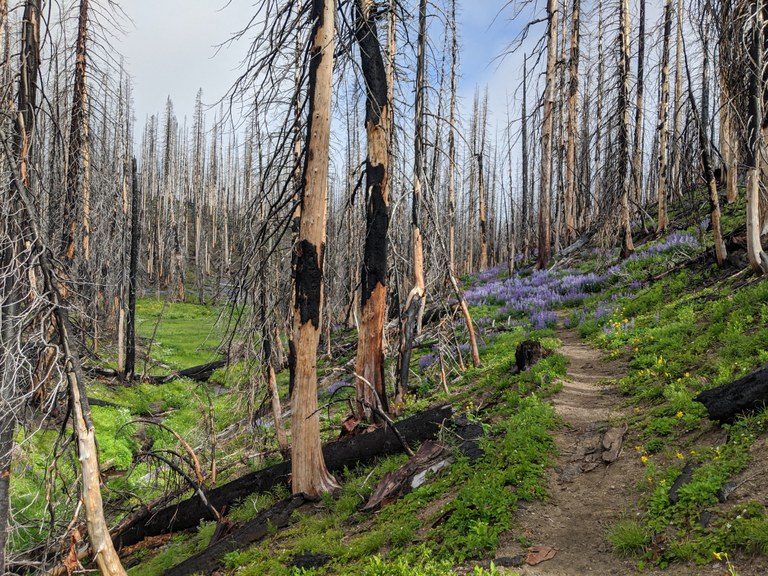
Snoquera’s beloved trails invite connections to the outdoors for hikers, bikers, motorized users and equestrians alike. But access to trails has eroded over time due to poor road and trail conditions, lack of maintenance and fire damage. Existing trails are not maintained or optimized for current use, creating natural resource impacts such as erosion. Snoquera’s plentiful trail system offers access to many beautiful areas, but its trails are vulnerable to being lost and forgotten as it becomes harder to access them.
WTA is taking action to keep Snoquera trails accessible. We are working with a group of passionate recreation and conservation groups, called the Snoquera Trails Coalition, to breathe life into the area’s trails. Our goal is to create a future where Snoquera trails are long-lasting, well-built and maintained and easy to access. Thoughtful planning is essential to reviving trail systems while ensuring natural and cultural resource protection. Through a collaborative planning process, we are working to help visitors enjoy better experiences in Snoquera.
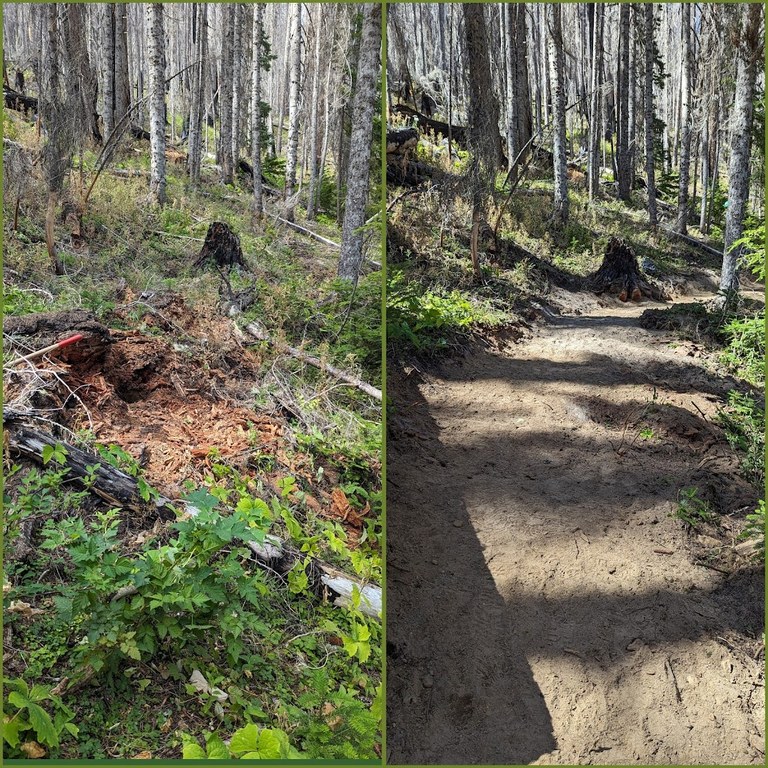
WTA worked on Echo Lake trail to improve access for trail users.
Community planning for better trails
For a trail system that appeals to so many users, it can be hard to get on the same page about what the area needs to become a better recreation destination. It takes lots of meaningful collaboration and conversations to reach a common goal for Snoquera’s future. Washington Trails Association has years of experience doing this. Through our trails assessment processes – like those across the Teanaway Community Forest, Silver Star Mountain, and Mountain Loop Highway landscapes – we lead collaborative efforts to develop a vision for sustaining trails across generations and create recommendations to get there. These processes take stock of a current trail system’s challenges, and then look proactively into the future to consider how trail and road improvements can reduce impacts on the land and foster better visitor experiences for years to come. When we work together with different groups, we can help build a future that meets the needs of all trail users.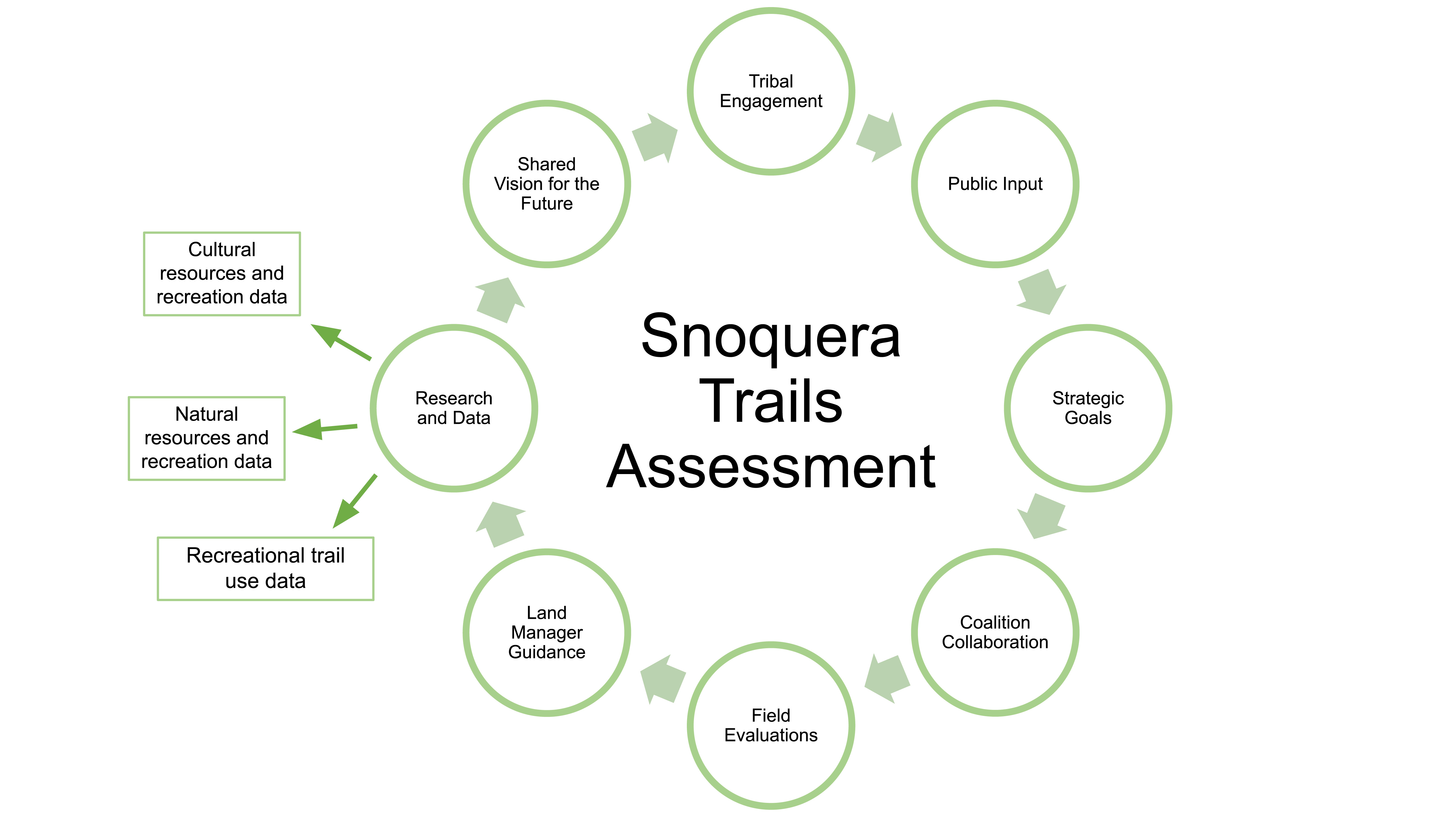
It takes effort from many partners to create a lasting, shared strategy for the future of an area. That begins with getting the right people in the room together, includes a lot of rich discussion and sharing and culminates in a sustainable strategy. It is no small feat!
This clear view for the future makes it easier to fund projects, spur partnerships, guide decision-makers and fast-track implementation of ideas — resulting in better experiences for you.
Kicking off our snoquera work with research on trails
The Snoquera Trails Coalition formed in spring of 2025 to guide the Snoquera trails assessment process. Before the coalition could develop priorities for the region’s trail improvements, we needed to get on the same page about the current state of trails. In the summer of 2025, WTA and the coalition collected data about the area’s trails. WTA went all-in to discover what we could about the trail system. We helped inventory the area’s trails and used a community-based research process that was a first-of-its-kind for us. Through our novel approach to research, we tried out tools and looked into new data sources to support our trails assessment. The coalition researched the condition of Snoquera trails as well as how much the trails were being used and how visitors preferred to use the trails.
From June to October 2025, Washington Trails Association and coalition members did the following:
- Placed 13 trail use counters across Mt. Baker-Snoqualmie National Forest trails to develop an understanding of visitor use across low and high-used trails.
- Analyzed AllTrails and Strava Community Heatmaps to glean insights about individual and system-level trail use from user reporting.
- Conducted a visitor use survey to understand visitor behaviors, expectations and hopes for the future of Snoquera trails.
- Created an up-to-date trail inventory to list all trails within the system, including details on their conditions and opportunities for improvement.
- Held two in-person meetings to gather qualitative data — one to discuss connectivity and gaps of the trail system with trail user groups, such as mountain bikers and equestrians, and another to better understand the Snoquera outdoor recreation and tourism economy with local business representatives.
Our research yielded unique insights about who uses Snoquera trails and where improvements to the visitor experience can be made. You can find this information in our Snoquera Collaborative Trails Study Plan: 2025 Recreational Trails Findings report, which is brimming with observations about the Snoquera trail system.
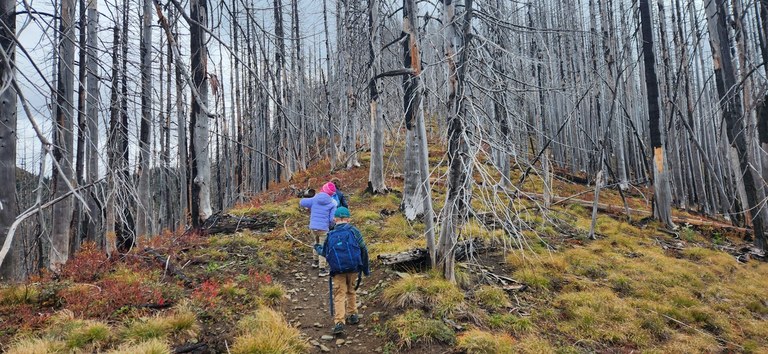
Dalles Ridge is a relativy short hike at 1.8 miles but offers incredible views as you hike along the ridgeline. Photo by trip reporter rustysailor.
What we learned
We learned that people love the variety of experience they can get in Snoquera. The area provides opportunities for accessible, family-friendly jaunts and challenging, primitive experiences. You can connect many Snoquera trails to each other, inviting time in the outdoors that are as short as a quick stroll along the river to multi-day backpacking.
At the same time, there is room for improvement. Through our 2025 summer research, we learned things like:
- Snoquera roads need improvements to safely get people to their backcountry destinations. There are a range of obstacles, including deep potholes, downed trees and significant rutting, that make travel difficult or impossible. For users who haul trailers, such as equestrians, road conditions are especially challenging. We got intel on specific roads – like those accessing Government Meadows, Ranger Creek, Corral Pass and Noble Knob – where poor road conditions are a major deterrent to getting outside.
- Users are interested in greater connectivity across Snoquera trails, including recovering lost trails and improving loop options.
- Trail design does not reflect preferred and projected uses. Across Snoquera, trails are largely used in ways that may not fit with how the trail was initially designed. For example, Greenwater Lakes is designated to be usable by horses, but the tread and trail width doesn’t reflect this. While the Palisades trail was built for hikers, mountain bikers love it. When trails are brought up to standard for their desired use, recurring trail issues and resource impacts can be mitigated.
- Signage across Snoquera roads and trails could create better experiences. Inadequate signage along roads, at trailheads and at trail junctions rose to the top of issues for our 750+ survey respondents. Additionally, survey-takers also pointed to limited and poorly maintained restrooms, insufficient parking for larger vehicles and trailers, and growing concerns about litter, noise and user conflicts.
These are just a few tidbits of many pulled from the report, which goes into much greater detail on some of your favorite trails across Snoquera.
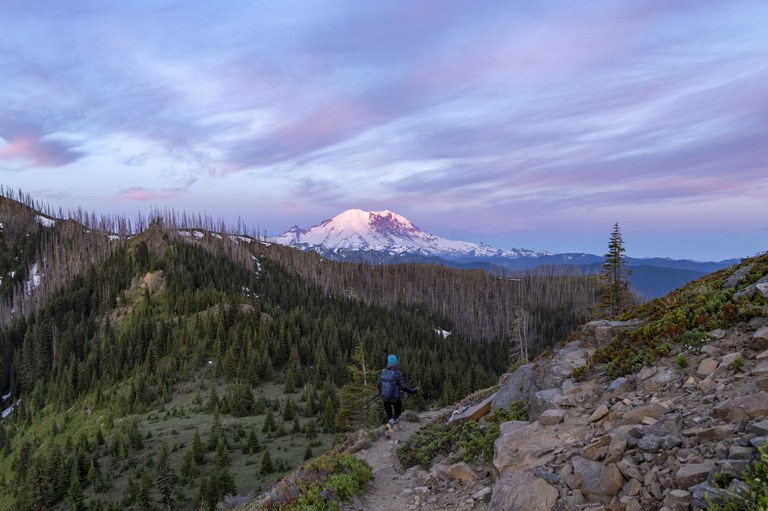
Mount Rainier, as seen from Noble Knob. Photo by Arc Sims.
What's next
As the coalition develops recommendations for Snoquera trails over the next year, we continue to consider how land managers and partners can create a trail system that fosters better visitor experiences and meaningfully connects people to the outdoors while reducing impacts on the land and cultivating stewardship. In 2026, the Snoquera Trails Coalition will pursue further research and refine our ideas for trail improvements.
Consider exploring the great opportunities that Snoquera offers today as we invest in improving the experience for hikers. When you get outside, you can help our efforts by writing a trip report that keeps us abreast of conditions on Snoquera trails.
WTA is dedicated to connecting communities to the great outdoors through trails. We must keep our public lands accessible to do this. This trails assessment is one of the ways we’re helping to protect your access to the outdoors. Multi-year projects like this require expertise and collaboration. The years of work pay off on the ground with long-lasting trails that are easier to access and that can be enjoyed by a range of users.
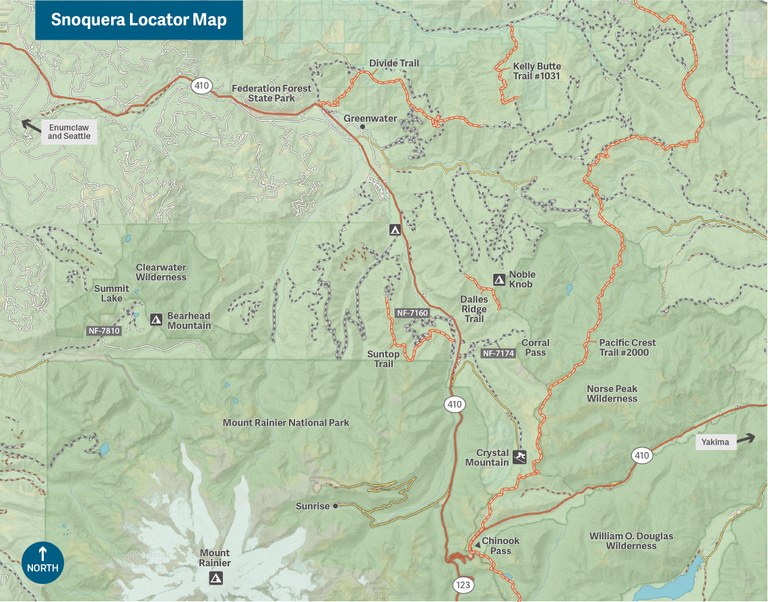
Map by Lisa Holmes
Comments
This is wonderful news! I intend to do much more hiking here this spring and summer, especially now that the access to the Carbon River area has been cut off (I live in Covington). I am sure you will let us know what we can do to help, volunteering to help develop better access and experiences for this area would be a welcome opportunity.
Posted by:
bunnybutt on Apr 14, 2026 05:30 PM
We're excited that you're getting out on Snoquera trails! We share your enthusiasm for investing in the Snoquera trail network. As opportunities to get involved in the Snoquera trails assessment come up this year, we will be sure to post about them on our socials and blog. WTA is planning plenty of trail work in the 410, too. Keep an eye on our work party page, wta.org/volunteer (filtered to the Mount Rainier region), where our Snoquera area work parties will be posted.
Posted by:
Washington Trails Association on Apr 23, 2026 11:41 AM
Hey @WTA, I stumbled upon the Snoquera Collaborative Trails Study Plan Findings and read it with interest, but also notice that there doesn't seem to be any representative from Greenwater (where I live) on the Coalition team. That seems like an oversight, as visitors to the area must go through GW and many stop (and impact GW far more than they impact Enumclaw), and because many of the people living in GW are among the area trails' heaviest users. I'd be interested in finding out if there's a way I might be able to get involved, if you need any more brains and feet on the team. Thanks!
Posted by:
JoniJay on Jul 18, 2026 06:33 PM
Thank you for reaching out! I'm Cassidy, I lead the project and would love to connect with you. Please send an email to cgiampetro@wta.org. We have invited businesses and homeowners in Greenwater to engage with us throughout the project. While we have had some input from folks in that area, we'd love to incorporate more of a Greenwater perspective! I look forward to hearing from you!
Posted by:
cgiampetro on Jul 20, 2026 10:50 AM