


Big flood, strong response: Kicking off a season of critical trail repairs


The winter storms of December 2025 left exceptional damage across the state. Countless trails were buried under debris and unsafe to access. In some places, restoration couldn’t wait. WTA crews were called in for a rapid response to rescue the trail leading from the Cispus Learning Center to Curtain Falls.
By Anna Wegner
Winter storms are a fact of life for Washington’s trails. Heavy rain, wind and flooding downs trees, washes out trails and damages bridges and signage every year. But the intensity of the December 2025 storms left exceptional damage, with countless trails across the state buried under debris and unsafe to access.
While land managers are still assessing the full extent of damage, it’s clear that many trails will require significant work this spring. In some places, restoration couldn’t wait.
One such trail is the route from the Cispus Learning Center to Curtain Falls (also known as Covel Falls), located within Gifford Pinchot National Forest in Cowlitz County. After December’s storms swept through the area, the trail was blocked by dozens of fallen trees and debris, making the popular route unsafe for visitors.
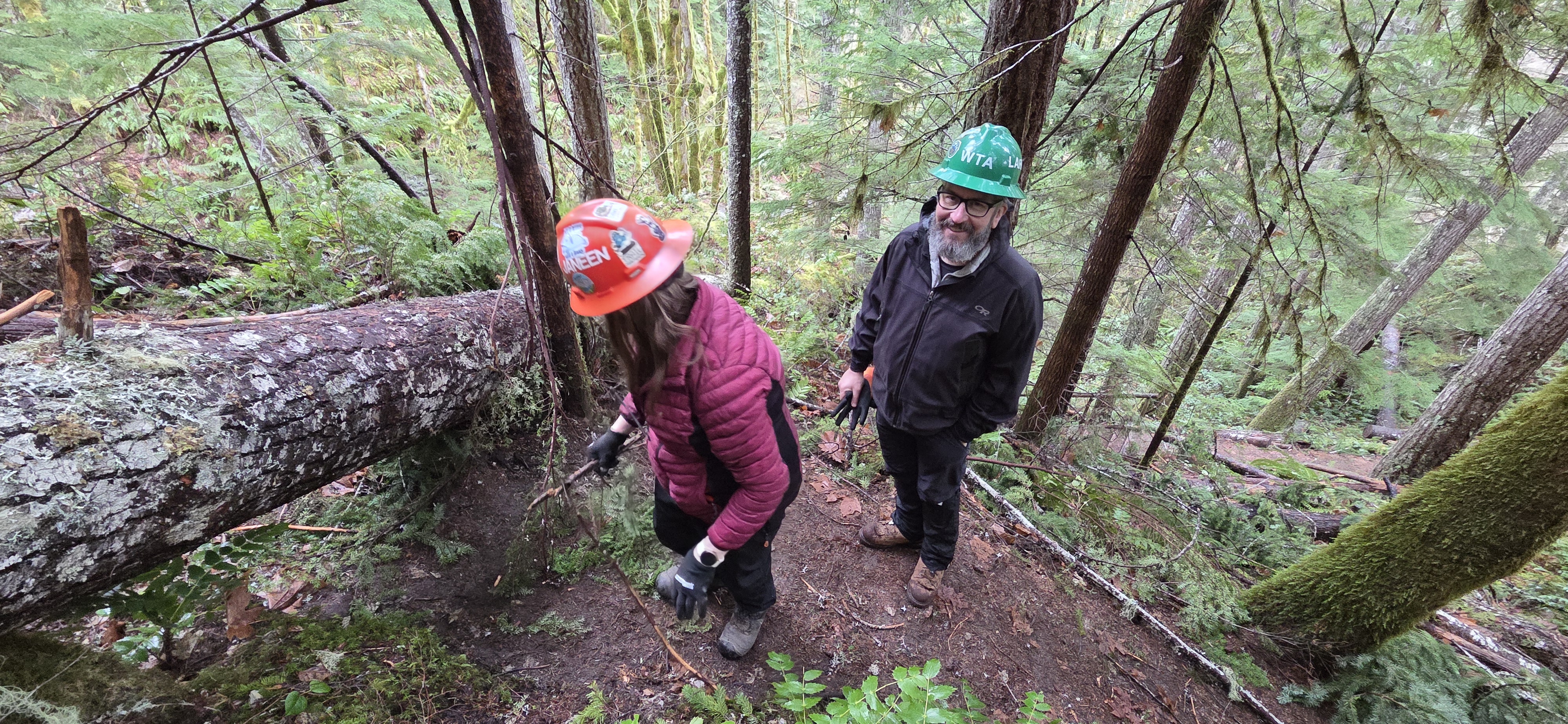 Winter storms can bring down many trees at once, making trails inaccessible. Above: On a steep slope not far from the Cispus Learning Center, a WTA assistant crew leader and a volunteer assess their approach to removing one of the chest-high trees blocking the way. Photo by James Alexander.
The Cispus Learning Center hosts school groups and educational programs throughout the year, and many of those groups hike the trail to Curtain Falls. With their first student group of the year arriving in early March, access to the trail was urgently needed. So the learning center reached out to WTA.
Within a week, WTA staff organized a rapid-response work party to reopen the trail before the students arrived.
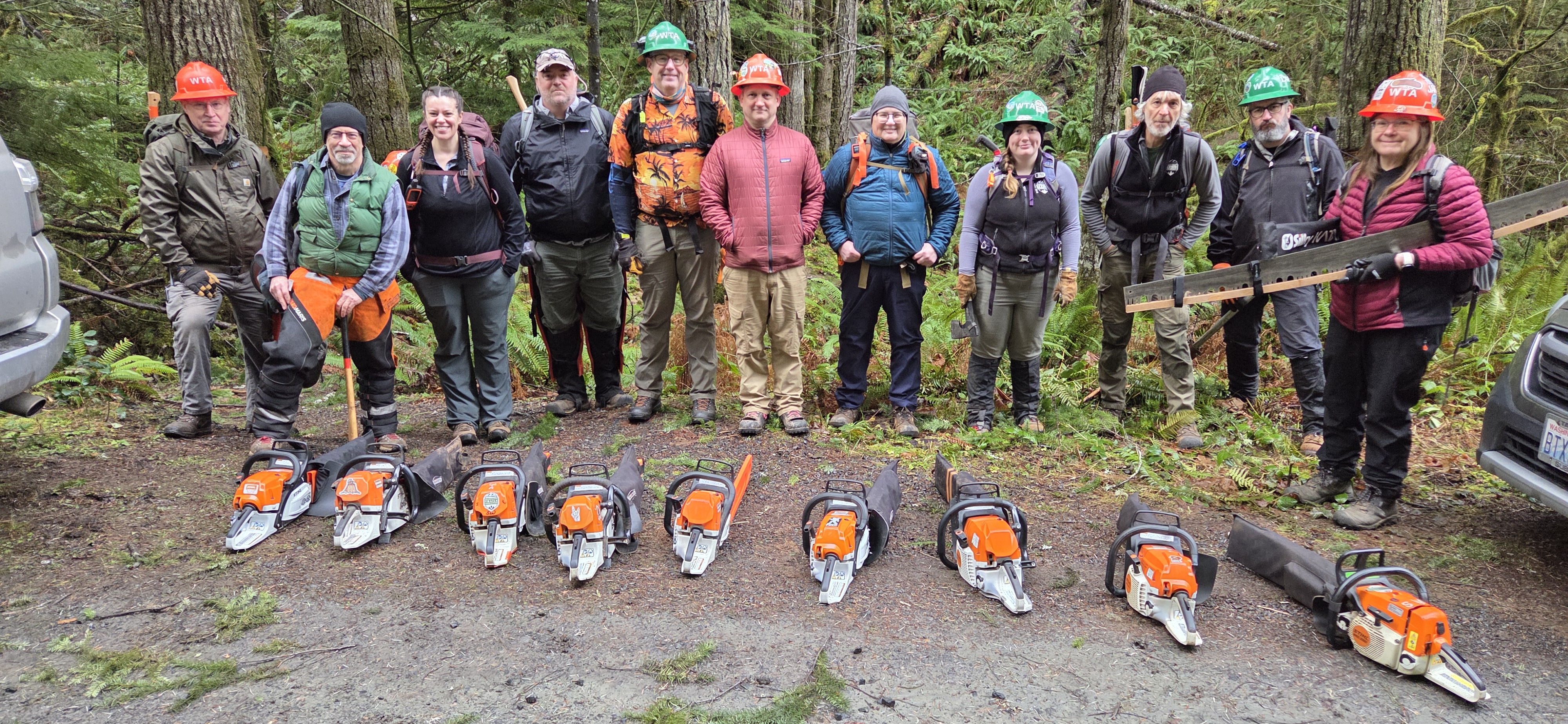 The WTA rapid response crew ready to clear the way. Photo by James Alexander
A force to be reckoned with
When the crew arrived, the trail was so obscured by debris that it was difficult to recognize. Trees lay tangled across the path, and sections of the forest floor were buried in fallen branches. Reaching Curtain Falls meant climbing over or going off-trail to detour around log after log after log. This meant that not only was the trail less safe for hikers, but that delicate vegetation alongside the trail was also at risk of being trampled.
In a single day, 13 volunteers and their crew lead removed 22 downed trees and cleared more than 1.5 miles of trail. Four chainsaw teams and one crosscut saw team worked their way through what had been an impassable stretch of forest, restoring the trail to hikable conditions.
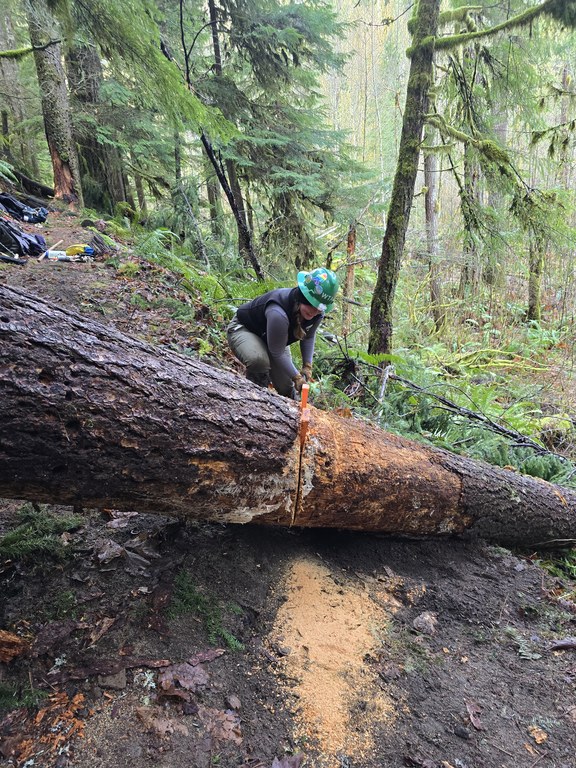
13 volunteers removed 22 downed trees and restored the trail leading to Curtain Falls, thanks in part to member support. Photo by Janeen Licatovich.
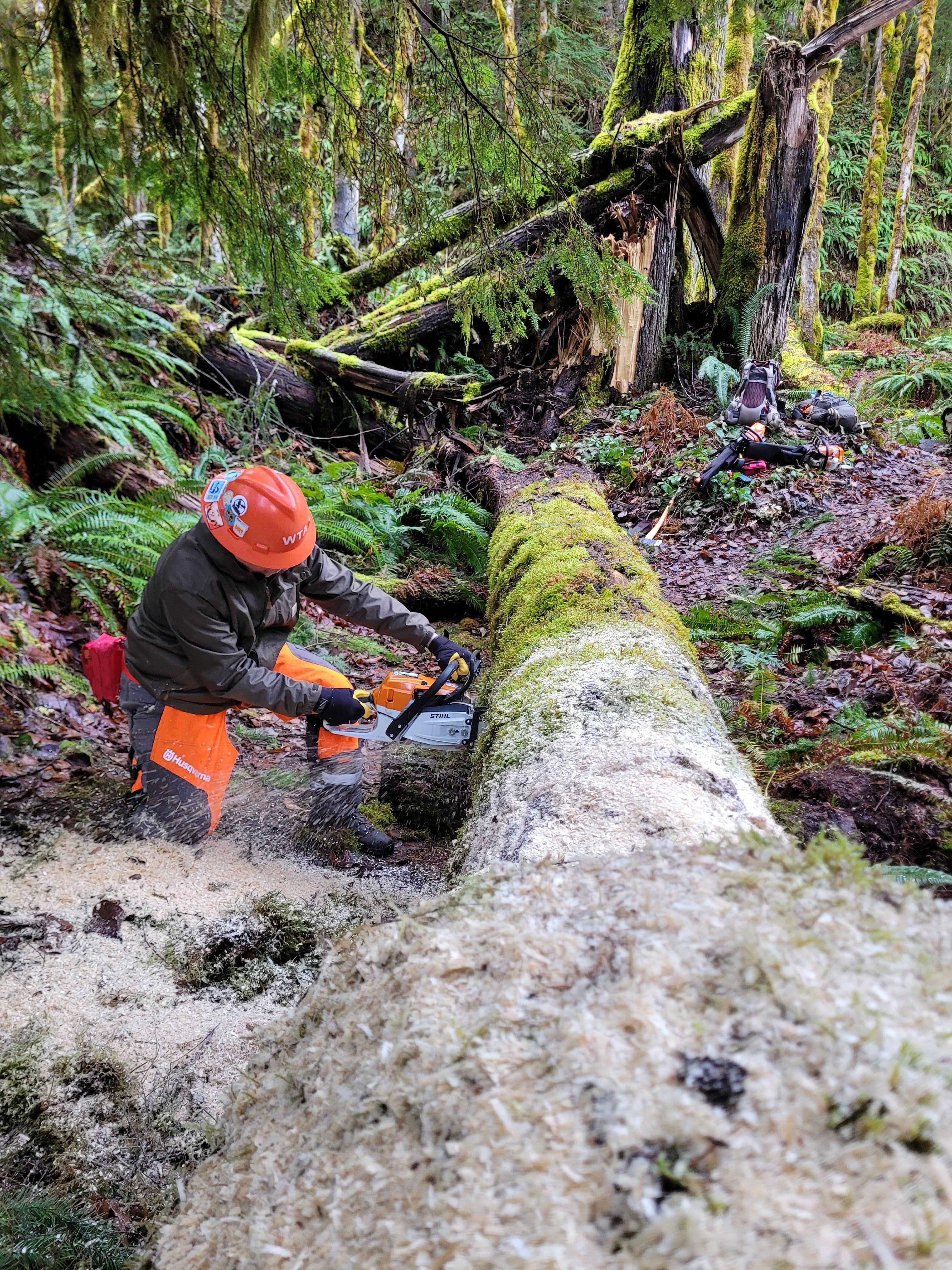 A WTA assistant crew leader cuts through one of the 22 logs. Photo by Matt Bannon.
Volunteers spent the day cutting, hauling and clearing debris, working steadily down the trail. Hour by hour, rain-soaked logs and tangled branches gave way to a clear path.
“If Ewoks needed trees removed so they could move freely on the moon of Endor in Star Wars Episode VI ‘Return of the Jedi,’ this group of volunteers would be the first to be called upon,” said Trail Crew Leader James Alexander, who led WTA’s crew through the response.
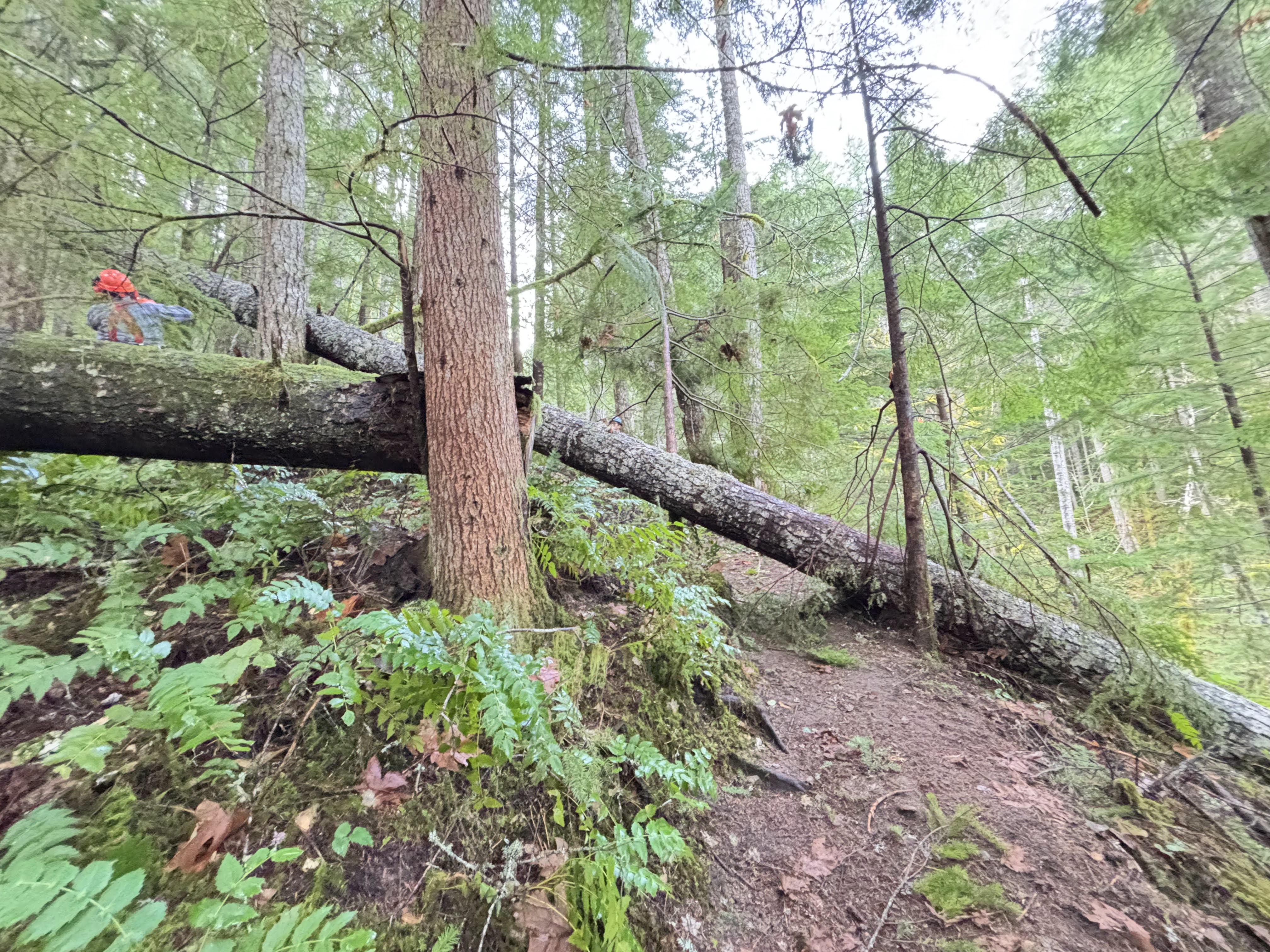 Before: a downed tree blocks the way to Curtain Falls. Photo by Elizabeth Storm.
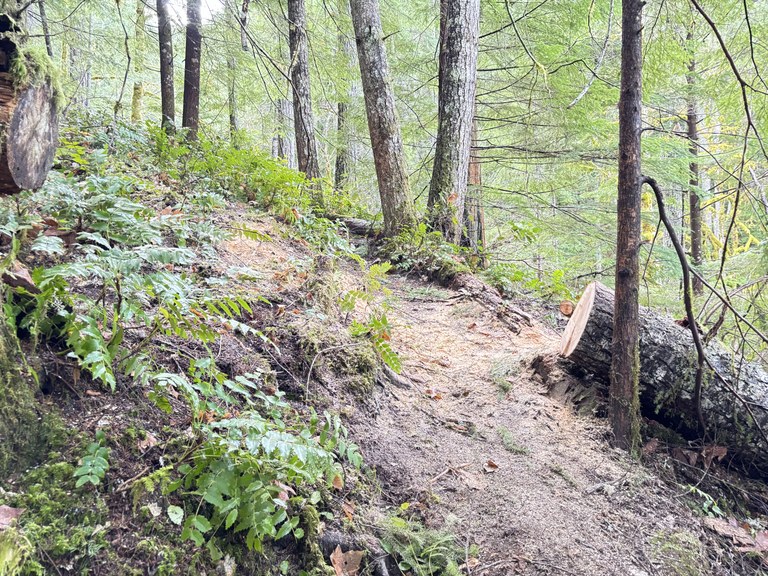
After: More than a mile of the trail to Curtain Falls was reopened, but trails across the state are still covered in blowdowns. Photo by Elizabeth Storm.
Reopening the trail did more than restore access to Curtain Falls. It unlocked progress on additional projects within the Cispus trail system — demonstrating how one trail work project can have a ripple effect across an entire network — and created lifelong memories for students on a field trip from LP Brown Elementary:
"Outdoor learning is an essential part of a well-rounded education, and this experience provided rich opportunities for our students. They identified lichen, tracked animal prints, tested water quality, and explored miles of beautifully maintained trails. For many, the night hike under a clear, star-filled sky was unforgettable."
"I also want to extend our sincere thanks to the Washington Trails Association. Because of their efforts, our students were able to safely access and fully experience the trails," said Sean Shaughnessy, Principal of LP Brown Elementary.
Rapid responses like this one are possible in large part because of the strong foundation of support from WTA members. Member support allows us to employ a team of year-round crew leaders who know their region’s landscapes and have longstanding, relationships with partners, land managers and volunteers. As a result, when urgent needs arise, we’re able to mobilize quickly.
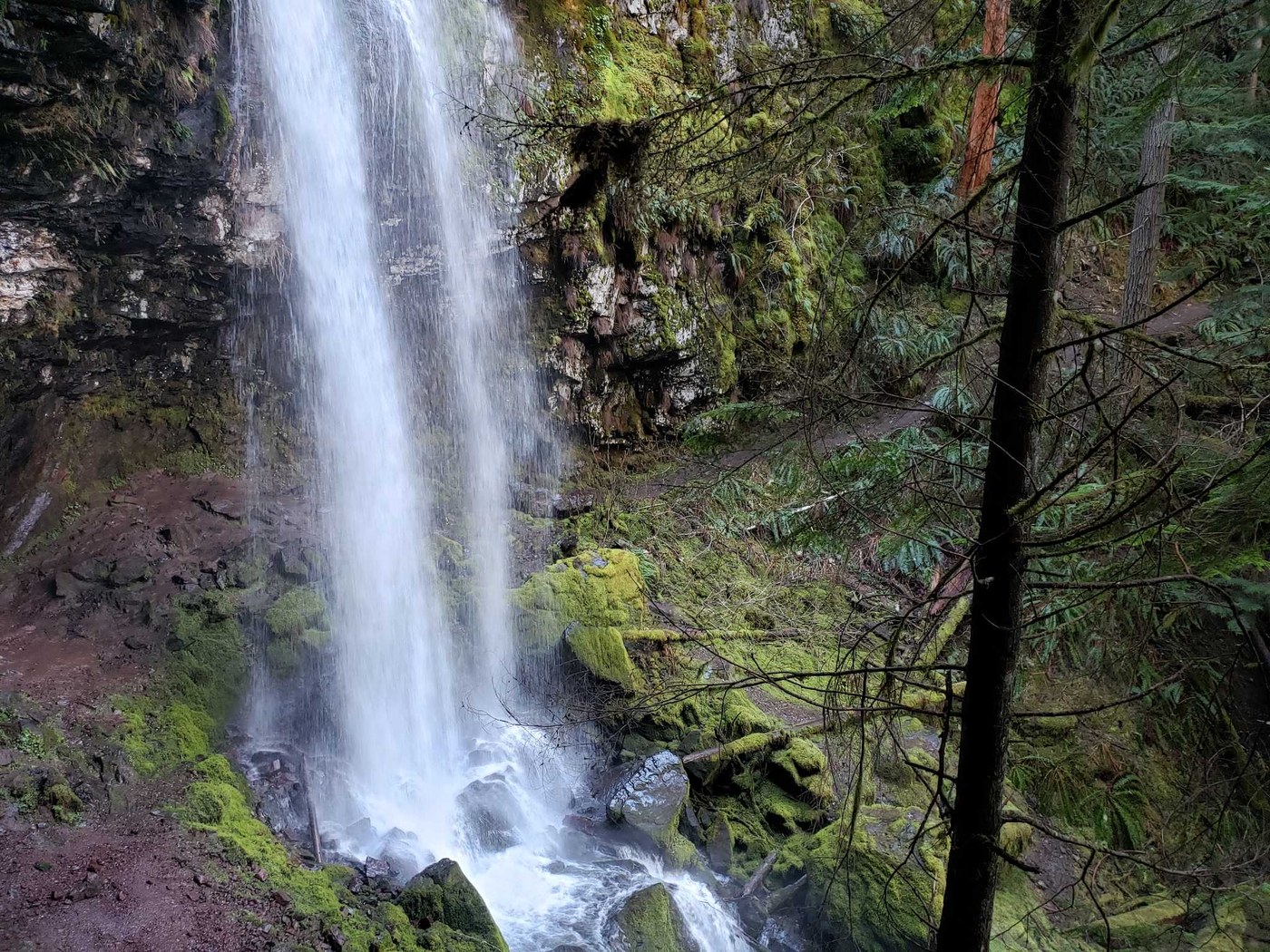 The crew opened up the way to the falls. Photo of the falls in spring by Anna Roth
This is just the beginning
Storms have affected trails all across Washington, and one thing is clear: there is a lot of work ahead.
WTA is preparing to support critical repairs in several areas this spring and summer, including:
- Clearing downed trees on the Pratt Lake Trail and the Pratt Connector in Snoqualmie
- Trail surface restoration on Noisy Creek Trail near Sullivan Lake in northeastern Washington’s Selkirk range
- Erosion repair on the Chelan Lakeshore Trail
Trails already on this year’s maintenance schedule are in worse condition than expected — meaning storm recovery and routine upkeep must happen simultaneously. Many of these projects will require more time, equipment and crew capacity than in a typical season.
With so much work still ahead, we need community support to help power the work that keeps Washington’s trails open and safe. Together, let’s ensure that the trails you love are there when you need them most.
Want to help power WTA’s great work for hikers, trails and public lands, including trail recovery this spring? Give now to support spring trail recovery, or become a monthly donor to ensure trails get the support they need all year-round.
Comments
Does anyone know if the forest service roads going to Blanca Lake and Foss River (Necklace Valley etc.) will be repaired for this season?
Posted by:
polarapfel on Mar 21, 2026 05:06 PM
Hi there, thanks for your question!
Land managers are still assessing the full extent of road damage, needed repairs and timelines on roads from winter storms and erosion. Spring runoff likely remains a factor for both roads. Currently the East Fork Foss / Necklace Valley trailhead is accessible (the washout on that road is after the trailhead there and does impact West Fork Foss) though there'll be snow in the mix there for a while yet. (More details here: https://www.fs.usda.gov/r06/mbs/conditions.) When there is more concrete info a bit later in the season, we will update our hiking guide and blog. And in the meantime, know that member support also powers our ongoing federal advocacy for the hard-working staff at the Forest Service and funding needed for infrastructure fixes to roads, bridges and trails on our national public lands.
Posted by:
Anna Wegner on Mar 23, 2026 01:20 PM
Hi! Is there any chance the Suiattle River Road will be repaired in 2026? Are there any alternative routes to access the Green Mountain trailhead?
Posted by:
BethAD on Mar 28, 2026 07:37 AM
Hi BethAD,
It's still a bit early to know exactly what to expect here this season, and the existing closure order may change some as agencies evaluate the damage and resources available for repairs (there are several washouts along the road). As for access to Green Mountain, there are still a few months before snow typically melts out there, and a lot can change in that time. We'll keep speaking up for funding and access, and we'll keep the Hiking Guide and news with the latest about the Suiattle as we learn more.
Posted by:
Anna Wegner on Mar 31, 2026 08:12 AM
Are there any plans to address the road washout from a few years ago to the Lake Dorothy TH?
Posted by:
Muledeer on May 06, 2026 08:12 AM