


A Pathway to Outdoor Leadership: Connecting communities to nature


Jane Tesner Kleiner shares her path to the outdoors and experience building community with Nature+Play Designs and the Lower Columbia Nature Network.
At WTA, we are grateful for the opportunities to collaborate with many different kinds of outdoor leaders, including educators, volunteers, government officials and people who work in the private sector. As we reflected on some of our partnerships, we were curious about how these leaders got started on their outdoor journey, what they’ve learned along the way and what keeps them going.
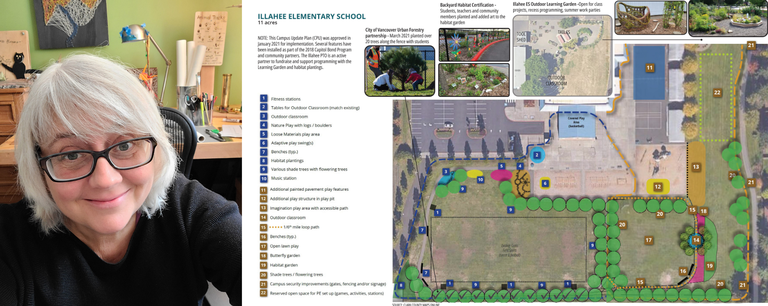
Jane Tesner Kleiner and the Campus Vision Plan for Evergreen Public School’s Illahee Elementary School that was included in a district wide vision to transform schools with Green Schoolyard features, such as more trees, outdoor classrooms, native habitat, accessible pathways, etc.. Photo by Jane Tesner Kleiner.
Recently we connected with Jane Tesner Kleiner, founder of Nature+Play Designs and program manager for Lower Columbia Nature Network (LCNN).
Nature+Play Designs creates opportunities to improve the health and well-being of communities through planning, designing and implementing projects that help everyone feel safe, welcome and able to enjoy natural settings. They work to connect communities to nature.
Lower Columbia Nature Network is a coalition of agencies, partners and stakeholders that connect communities to nature and public lands by fostering partnerships across Southwest Washington. WTA has been a member of LCNN since the beginning and has collaborated with the network on planning accessible trails workshops.
How would you describe your role?
As the program manager for LCNN, I facilitate connecting partners to partners, looking for collaboration opportunities and researching partners who do the work across the Southwest Washington region to connect our communities to nature. LCNN has evolved over the last 10 years to build relationships and connections, share ideas and lean into our partners to maximize efficiencies. This could include shared training, panel discussions on key topics and identifying possible joint-funding opportunities. I also maintain our web page and social media to connect this great work to our community, including a robust event calendar, blog posts, educator resource pages and information to help the community learn about outdoor resources.
What initially drew you to work that connects people with nature?
As a kid, my go-to place was my backyard in the floodplain of Bell Creek in Michigan, catching frogs and snakes and spending endless hours exploring the forests. In my work as an ecologist and landscape architect, I have been involved in projects over the past 30 years that make access to nature more accessible to urban/suburban communities. Safe and welcoming access is so important, but not everyone knows how to find the information of where to go and what to do. As a person with disabilities and a parent of two kids, I have had the joy of meeting lots of families and partners to learn how to find the ideas for outdoor adventures that work for me and my family. I am excited to share what I have learned with others.
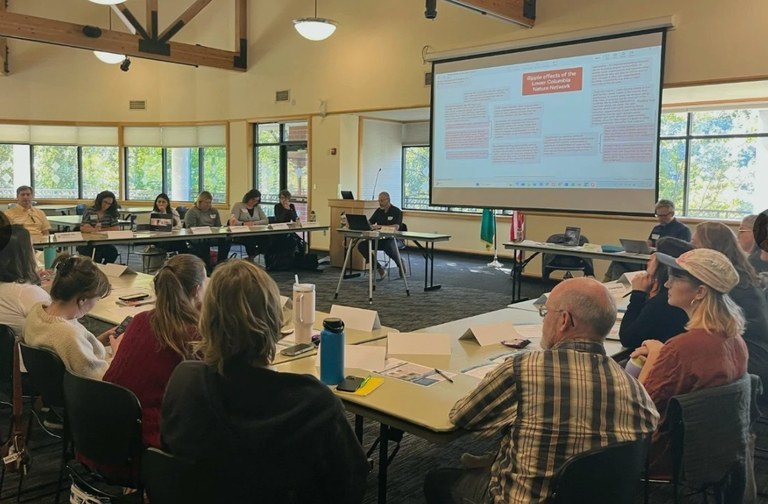
LCNN partners work with Erin Allaman with the Children & Nature Network to conduct a Ripple Effect Mapping workshop. Photo courtesy of Lower Columbia Nature Network.
What was your path to your leadership role with LCNN and Nature+Play Designs (NPD)? How did you get here?
I founded NPD because I had an opportunity to support several of our local school districts with developing concepts and implementing Green Schoolyard capital projects, both from the districts' capital bond programs, as well as supporting grassroots projects with educators, parent teacher associations or organizations and students. I met so many amazing people through this process and we built some amazing Green Schoolyard projects, such as gardens, learning habitats, outdoor classrooms, accessible pathways and more.
I worked for the City of Vancouver, and Clark County previously and I have built relationships and some programs with a wide range of community partners. LCNN was founded through those efforts. It was a chance to bring partners together. Many of our partners vie for the same volunteer pool, funding and events. We asked ourselves “What if we could collaborate and not compete?” Over the years, we have built training programs together, created a joint event-calendar and a set of resources that builds from everyone's input.
LCNN is truly a collaborative effort and I am so grateful to help facilitate these conversations and efforts. Through this work, many partners have been able to build some larger projects together and bring this work to fruition through collaborative funding. Projects have included school gardens, urban tree canopy plantings, habitat restoration efforts and community engagement and education. We are able to reach multiple organizations' goals with just one project — that is success. This work has also led us to connect with national leaders, like the Children & Nature Network, to support our work and help us move pieces forward with their expertise and connect with other communities doing this work around the country!
Tell me why the work you do is important.
Nature is a healer, a helper and a companion for so many people. Access to nature is not equal and not always affordable. Not everyone has a yard — so what can we do in neighborhoods, local parks, schools to create daily safe access to nature? I have seen time and time again how people respond to nature settings. I especially love Green Schoolyard projects where we bring nature to students and educators on their campuses. The impact goes way beyond just STEM learning to art, music, writing, poetry, photography, as well as behavior regulation, social emotional learning and general rest and reset. Kids need nature and so do their teachers. I am grateful to work with partners who can bring their expertise, passion and enthusiasm to schools to make a difference. They are role models for the next generation of us doing the work. Daily access to nature is key to feeling comfortable and confident to then explore more regional destinations and then, if interested, the backcountry. But it starts in our neighborhoods. We know that once people are familiar and comfortable with natural features in their daily lives, they will be more interested in exploring regionally. This is why WTA is such a great partner, local community access and a great entry point to more regional destinations!
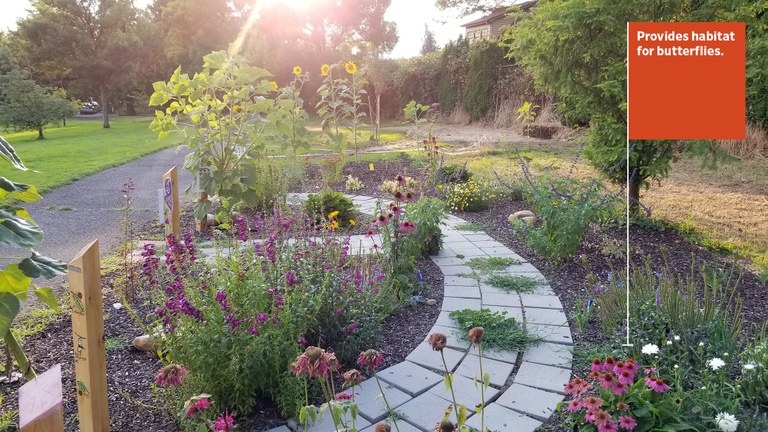
Hough Elementary School Green Schoolyard Butterfly Garden in Vancouver. Photo by Jane Tesner Kleiner.
Who gave you your spark (for connecting people to nature and building community outdoors)?
My mom has always loved gardening and we love to talk about flowers, birds and nature. Role models in my career have been my inspiration while learning about environmental education, environmental psychology and the role of nature in healing. So now I can translate my work with schools and communities. During school plantings, for example, we are working with kids who have never planted anything or used the tools. We are giving them access and opening possibilities to them. Day to day, I am inspired by my community partners and the amazing work they do. I love collaborations and there are so many gaps to fill in our communities. Working together we can brainstorm to fill those gaps.
What experiences have set you up for success in your role?
Being open to meeting folks in a variety of roles and listening to what their interests are, skills that they bring to the table, and what gets people excited. This work has been all about building relationships built on trust and respect. I am not there to solve their problems but to connect with folks who can bring those opportunities to fruition. I don't necessarily see myself as a leader, more of a connector. I am endlessly curious and love to learn about what groups are out there, what they are doing and how we can connect and work together.
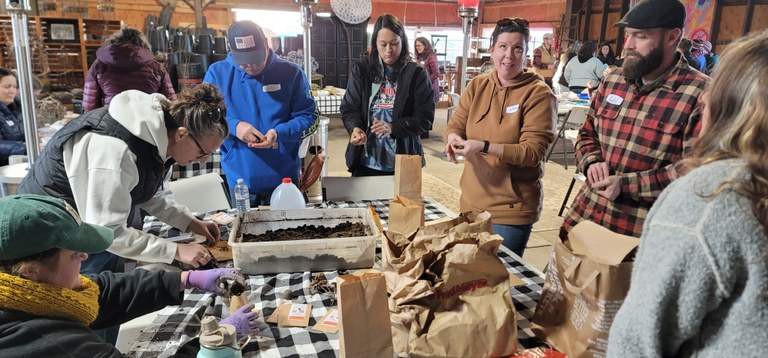
Educators at a seed-ball making activity for the Planting with a Purpose workshop, part of the Take Learning Outside training series. Photo courtesy of Lower Columbia Nature Network.
What brings you joy in your role?
Meeting with folks and hearing a community member say "Cool, I didn't know that was there" or "I didn't know our community had that!" Getting people the information they need so that they and their family and friends can get outside and connect. Spaces where we work to create healing gardens and natural areas and where we can rest and reset are most special for me. Also, I enjoy creating habitat in spaces around our community where people can watch butterflies and birds, as well as harvest food and connect together. Regardless of backgrounds, we can all agree that a good meal shared together in a beautiful setting can build community and stronger relationships.
What advice would you give someone interested in pursuing opportunities to connect people to nature and build community outdoors?
Bring your passion for what you love and inspire you to the table and learn what others are excited about. Do lots of listening, take really good notes, and be willing to be curious and learn. All of the other pieces will come, but a healthy curiosity is a really good thing. As is finding out where the best accessible place to watch a sunrise over a mountain.
WTA is a proud member of Lower Columbia Nature Network, learn more at their website or Instagram and you can connect with Jane’s design work at Nature+Play Design.
Comments