


3 (more) reasons why nature is so important for mental, physical and kids’ health


What do mental health, healthcare costs and youth leadership development have in common? They're all improved by nature! Find out three new things we learned at the Northwest Nature & Health Symposium. By Linnea Atherly.
In recent years, researchers have been working to substantiate what you have likely experienced on a visceral level: That spending time in nature is good for your well-being.
One of WTA’s foundational principles is that time in nature is good for the heart, mind and body. We’ve been tracking new developments in the fascinating world of nature and health for years — from the many benefits of being outside for physical and mental health, to why local trails are essential for mental health, to why nature is so important for kids — and we’re honestly pretty nerdy about keeping up-to-date on the cutting edge research.
That’s why we’re part of the NW Nature and Health Coalition and were delighted to attend the Northwest Nature & Health Symposium hosted by the University of Washington Center for Nature and Health.
Here are three (new) things we learned at the symposium about the connections between nature and your health.
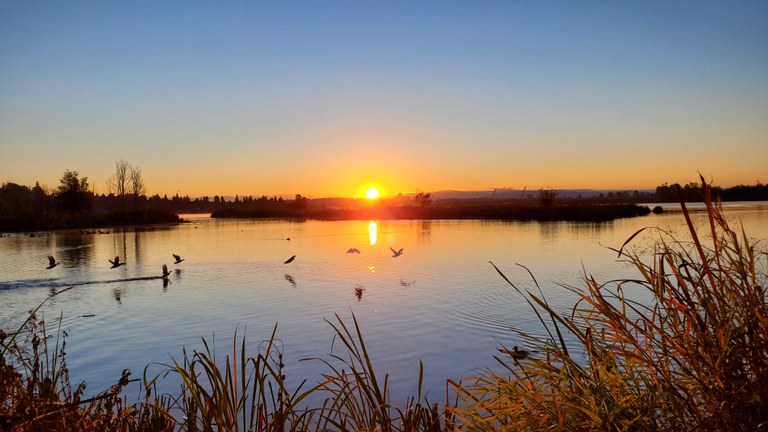
Waterfowl take flight at the Union Bay Natural Area, where participants in the HINTS Lab study test groups walked. Photo by Eric Richmond.
1. When it comes to mental health, where you walk matters.
To find out, presenter Soteria Li and her colleagues at the Human Interaction with Nature and Technological Systems (HINTS) Lab divided students experiencing depression into three test groups: The first group walked an urban route, the second walked through a natural area, and the third took “active” nature walks through the same natural area, following mindfulness prompts to help them appreciate their surroundings. All three groups walked the same length each outing and went out on the same cadence throughout the month.
The researchers found that nature walking reduced depressive symptoms after a 1-month follow-up, but walking through the city did not have the same effect — even with urban greenery present. Additionally, they found that the active nature walks resulted in even stronger, continued benefits.
Their findings reinforce just how important it is for everyone to have access to nature within a 10-minute walk from home — why increasing access to parks is an urgent matter of mental health equity.
→ Science in action: Find a trail near you.
2. Green spaces save everyone in Washington hundreds in healthcare costs each year
We’ve known for a long time that parks reduce healthcare expenditures because of the enormous benefits they bring to people who use them. In 2019, a landmark Recreation and Conservation Office study found that physical activity on trails resulted in $390 million annual health savings in Washington.
Now, the UW Center for Nature and Health is assessing the healthcare savings of spending time in nature — on an individual level. Their initial results indicate that forests and other natural areas provide an average healthcare cost savings of $236.98 per person, per year. Learn more about their approach and findings.
3. Youth programs with outdoor exploration offer significantly greater skill-building than indoor programs
Courtney Aber, National Director of Outdoor Initiatives for the YMCA of Greater Seattle, shared remarkable findings about the power of outdoor experiences to help youth build the skills they need to thrive. “Skills for Thriving,” also known as socio-emotional skills, are important protective factors in building young peoples’ resilience to mental health challenges and help them achieve success on their own terms.
Specifically, including time to explore and reflect outdoors was found to enhance development of skills for thriving by 30% when compared to comparable indoor programs. We see this in action during WTA’s Youth Day Work Parties. To learn more, read the full report, The Nature of the Outdoors: Stronger Youth Development Through Exploration.
→ Science in action: Learn about WTA’s Outdoor Leadership Training program.
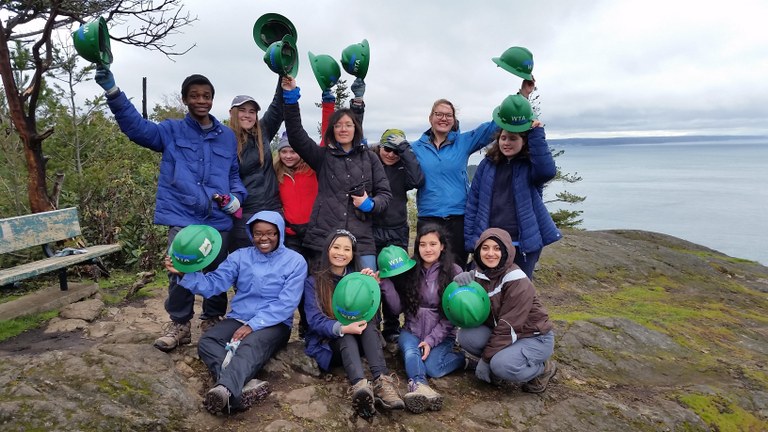
Young people build community, resilience and skills for thriving while exploring and volunteering outdoors. Photo by Barbara B.
All people deserve to have trails nearby so that they can experience the vast health benefits of time in nature — yet not all communities currently have equal access to green spaces. WTA is working to change that. To help build a future with trails for everyone, join WTA as a monthly member today.
Comments