 Washington Trails
Association
Washington Trails
Association
Trails for everyone, forever
Washington Trails
AssociationTrails for everyone, forever
The Pacific Crest Trail is home to some of the finest wilderness areas in the U.S. — and they need your help. By Joseph Gonzalez
The climb from the Waptus River into the subalpine was tough in mid-July 2024. Out of my lunch break, I huffed and puffed, swatting at mosquitoes while ascending 2,500 feet. Near the top, I encountered half a dozen thru-hikers sprawled in the shade.
While I was relatively fresh — I’d begun my 70-mile hike on the Pacific Crest Trail (PCT) from Stevens Pass to Snoqualmie Pass the day before — the southbound thru-hikers, curled up on foam pads with water bottles and Clif bars nestled at their sides, had already hiked over 200 miles. Already, their time in the wilderness had brought an unbothered stillness to them.
I thru-hiked the PCT from Mexico to Canada in 2016, my first “big” hike. And just like the sweat-laden hikers in front of me, I gained a fresh perspective from my experience. I found myself less concerned with the future and more thoughtful about the now. I hiked with travelers from every walk of life, including many I’d never normally rub shoulders with. And above it all, the long walk instilled confidence I carry to this day.
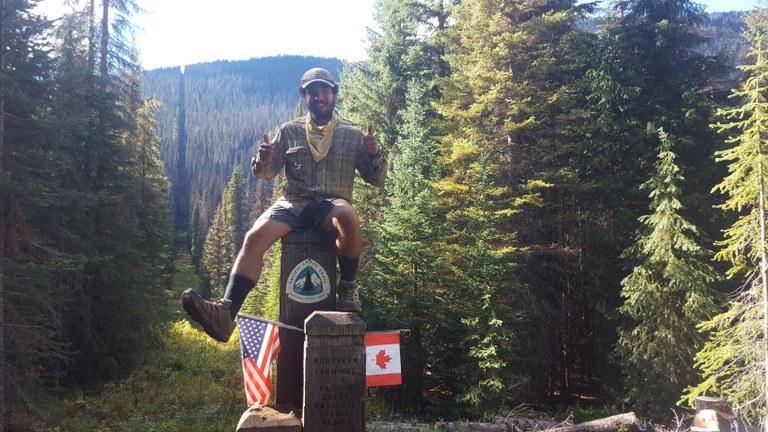 The PCT's Northern Terminus monument has changed in the last 10 years, but memories of the journey remain. Photo by Joseph Gonzalez
The PCT snakes through a whopping 50 wilderness areas from Mexico to Canada, including nine of Washington’s 31 wilderness areas. These protected lands are intended to have minimal human impact, without motorized equipment or roads. Wilderness areas ensure the PCT continues to offer a chance to connect deeply with nature. That experience has been pivotal for me and countless other hikers.
Even WTA’s founder, Louise Marshall, had a fondness for the PCT. She hiked on it with her family and, through the years, filled several roles at the Pacific Crest Trail Association, including executive director.
I share Louise’s fondness for the PCT and am glad that her legacy is honored today in efforts to protect the trail and the wilderness areas that make it so special.
The Alpine Lakes Wilderness is aptly named: Its 414,000 acres are home to more than 700 lakes and ponds. WTA played a role in the creation of the wilderness in 1976. Throughout the ’70s, Signpost (the newsletter that launched WTA) chronicled efforts to protect the area, and readers were encouraged to contact lawmakers in support of the wilderness designation.
It’s an iconic PCT section, known for remote backcountry and spectacular views. It’s also incredibly popular: The wilderness is less than 2 hours from the greater Seattle area and millions of people.
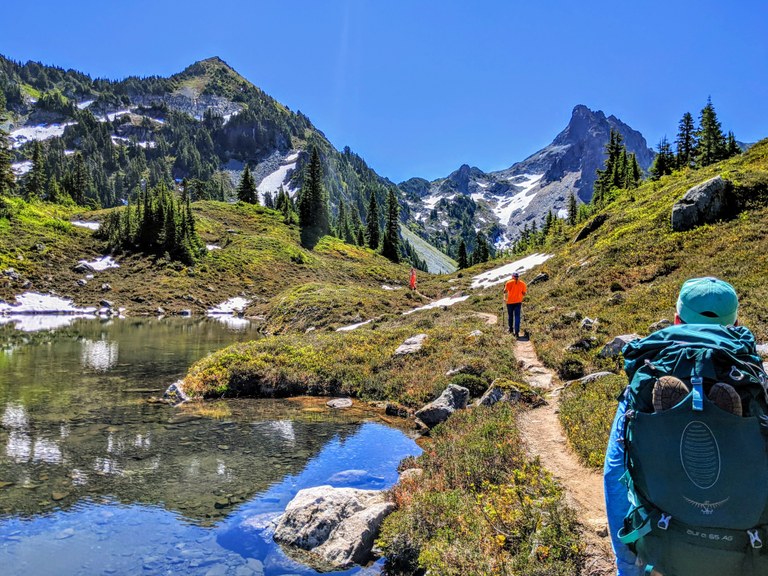
The Alpine Lakes Wilderness holds a special place in the hearts of PCT hikers and those who live nearby. Photo by Alicia Mau
I recall plenty of trail traffic in this area’s more famous sections, like Kendall Katwalk and Spectacle Lake, during my 2016 PCT hike. I had tunnel vision then — just get to Canada safely and quickly (and sleep). But section hiking’s slower pace allows for more observation. And on section hikes in 2020 and 2024, I was sharing the trail more than I expected.
Places like the Alpine Lakes Wilderness offer people the mental and physical benefits of getting outside and they protect important resources, like clean water. The value of this land, and the challenges that it faces, means that it requires robust management and care.
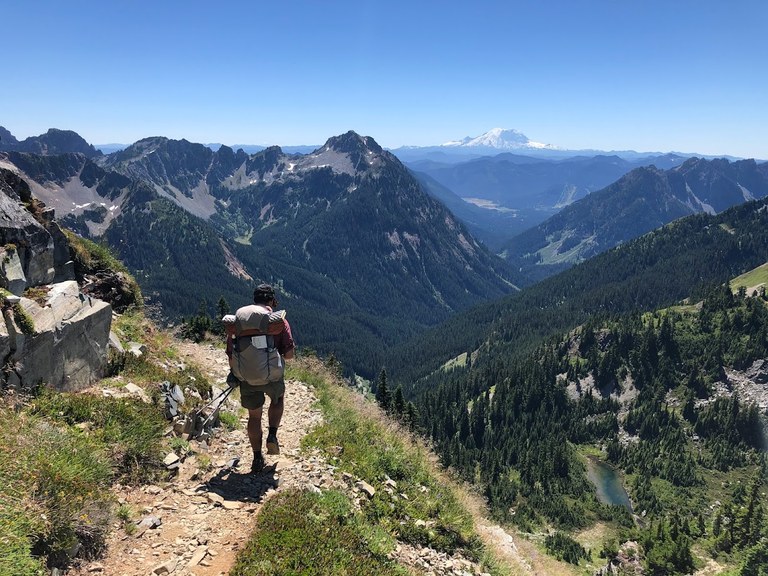
Alpine Lakes Wilderness is the premier summer backpacking destination for many King County-based hikers. Photo by Tynesha Campbell
WTA has spent over 150,000 hours maintaining trails in the Alpine Lakes Wilderness since the beginning our trail maintenance program in 1993. But that’s not enough. For these areas to truly be protected, we need the work of federal land managers. In 2025, the recreation staff of the Enchantments — part of the Alpine Lakes Wilderness — was cut from 11 to one. That left few rangers on the ground to help hikers and encourage good stewardship.
Those reductions are playing out all across federal lands. WTA has been advocating, along with partners and our community, to restore the funding and staffing needed to protect places like this — and we’ll keep doing that work.
If the Alpine Lakes Wilderness is the pop star of Washington’s PCT, the section that passes through the Glacier Peak Wilderness — about 120 miles from Stevens Pass to Rainy Pass — is its alternative-rock older sibling: longer, less understood and more scenic.
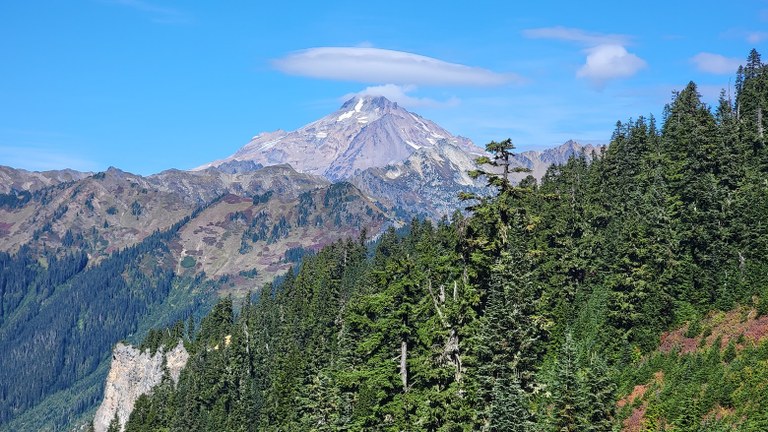
Glacier Peak Wilderness is a major highlight of the PCT in Washington. Photo by Joseph Gonzalez
For thru-hikers, it’s one of the most challenging sections of trail, devoid of convenient resupply opportunities and riddled with blowdowns and brush. For weekenders and day hikers, it’s tough to get to. Most folks access the PCT via feeder trails. If the PCT is I-5, these feeder trails are exits, on-ramps and detours.
I love feeder trails. Each of the last two Septembers, I’ve enjoyed the Glacier Peak Wilderness via the White Pass–Pilot Ridge Loop. The blazing reds and brilliant golds of late summer are heavenly. By mid-September, there are more huckleberries than you could eat in a lifetime. But without feeder trails, this landscape would be inaccessible. That’s what nearly happened on the White River Trail.
Only about a 30-minute drive from Wenatchee, the White River Trail can take hikers 10 miles and 3,000 feet up to the PCT. But first, hikers need to navigate an unmaintained mess. Brush is ideally cut every 5 years; this trail hadn’t been maintained in over 10. So in 2024 and 2025, WTA volunteer trail maintenance crews dedicated trips to brushing the trail out. In 2025, they even received mule support from the Forest Service. (That mule support is vital to backcountry trips but is also at risk due to funding and staffing cuts.)
The White River Trail is just one example. There are feeder trails that access the PCT from Highway 2, but they face similar challenges. The Cady Creek, Little Wenatchee and Indian Creek trails are also all known for sections of thick brush, inspiring WTA crews to spend a 5-day backcountry work party maintaining the latter in 2025.
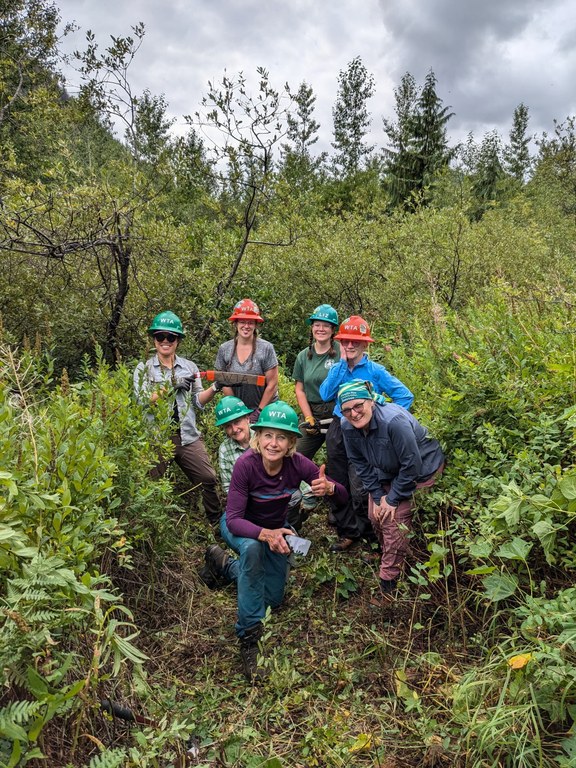
Feeder trails, like the White River Trail, help make the majesty of Glacier Peak Wilderness a little more accessible. Photo by Lisa Black
WTA crews have also helped refurbish the Suiattle River Trail and, before that, worked for years to get the Suiattle River Road reopened following flooding in 2003. (The road was damaged again in 2025 by flooding and landslides, and WTA is working with the federal government to repair it.)
But it takes time and resources to make progress. The budget cuts and layoffs in recent years at the Forest Service are making it harder than ever to perform this work.
Feeder trails aren’t just about access for recreation — they’re also for safety. On my last visit to the Glacier Peak Wilderness, I’d just gotten off the PCT and onto a feeder trail when I met three section hikers in need. One of them had suffered a few injuries, including a twisted ankle, and was hiking slowly. He yearned for reprieve. Hikers help hikers, and I offered them a ride to Darrington so they could find safe travel home.
But without a well-maintained feeder trail — in this case, the North Fork Sauk — these hikers would’ve been forced to hike on while injured, or would have needed evacuation. Ensuring these feeder trails are accessible offers hikers more options to create routes and resupply and can even make it easier for emergency evacuation.
I’m proud of the impression Washington’s PCT section makes on thru-hikers. In 2023, an international thru-hiker friend said the Goat Rocks Wilderness was the most beautiful section of the North American Triple Crown (the PCT, Appalachian Trail and Continental Divide Trail). I didn’t disagree. The Goat Rocks are known for wildflower meadows, glorious glaciated basins and, of course, mountain goats.
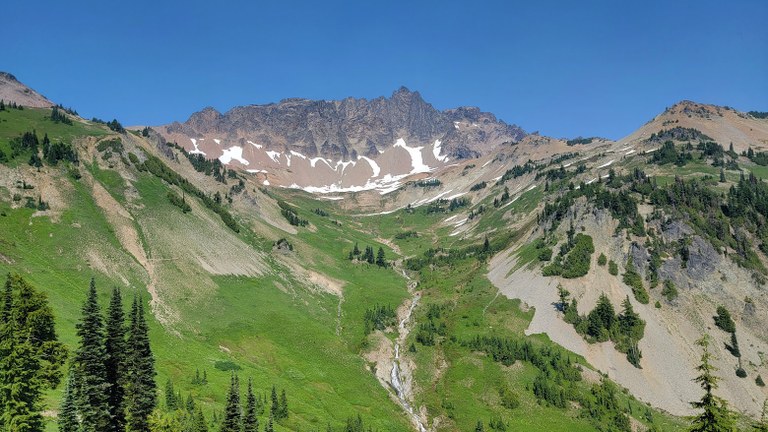
The Goat Rocks Wilderness is a highlight of the North American Triple Crown. Photo by Joseph Gonzalez
Recent visits to this wilderness area in 2023 and 2024 made me recall my first steps in the Goat Rocks back in 2016. I made fond memories there, like being charmed by a herd of goats and hiking my first 40-mile day. And back in 2016, the only trail users I encountered were fellow thru-hikers.
The Goat Rocks Wilderness, in the Gifford Pinchot and Okanogan-Wenatchee national forests, is large. But usage is concentrated on a handful of trails. In recent years, WTA and partners have collected input to inform the new Gifford Pinchot Sustainable Trails Plan, with hopes it will help guide the forest to identify new trails and maintain existing ones in the face of decreased funding. It was an opportunity for WTA and other outdoor user groups to develop a shared vision that serves all trail users.
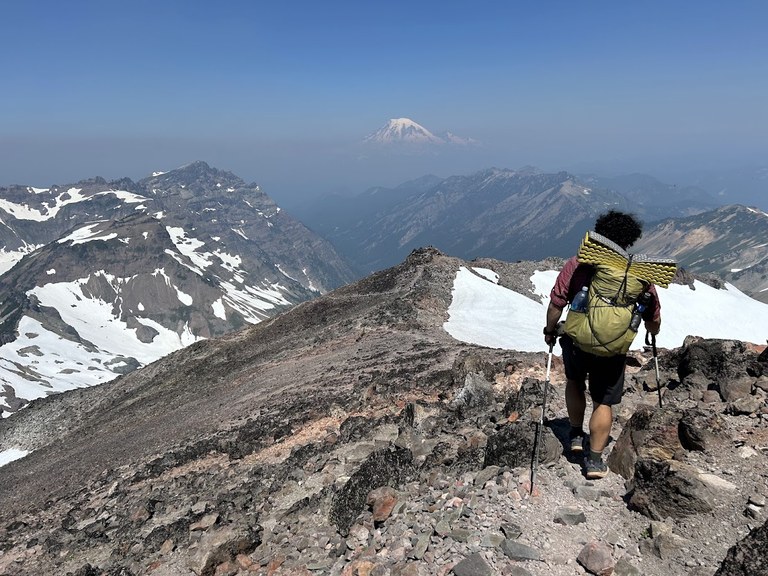
The Goat Rocks Wilderness is highly memorable. Revisiting the area in recent years did not disappoint. Photo by Tynesha Campbell
I’ve climbed into the icy basin of Goat Lake, up the blustery peak of Old Snowy and across the paintbrush-laden fields of Snowgrass Flats. The same is true for thousands of other hikers annually. It’s a reason why WTA has worked diligently in recent years to bring the Angry Mountain Trail — which runs parallel to that PCT loop I hiked twice — back to life to ease the pressure on neighboring routes.
Imagine a future where there’s the funding, care and attention required to develop a trails system that can meet the public’s desire for wilderness while protecting natural resources. That’s what WTA and our partners are working toward.
Ten years ago this May, I set off on a journey from Mexico to Canada that would change me forever. I still reminisce about my fun in the Mojave Desert, the granite slabs of the High Sierra and the delicious lakes of Oregon. But these days, the Washington section feels most like home. It’s one reason I moved to Washington in 2019 and why I’ve section hiked nearly every year since.
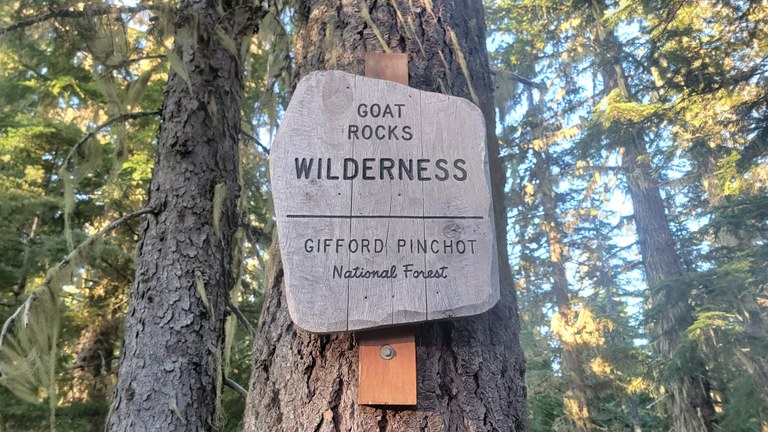
Keep an eye out for wilderness signs like this one on your next hike. Photo by Joseph Gonzalez
I wouldn’t be writing for Washington Trails had I not experienced my life-changing pilgrimage. Wilderness is at the center of these experiences. Now, 10 years later, I’m still daydreaming about thru-hiking the PCT again. But for that to happen for me and others, these areas must be protected.
Please help us defend these wild and iconic places. Consider joining a work party at wta.org/volunteer or signing up for our Trail Action Network at wta.org/tan to learn how to advocate for public lands. With your help, we can keep these places beautiful and protected. Your impact could ripple through the hiking community for years to come!


