


Looking upward: How to stargaze without leaving a trace
What better late-night movie is there than the night sky during a meteor shower, lunar eclipse, aurora or other celestial spectacle? It’s no wonder folks from all over the state seek areas far from light pollution for a quiet dark place to lay down a blanket and watch the show.
But not every wide open space is a good place to set up. It’s important that we treat our public lands with care when recreating, including when we spread out to gaze up at the sky.
The tips below are always best practices whenever you’re hiking — but they're extra important to keep in mind when a big event like a meteor shower or eclipse rolls around and you're among many other outdoor enthusiasts hoping to enjoy the same sky show.
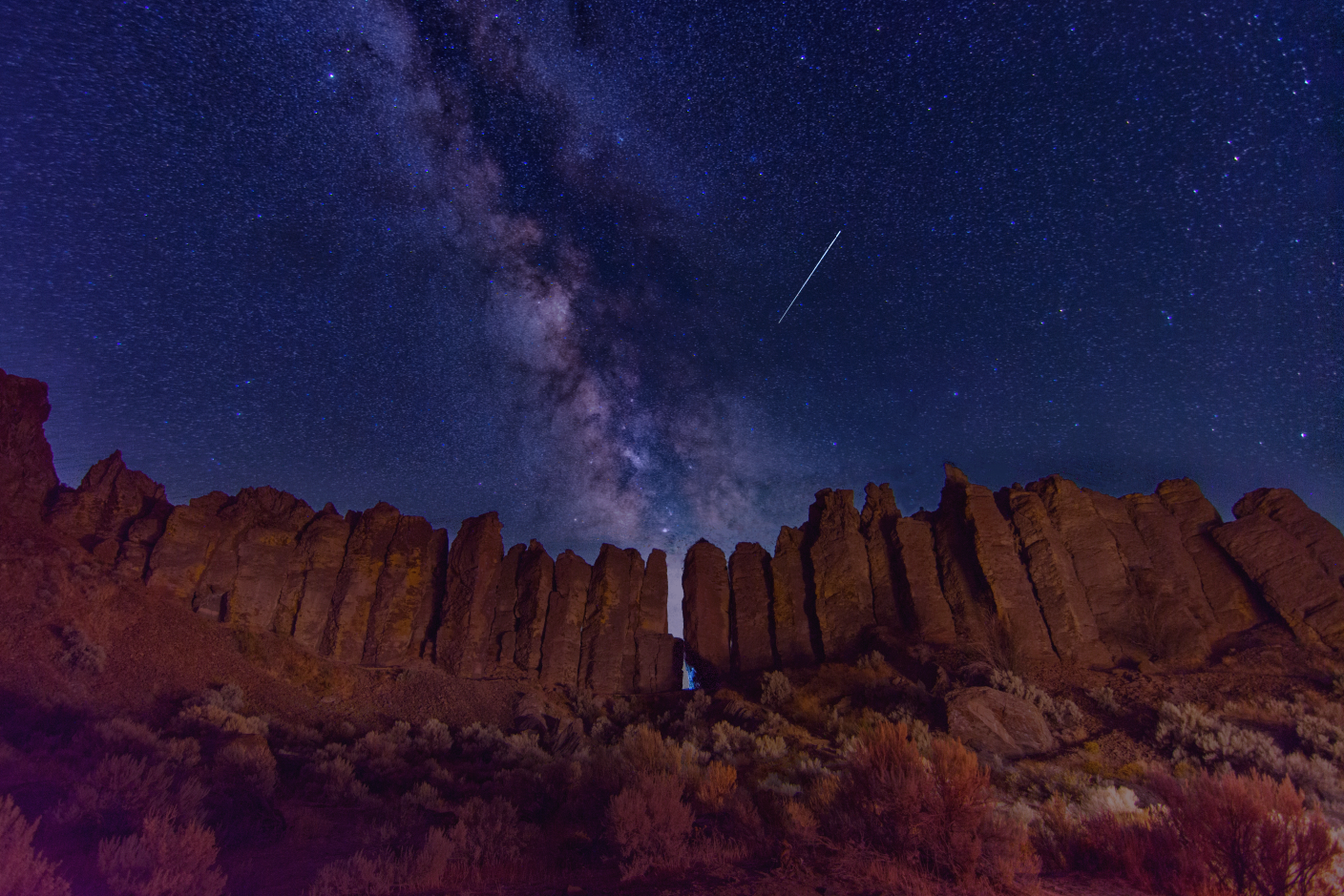
Meteor showers happen multiple times a year — the brightest in the northern hemisphere is the Perseid shower, which peaks in August. Photo by Manit Singh Kalsi.
PARK ONLY IN DESIGNATED SPOTS
It’s exciting for outdoor recreationists everywhere when shooting stars are in the forecast, so always be prepared for the possibility of a full parking lot. Aim to get to your destination early, particularly if your destination might be popular for many other folks, too.
It’s a good idea to have a plan B, plan C and even a plan D for places to watch the stars, in case your plan A is a fully-packed no-go when you get there. And always be mentally (and emotionally!) prepared to pivot to your plan B or C. It is worth the effort to create backup plans you would actually be excited to use!
Refrain from parking along the sides of roads and crushing vegetation in an attempt to squeeze into a packed parking lot. If you find that you'd need to park halfway off a road to snag a space, that’s a sure sign it’s time to start making your way to your backup plan.
STAY ON TRAIL (And Protect Meadows)
When there’s a beautiful meadow just off the trail, it might seem like the perfect spot to lean back and take in the sky. But those meadows can be very delicate — in particular, subalpine meadows are exceedingly fragile, as they only have a small window of time to grow and bloom each year between snowy seasons. Soils in subalpine areas are similarly sensitive to disturbances.
When off-trail travel compacts the delicate ground during the peak hiking season, it becomes harder and harder each year for the plant life to grow back. Just a single night where a large number of hikers trek off-trail, like the night of a meteor shower or day of an eclipse, can significantly (and potentially irreparably) harm a fragile ecosystem.
Trails minimize the impact hikers have on the ecosystem by keeping us on the same, specific grounds, so vegetation and wildlife have the freedom and space away from us that they need to thrive. When we stay on trail, we are helping protect the flora and fauna in the area.

Staying on trail helps protect local vegetation. Photo by Dale Halgen.
LEAVE NO TRACE
Cozying up on a picnic blanket with hot cocoa or a warm cup of tea sounds like a delight, but don’t forget to pack those cocoa packets and tea bags out and leave your space as good as — or even better than — you found it. Always bring a bag so you can pack out your trash and check around you before heading you to make sure you didn’t miss something. For bonus points, pack out trash others may have left behind too!
Trash receptacles might be totally full due to how many people there are at non-peak recreation hours. So, if trash bins are already full, don't leave anything outside of them. Instead, just bring your trash all the way home.
And don’t forget that it can get pretty breezy on clear nights, so it’s also a good idea to have some “paperweights” around — heavy objects like rocks or water bottles to weigh down your picnic blanket or lightweight camp chairs to keep your gear or trash from flying away if you need to stand up for a minute.
You'll likely be sharing your space with at least a few other stargazers if you've found a good place to set up, so be considerate of those around you as well. Pack headlamps, ideally with a red light feature to help maintain the darkness even when you need some light, instead of bright lanterns, and leave the speakers at home. Keep in mind that many folks traveled out of the city specifically to leave the light and noise behind.
WHERE TO GO
It might seem like a no-brainer to many hikers to spend the night outside to watch a star show, but always verify the place you’re heading is a place where overnight stays are permitted. Many good-for-viewing parking lots do not allow overnight parking or camping, so you’ll want to find nearby lodging or viable camping locations so you have a place to sleep once you decide to get some shut-eye.
If you’re hoping to find a place to overnight, consider setting up at an established campsite (at a car campground or on a trail) or dispersed camping along a forest road. Most car campgrounds require reservations or charge a fee for staying the night, so make sure you do some research before packing up the car. You can also use WTA’s Hiking Guide to find trails with established campsites using the trail features filter on the sidebar. And if you’re hiking with littles or furry friends, you can also seek out hikes that are specifically kid- and/or dog-friendly using filters.
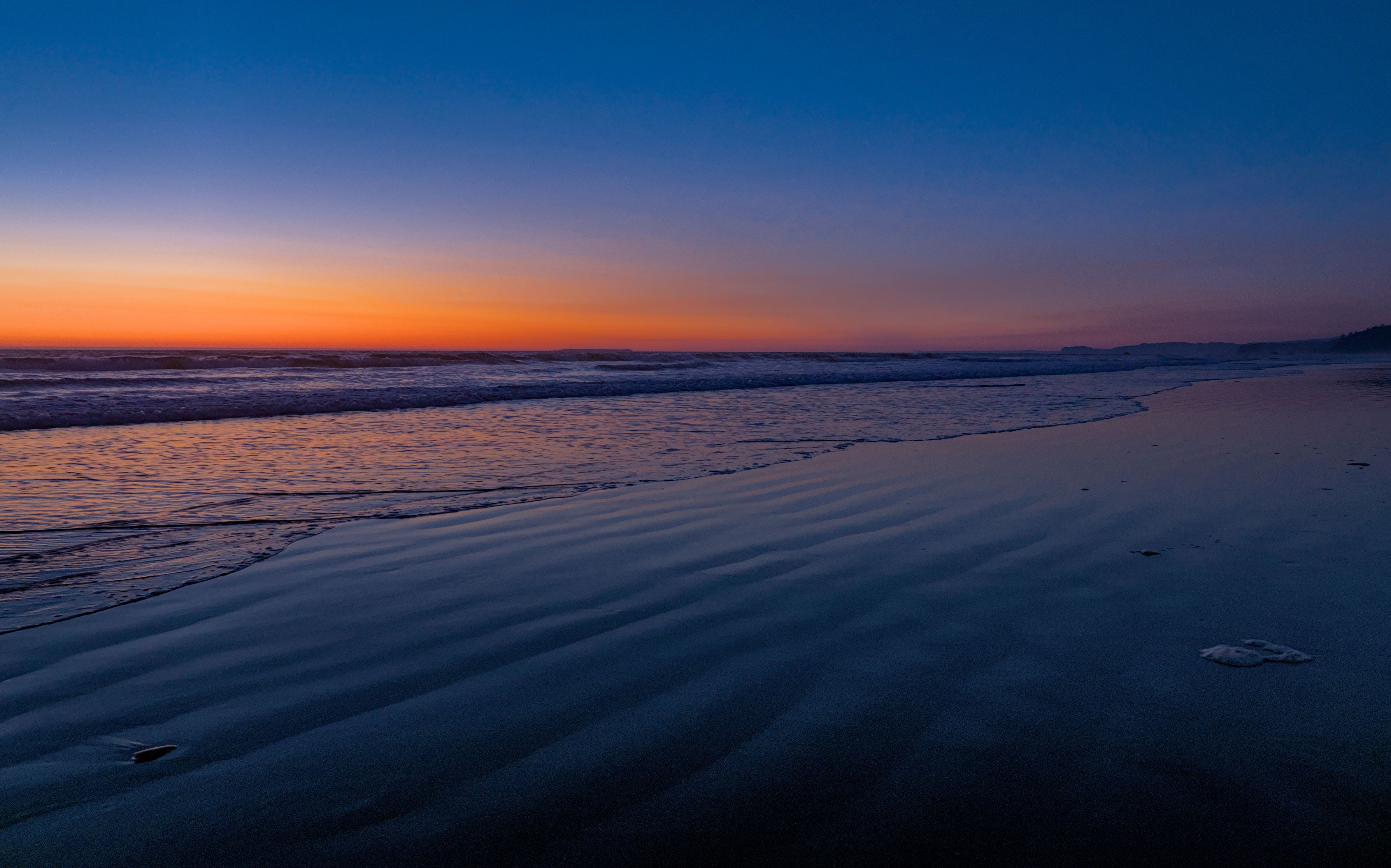
Beaches are a great place to find wide open space. Photo by Jonathan Blinn.
If you’re up for night hiking to a viewpoint without spending the night, that opens up some more on-trail possibilities for great viewing spots. Fire lookouts, tall rocky summits, beaches and large lake clearings are often clear of upward obstructions. WTA’s Hiking Guide can also filter for summits and ridges/passes. Make sure to check that the trailhead parking lot doesn’t close at a certain time so you don’t get stuck behind a gate!
A great way to check if your planned spot is a good one for stargazing is to look at your destination on a satellite map — Google Maps and many topographic map programs like Gaia GPS and Caltopo have those layers — and see if it’s in an area clear of tall shrubbery and trees.
BEFORE YOU GO
Don’t forget to check the weather forecast! Most Pacific Northwesterners know to expect clouds on any given day throughout the year, so it’s not a bad idea to confirm you’ll be able to see the sky from your planned setup and plan to head elsewhere if the forecast is cloudy. You can check the weather by clicking “See weather forecast” under the Before You Go header on any hike in the Hiking Guide.
If it's wildfire season, make sure to look at air quality and where wildfires are. Just as clouds can shroud the stars, so can smoke and haze. During fire season, WTA's Hike Finder Map has an AQI forecast map layer, as well as a wildfire layer, which can help you determine if the place you're heading will have any problematic conditions as a result of any fires.
And be sure to pack warm layers and plenty of water and snacks if you're staying outside for an extended period of time, even if the forecast says it will be warm — nighttime winds and a lack of sun can definitely make it feel chillier than you expect!