 Washington Trails
Association
Washington Trails
Association
Trails for everyone, forever
Washington Trails
AssociationTrails for everyone, forever
Our state is full of gorgeous trails — but if you want to explore farther, here are suggestions for three areas overflowing with trails. By Craig Romano
Washington is one of the most beautiful and geographically diverse states in the nation. And one of the best for hiking. We have thousands of miles of stunning backcountry, urban and rail trails. We have sprawling national, state and local parks and forests, and the largest state-based trail advocacy organization (that would be WTA) in the country!
But we don’t “have it all!” The country is huge and even more geographically diverse — and full of incredible places to hike. You’ll be hard pressed to explore even a tiny fraction of them in a lifetime. But definitely branch out to other parts of our nation (and world) and experience new landscapes.
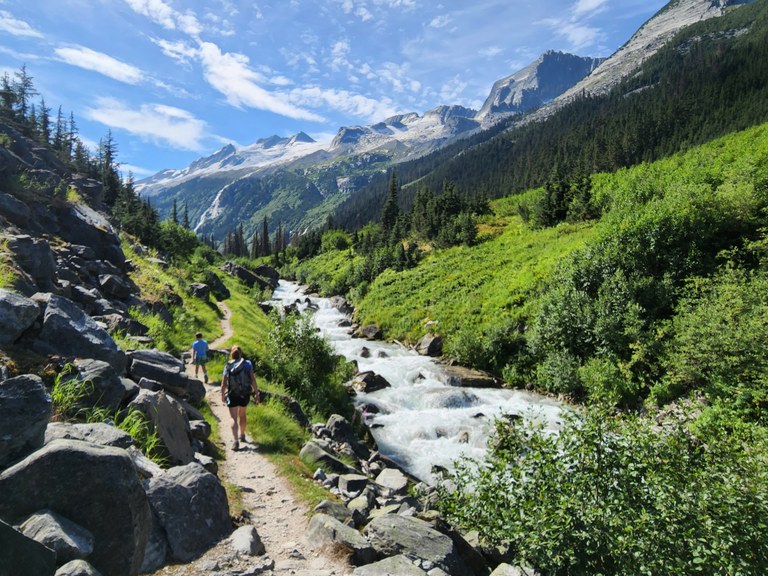
Washington trails are spectacular. But, sometimes it's fun to see somewhere new, like in Glacier National Park. Photo by Craig Romano
I’ve been fortunate to hike in many places throughout the U.S., Canada, South America, Europe and a bit of Asia. And while I’m always busy researching trail guidebooks for Washington state, I frequently travel to hike. New Hampshire, California and British Columbia are three of my favorite places and I hike them yearly. Let me share some of my favorite areas — and hopefully entice you to explore some new and exciting trails.
Despite sharing a border with Washington, Canada’s British Columbia (B.C.) is a vastly (and vast indeed at more than five times larger than Washington) different place. The province features nearly 16,000 miles of rugged coastline, a huge interior plateau and 10 major mountain ranges with more than 30 peaks exceeding 10,000 feet. It’s a chance to see dramatic new scenery without traveling too far.
B.C. has some of the largest undeveloped tracts of land left on the West Coast. Three-quarters of its 5 million residents live on less than 2% of its land mass. Here are some of the areas I love.
Several gorgeous provincial and regional parks are just a short drive or bus ride from downtown Vancouver, allowing you to experience a vibrant, culturally rich city as well as hiking.
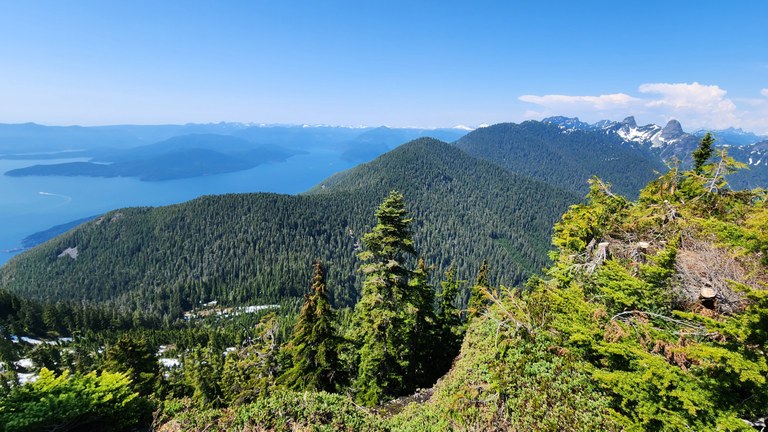
Marvel at British Columbia trails, many within a short trip from Vancouver, such as Howe Crest, showin here. Photo by Craig Romano
Cypress and Mount Seymour Provincial Parks in West and North Vancouver offer scores of miles of backcountry trails through old-growth forest, to subalpine lakes and several summits that offer excellent views of Canada’s third-largest metropolitan area. There are also great views of other North Shore Peaks, the Howe Sound fjord and Mount Baker.
Golden Ears Provincial Park a little farther east contains miles of trails and excellent backcountry adventure, including to the 5,630-foot summit of iconic Golden Ears Mountain. It’s a grueling 15-mile roundtrip with 5,000 feet of vertical and some scrambling across steep rock and snowfields. But the views are breathtaking from this prominent peak that can be seen from throughout the lower mainland and Whatcom County.
Garibaldi Provincial Park is a sprawling area north of Vancouver with some of the most stunning alpine scenery in the Lower Mainland (Southwest BC). The view from Panorama Ridge of Mount Garibaldi — a 8,736-foot volcano — reflecting in turquoise Garibaldi Lake is a North American classic!
I particularly like Glacier National Park (not to be confused with Montana’s park of the same name) near Revelstoke. This small national park in the Columbia Mountains, despite being located along the Trans-Canada Highway, is overlooked by many travelers. The park protects 330,000 acres of formidable and snowy terrain, with peaks over 10,000 feet clad with more than 100 glaciers. There are about 90 miles of trails in the park. You can explore primeval rainforests, silvery cascades, wilderness valleys that are home to grizzly bears and mountain goats and high ridges with jaw-dropping views. And the area doesn’t get busy! I’m heading up there again later this summer.
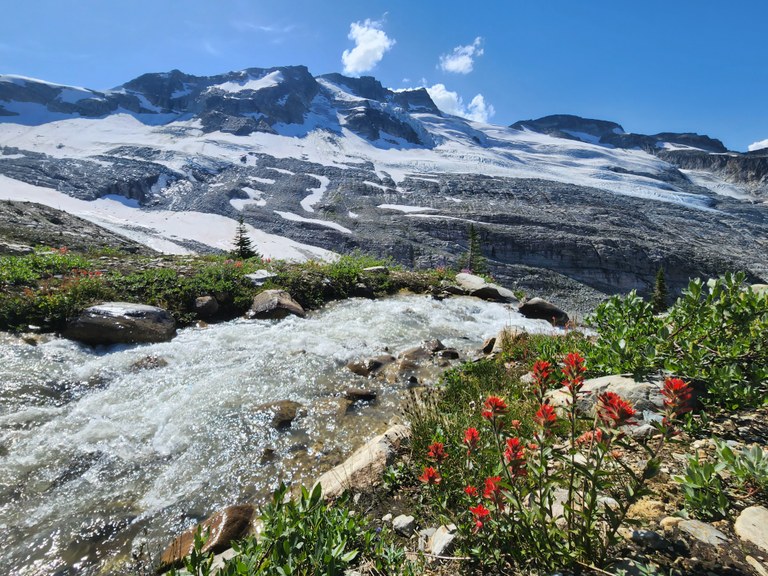
Glacier National Park in British Columbia has all the charm of your favorite Washington destinations. Photo by Craig Romano
I’ve also hiked in B.C.’s famed national and provincial parks in the Rockies: Kootenay, Yoho and Mount Robson. If you can only do one hike in each of them, here’s what I suggest. (Be forewarned, none of these classic hikes are short or easy.)
Kootenay National Park: Hike to Floe Lake for its mesmerizing reflections of ice and rock.
Yoho National Park: Hike Iceline for alpine views and a visit to Takakkaw Falls, the second-highest waterfall in Canada.
Mount Robson Provincial Park: Hike to Berg Lake to marvel at the massive lake at the base of the highest summit in the Canadian Rockies.
My home state of New Hampshire is where I fell in love with all things outdoors. The state is largely rural and forested, home to a sprawling national forest, and hundreds of parks and preserves protecting wild and scenic landscapes. And despite its small size, there are more than 4,000 miles of trails. I return to New Hampshire two to three times a year and am constantly hiking new areas.
I especially like hiking in the Monadnock Highlands in the state’s southwestern corner, an area of rolling hills dotted by quaint villages and towns. The landscape is poetic, soothing and inspiring. It’s a region of profound hiking history, too. Henry David Thoreau tramped these woods and hiked Mount Monadnock four times. It was among his favorite mountains.
The Wapack Trail, the oldest interstate hiking trail in New England, is celebrating its centennial this year. I’ve enjoyed hiking it on many occasions, as did Benton MacKaye 100 years prior. MacKaye, who came up with the idea of the Appalachian Trail, taught at a nearby school and brought his students to the Wapack for trail work. The AT doesn’t traverse this region, but the New England National Scenic Trail does.
Beyond Mount Monadnock, one of the most hiked peaks in the country (I first clambered up it at age 9.) I’ve hiked on many a trail in the region, often encountering no one. And autumn is absolutely stunning when the rolling hills explode in an array of vibrant colors.
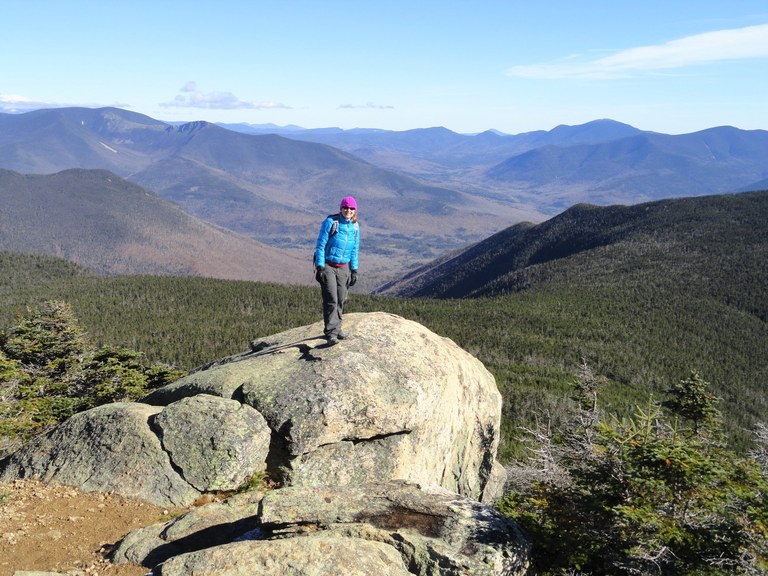
Venture east to explore New England’s largest wilderness area, the Pemigewasset. Photo by Craig Romano
If you want to experience some of the best hiking in the East, head to the White Mountains in central and northern New Hampshire. You will find some of the highest mountains in the Northeast including 6,288-foot Mount Washington, home to some of the worst weather in the country and highest recorded winds (231 mph) in the world. There are 48 peaks exceeding 4,000 feet in the Whites. And while 4,000 to 6,000 feet might not sound too high to a westerner, these mountains are rugged. Switchbacks are non-existent and trails often involve following blazes and scrambling. The Whites are one of the few places in the East with an alpine zone.
Nash Stream Forest and Dixville Notch: In this remote area near the Quebec border, moose and loons are more common than fellow hikers.
The Presidential Range: One of Peter Potterfield’s “25 Classic Hikes in North America,” the Presidential Traverse, which is mostly above tree line, is a must hike. Many hikers sample sections of it. Backpackers can camp or stay in the Appalachian Mountain Club’s alpine huts. On my 60th birthday, I did it in a day. It’s 20 miles, mostly on the Appalachian Trail on rock, talus and snow and over 9 summits, with 8,600 feet of gain. It was one of my most memorable hikes.
Pemigewasset Loop: Referred to as the Pemi loop, this classic hike is often done as a 2- or 3-day trip and traverses New England’s largest wilderness area, the Pemigewasset. It travels 32 miles, with 10,000 feet of elevation gain and eight summits. This summer, I hope to cover the loop in a day.
And finally my third favorite area to hike outside of Washington is California. I head to Cali at least once a year and I have hiked spectacular parks, peaks and preserves there.
I’ve made many trips to California’s Redwood Coast. I love this region. The gargantuan trees mesmerize me. I’ve biked, run and hiked many a trail in the redwoods national and state parks.
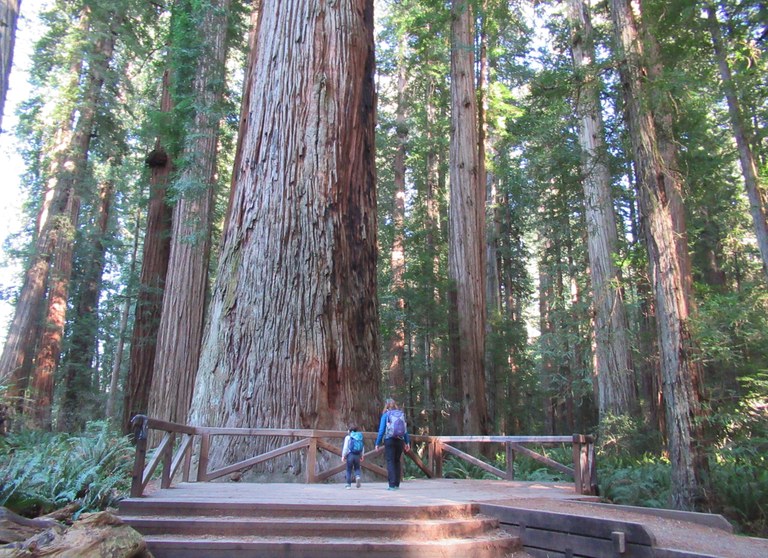
Visit Northern California to walk among giants. Photo by Craig Romano
Humboldt Redwoods State Park: My favorite of all of the redwoods parks is south of the national park complex at Humboldt Redwoods State Park. There are more than 100 miles of trails in the 53,000 acre park. And many are little-visited. I’ve hiked to the top of Grasshopper Mountain, a 14 mile 3,300-foot vertical hike and I saw no one else.
Kings Range National Conservation Area: Not far from Humboldt, Kings Range National Conservation Area is part of the Lost Coast, which rivals our Olympic National Park’s wilderness coast. I’ve hiked to the top of 4,088-foot Kings Peak, the highest mountain right on the Pacific Coast in the Lower 48. An area of incredible biological diversity, you leave the redwoods, madrones, and tanoaks below as you hike above the cloud line and enter an alpine region of chaparral. The views are mind-blowing. I’ve had the whole mountain — except for the summit rattlesnakes — to myself!
I really like Southern California and it’s one of my go-to places during the winter when I need sun and warmth. And even though the region is home to 20 million people, it contains incredible wilderness areas and national parks.
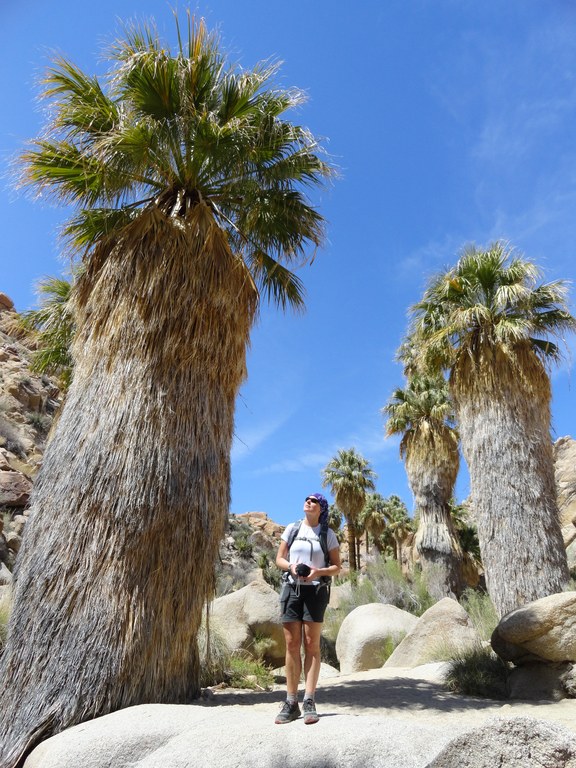
Southern California, including Joshua Tree National Park, is a great visit for Washington hikers — especially in the winter and shoulder seasons. Photo by Craig Romano
Joshua Tree: I’ve hike Joshua Tree National Park several times and while it’s one of the country’s most visited national parks, you can find solitude there too, particularly in the Black Rock Canyon area.
Big peaks: If it’s big mountains you desire, there are two dozen peaks over 10,000 feet in So Cal. I’ve only hiked one, Mount San Jacinto from Idyllwild, for a wonderful 15-mile roundtrip with 4,100 feet of elevation gain. The views of the Salton Sea, 11,000 feet below to the Los Angeles Basin, are jaw dropping.
Santa Rosa Plateau Ecological Preserve: If you want to experience Southern California with a feeling of what it was once like, check out the Santa Rosa Plateau Ecological Preserve in Riverside County. Among its 9,000 acres are native grasslands, old-growth live oaks and sycamores and 49 endangered, threatened or rare species.
San Diego County Parks: I’ve hiked Palomar Mountain State Park with its impressive old-growth incense cedars, and Rancho Cuyamaca State Park with its oak forests, grasslands and Tecate cypresses. The park has more than 100 miles of trails. I will be there again this October running many of them as I attempt my first 100K run!
Ready to broaden your hiking horizons? You’ll need some detailed information like you’re used to getting from Washington Trails Association’s website and my guidebooks. Below are some of the trusted sources I refer to for some of my favorite areas.


