 Washington Trails
Association
Washington Trails
Association
Trails for everyone, forever
Washington Trails
AssociationTrails for everyone, forever
Hiking isn't fun or beneficial when you face discrimination on trail. Here's how one researcher is shaping a more welcoming outdoors for BIPOC recreators. By Linnea Atherly
Growing up, Dr. Ian Munanura loved spending time outdoors. In the forest, he found peace, fun and revitalization.
“The forest has always been a place for me to rejuvenate, to renew myself,” he said.
As a researcher, Ian spent 15 years working and recreating in tropical forests throughout sub-Saharan Africa. When he arrived in the U.S. he was eager to explore forests in his new home, but his carefree experiences outside were short-lived.
“I realized shortly after (I arrived) that (the outdoors here are) not safe for me because of how I may be perceived. I started learning about how people like me may be perceived as a risk or threat,” Ian said.
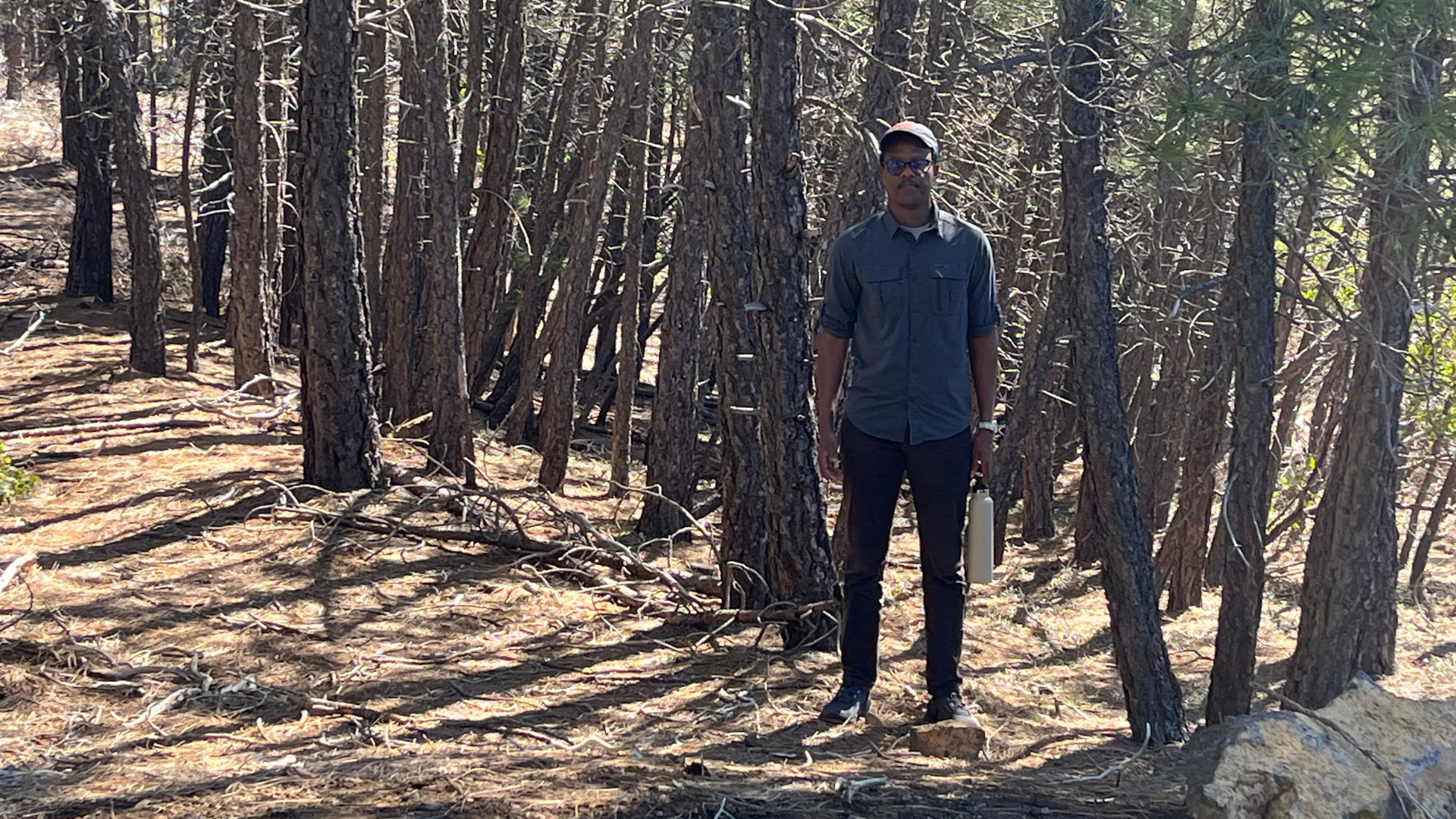 Ian spending time on trail.
The more Ian learned about the pervasiveness of racism in American culture, the less safe he felt recreating alone. He hiked less and only felt comfortable camping if he was with a White friend.
Now, as an associate professor at Oregon State University in the department of forest ecosystems and society at the College of Forestry, Ian is studying this very phenomenon. He’s working to document how fear of threats in forests creates barriers to recreation — and therefore barriers to the myriad health benefits of time outdoors.
According to Ian, more than 39% of the U.S. population are people of color — yet Black, Indigenous, Latino and Asian people combined account for only 5% of the population that recreates in public forests.
This means that there is also a gap in access to the health benefits of outdoor recreation, benefits which are broadly supported by scientific evidence. According to a study by the Washington Recreation and Conservation Office, physical activity outdoors is associated with a reduced risk of chronic illnesses like heart disease, hypertension and diabetes. Broad evidence indicates that time in nature helps ease anxiety and improve mental health.
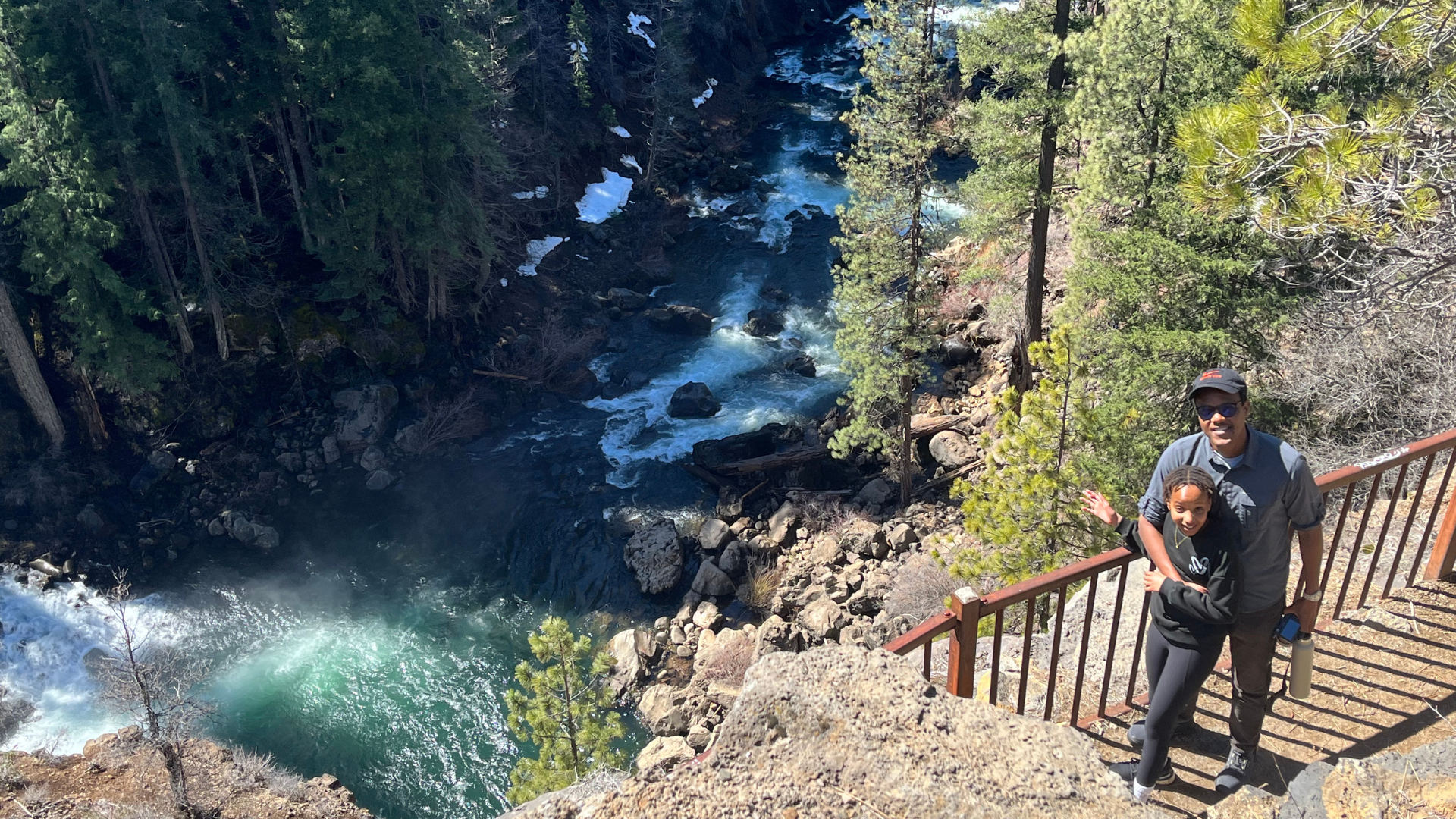
Ian and his daughter visit a waterfall at Shasta-Trinity National Forest.
When, as a result of structural racism embedded in the American health system and other systems, Black, Indigenous, and people of color (BIPOC) populations are disproportionately affected by chronic illnesses and mental health challenges, it is especially important that these groups have access to the many benefits of nature.
“This is a problem that is affecting a huge number of the U.S. population,” Ian said.
Over the past three decades, researchers have worked to establish the root causes of the underrepresentation of BIPOC individuals in outdoor recreation. Most research has explored individual barriers, like fear of animals, and structural barriers, like the cost of passes, but didn’t address racism head-on. Ian’s research, on the other hand, seeks to document how stress and fear related to racial discrimination prevent BIPOC individuals from recreating at a disproportionate rate. He’s surveying folks from diverse racial backgrounds in Oregon and Washington to understand what factors (if any) prevent them from going outside. He’s also exploring which factors increase respondents’ ability to withstand or overcome those stressors and recreate anyway.
Whether or not someone has previously experienced a racist interaction on public lands, Ian says that racism is so prevalent in American culture, media and policy that many BIPOC folks choose not to engage in outdoor recreation based on the potential for threat. Infamous evidence of discrimination — such as the 2020 video of White dog walker Amy Cooper calling the police with false accusations of Black birder Christian Cooper in Central Park — erodes the perception of safety outside.
Additionally, to reach many public lands, visitors must drive through predominantly White suburban and/or rural areas that may not feel safe — especially with the knowledge of hate crimes like the 2020 murder of Ahmaud Arbery, a Black man who was pursued and murdered by three White men while jogging.
Unfortunately, Washington is not immune to racism in the outdoors. At WTA, we hear from our community and read in trip reports about interactions that left hikers feeling threatened or unwelcome.
In a 2021 article for WTA, South King County-based hiker and facilitator KJ Williams shares candidly about her own sense of safety on trail.
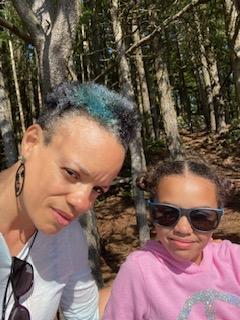
KJ Williams and her daughter enjoy the sunshine on the Oyster Dome trail.
“As a Black, queer woman who hikes, I am always concerned about who I might run into on trail … What is my number one fear? Not animals or insects but WHITE PEOPLE! I am constantly on guard. I don’t allow our 10-year-old to scamper ahead for fear of what might be done or said to her before I catch up. It is nerve wrecking..."
Unfortunately, KJ’s concerns were affirmed by an interaction on her first camping trip, where a White woman nearly hit KJ and her group with her car and would not apologize or engage with them after they called attention to her dangerous behavior.
In another example, a hiker of color (who preferred to remain anonymous) wrote in a WTA trip report about a discriminatory encounter on a popular trail. The trip reporter asked a White hiker to leash her dog, but she refused. The hiker with the dog asked, “Where are you from that makes you think you can ask me to leash my dog?” This language was harmful because it implied that the trip reporter did not belong — which is unacceptable anywhere, let alone on public lands we all share.
No single government agency, organization or hiker can address racism in the outdoors alone. But there are things all three can do to make public lands safer.
By identifying factors that contribute to — or detract from — BIPOC hikers’ sense of safety, Ian intends to provide land managers with evidence-based recommendations to create more inclusive spaces.
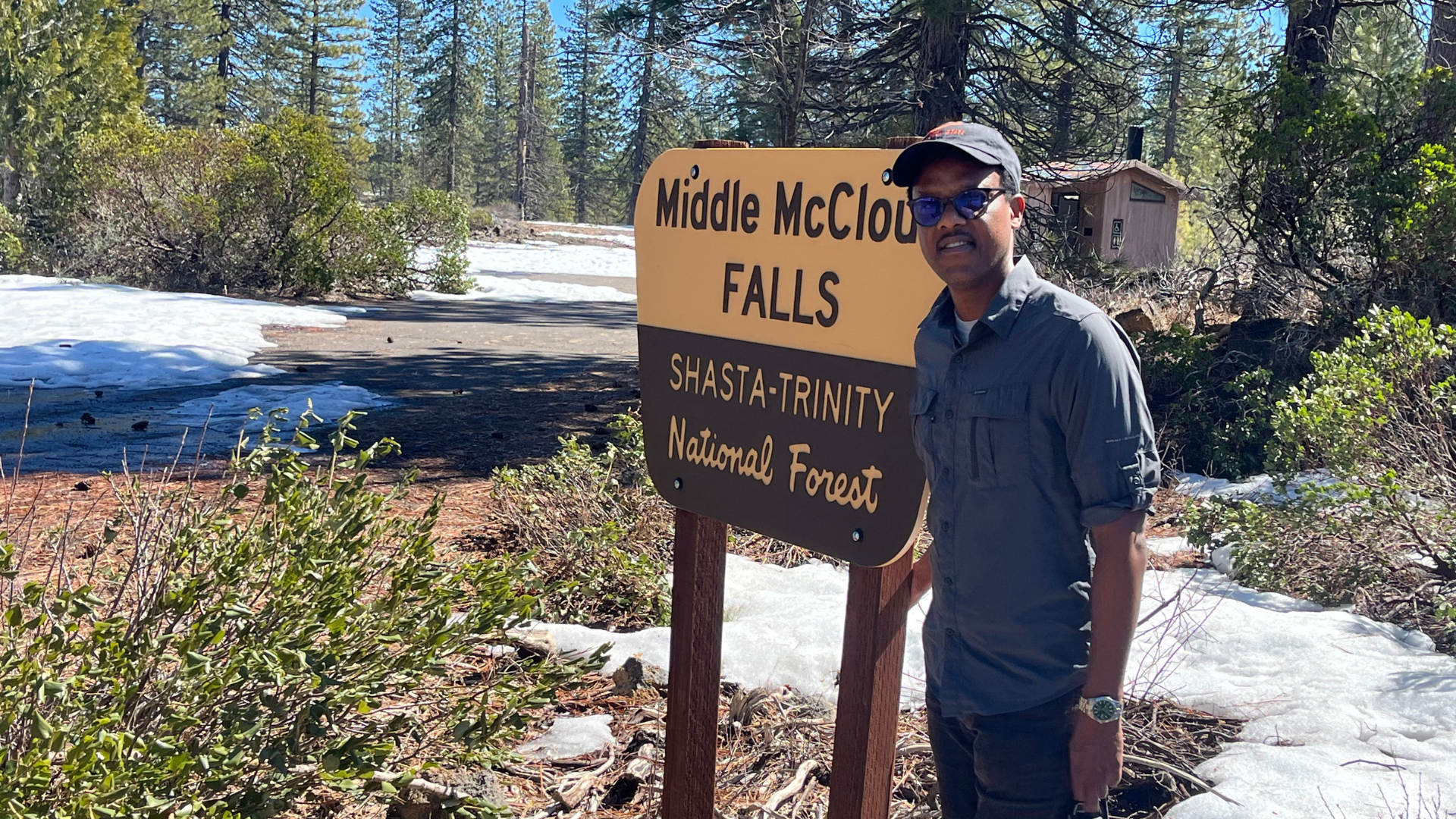
Ian at the trailhead in Shasta-Trinity National Forest.
“I hope my work helps to point recreation managers to potential solutions that get as many forest-fearful people into forests (as possible),” Ian said.
Here are a few of Ian’s recommendations:
Of course, land managers can only make strides toward inclusion when they have the funding, staff and support to do so, Ian says. Due to recent cuts and the prohibition of diversity, equity and inclusion initiatives, federal land managers are severely limited in their ability to do this work.
That means it’s especially important for individuals and nonprofits to do everything in our power to build a more inclusive outdoors. One way hikers can help other hikers feel safer in the outdoors is by intentionally being welcoming.
“If you meet, you smile! That’s welcoming for me. If you meet, you converse. For example, ‘Did you pass by this trail?’ ‘I just saw a beautiful bird.’ Such conversations reduce bias and help me feel included … like someone recognizes my presence in this space,” Ian said.
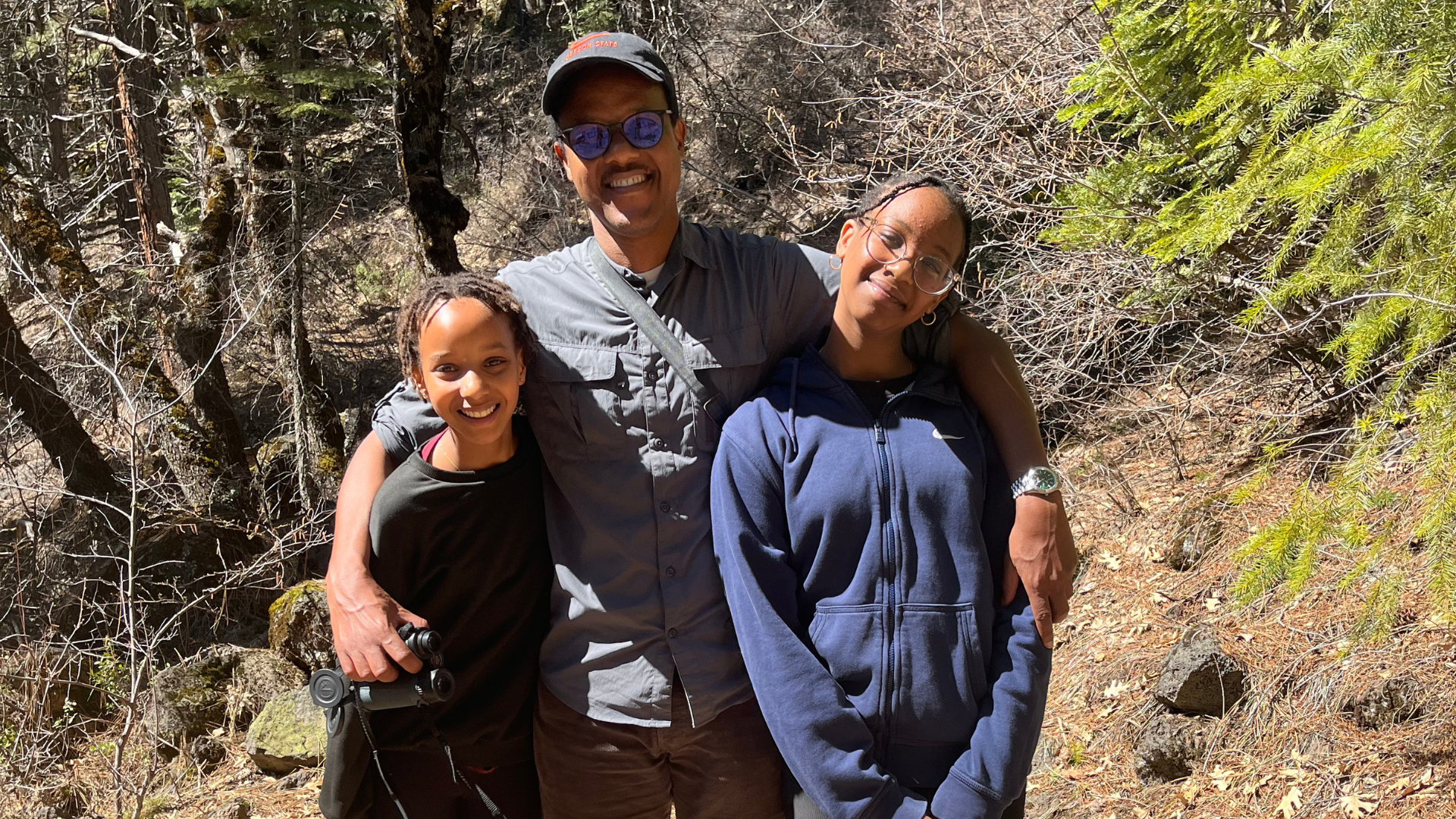 Ian and his daughters enjoying a beautiful day on trail.
Beyond contributing to a welcoming atmosphere, hikers can prepare in advance to take action when we observe bias, discriminatory language or unsafe behavior on trail, KJ says.
“Access to outdoor space and the freedom and safety to navigate those spaces without fear of harm is the responsibility of all of us — but we are not all treated equally … For those individuals who claim allyship with people of color, we are calling on you to be disrupters focused on changing whatever space you occupy,” KJ said.
At WTA, we believe that outdoor recreation — and its health benefits — are rights to which all people should have access. We hope you’ll join us in building a reality in which trails are safe and welcoming for everyone.


