


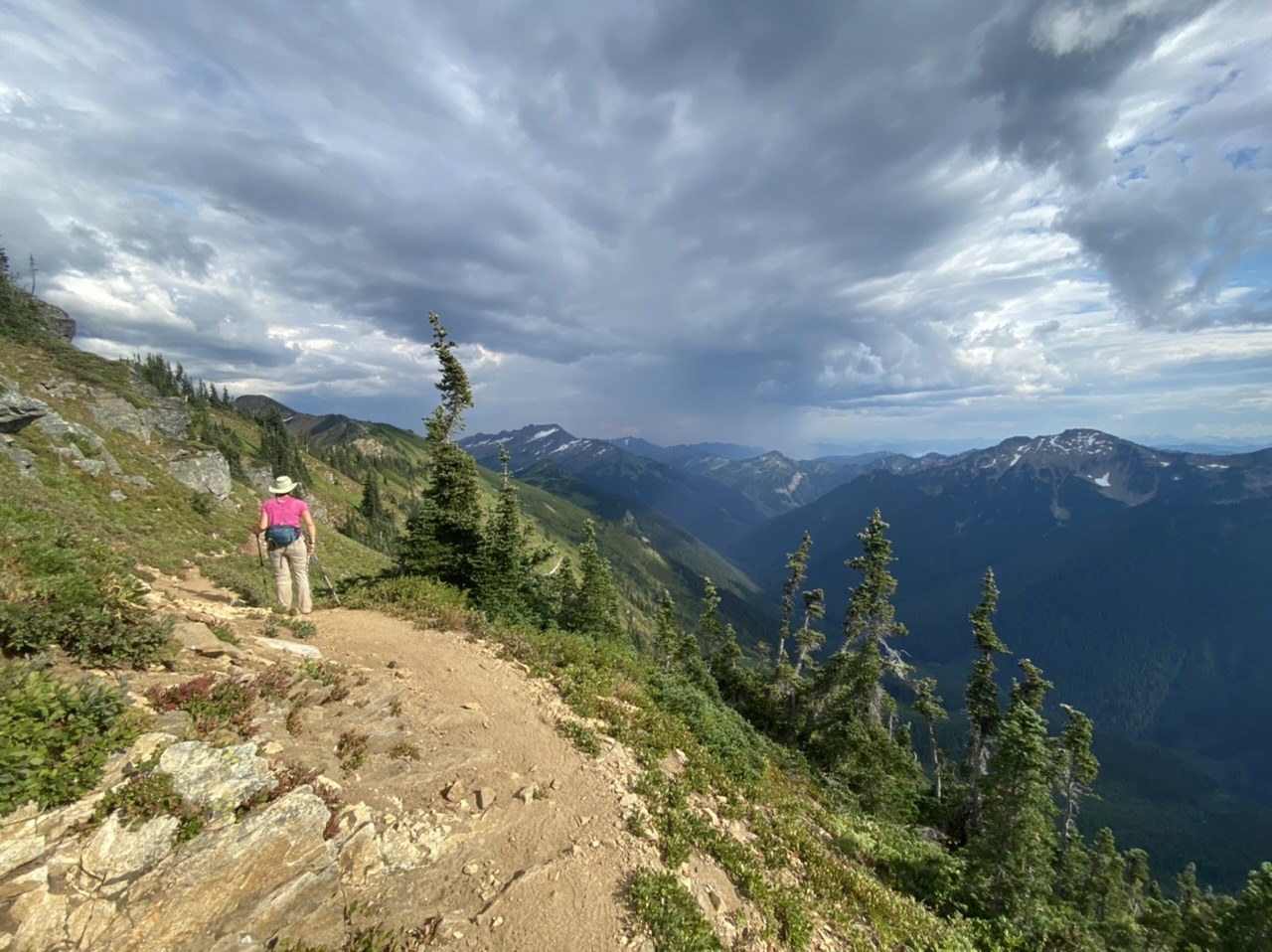
Today was a good reminder to do our research before going on a hike. Our goal had been to get to Miner’s Ridge and Image Lake, accessing those through the Suiattle River Trail. Though our destinations were open the Suiattle River trail was not. Once we got over the wasted drive and our disappointment, we came up with a good plan B.
The North Fork of the Sauk River provided us with great access towards White Pass and the Glacier Peak area. Getting a late start, we decided to camp at the Makinaw Shelter, five-and-one-half miles from the trailhead. The shelter itself has long ago collapsed but the camping is good and access to water easy. The North Fork Sauk trail is a real thoroughfare (thank you WTA). Several miles of this trail miraculously escaped the buzz-saws of the twentieth century. Massive trees spoke to us of eons gone by.
Getting up early on day two we packed and departed early. The upper slopes of the ascent to White Pass are fully exposed to the sun so we wanted to beat the heat. Once again, a well graded trail made for quick work. Traverses of cliffy areas have been greatly improved lately. Wildflowers and screeching marmots were our constant friends. After 3000’ of gain the PCT is reached. Turning southward we were soon at White Pass. A short drop onto a broad bench led us to numerous tent site options. Water is not to be found near the tents so be sure to collect from one of several creeks along the PCT just north of White Pass.
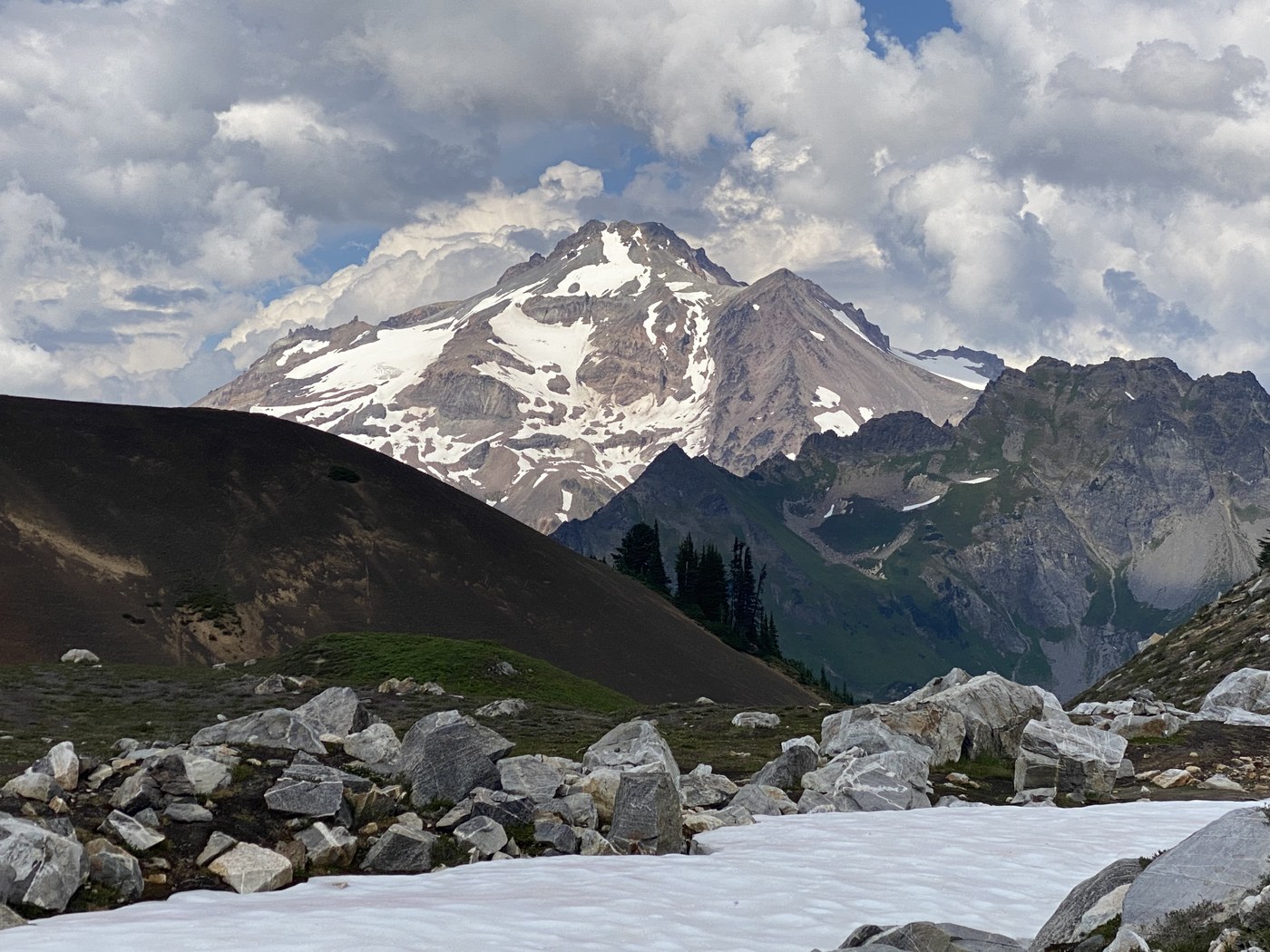
After making camp and a brief lunch we headed out to explore with just light day packs. The Foam Creek trail is popularly used by those climbing Glacier Peak. This well graded trail ambles a bit less than two miles, traversing moss and flower studded drainages. Several short snow gullies needed to be crossed that might be difficult for some. We eventually turned around at a high point with dramatic Glacier Peak views. Returning to White Pass we head north on the PCT, chatting with through hikers on their way to Canada. Most are pretty honed by this point, one telling us that the remaining 150 miles would take him five days to complete. It seems almost a shame to blow through such beautiful country, laden with berries as it is, at such a clip. It is their trip though and I imagine at some point you just want to get it done.
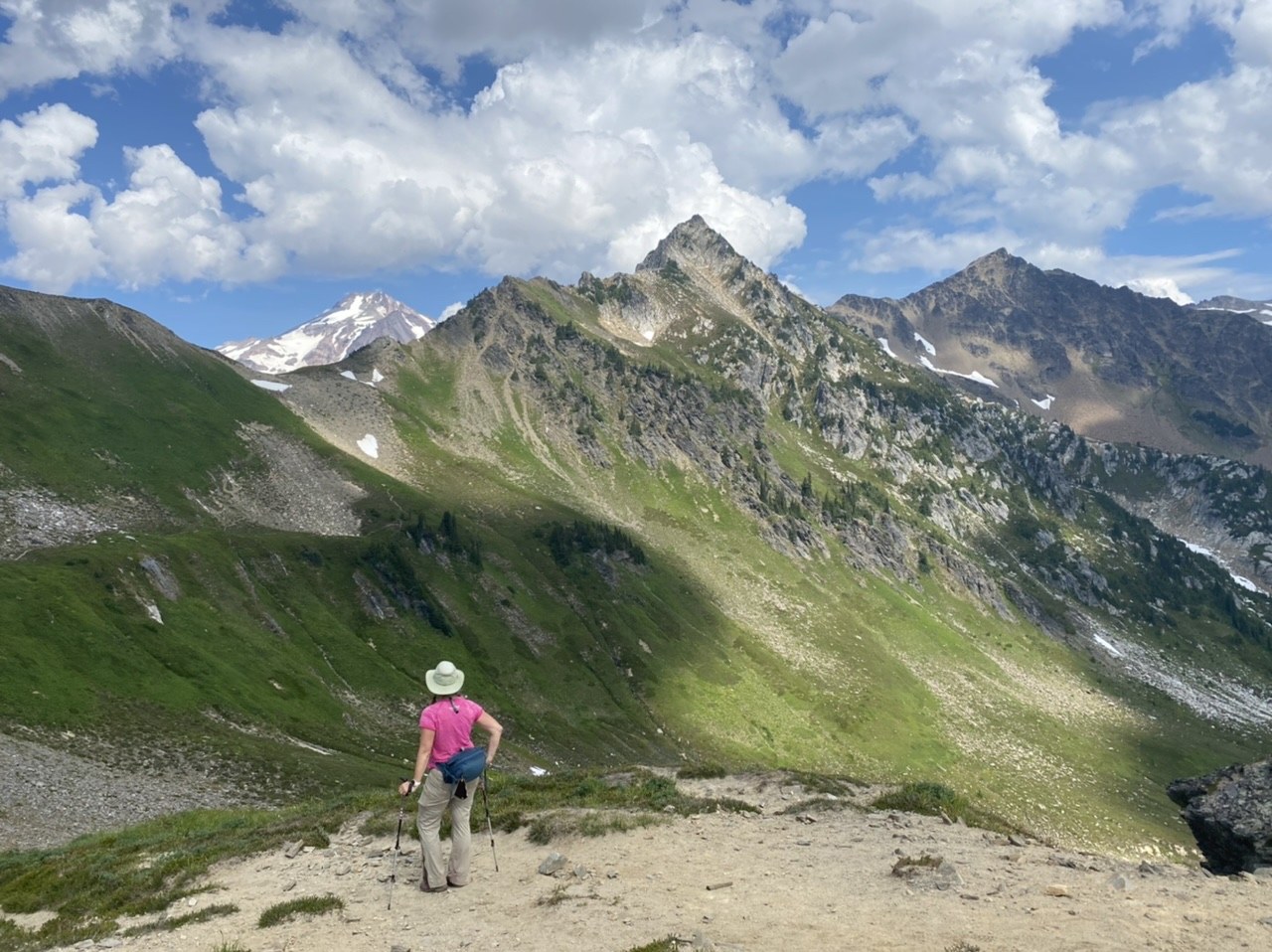
We ate berries, and then ate more berries. We watched black bears a thousand feet below us snarfing up berries on the hillside. Cute marmots scarcely paid us any mind as they fattened up on the same berries. Our trial climbed to Red Pass. Narrow and rocky, with late afternoon winds picking up, we didn’t stay long. Below us the headwaters of the White Chuck River formed in an alpine basin, rustic, and desolate, with the primordial feel of a lost Alaskan drainage. I kept expecting caribou to descend off a high pass or to see an ambling grizzly digging for ground squirrels. None of that happened but we were not disappointed. Impressive glaciers like the Honeycomb and the Suiattle, pouring off Tenpeak Mountain, made me yearn for more days to tromp through this country.
Our turn around for this day was White Chuck Cinder Cone. An almost improbable mass of cinders, seemingly dumped from a wheelbarrow of godly proportions. Spare of any vegetation, but with first-class views of Glacier Peak. Some small, unnamed ponds live at it’s base, seemingly almost unsure of why they are there.
Late afternoon in this country can bring thunderstorms. High, dark clouds built, and bolts of lightening could be seen to the south. As we hustled southward to our camp a rush of afternoon through hikers scurried to get away from the ridgeline. No real rain ever happened, though we cleared camp at least once. Hiking out the following morning was a leisurely affair. Three thousand feet of descent passed quickly with the purple stained hands of the guilty.
Comments