


Type of Hike
Overnight


Hiked in to see the old-growth larches and firs that the proposed larger dam will inundate.
I saw for myself how the dam would wipe out fertile meadow/wetland shores as well, kick an elk herd out of its bedding grounds, and kill this fine old trail leading into the William O. Douglas Wilderness.
Because of the chance of thunder storms I decided to limit this trip to a short overnighter. We were able to park at the trailhead with no problem. After only 2.5 miles in my dog and I camped en route after Boulder creek. Mosquitoes were a non-issue. On Friday morning we continued up the trail to just past a lava field at about 5.5 miles up. Lightening storm clouds were gathering, so we turned around there and hiked out.
Lots of wildlife: elk (bugling at night; we also saw a large young elk), coyote scat, bear scat, lots of dragonflies, fish jumping in the lake, 2 different kinds of frogs in creeks and on the lake shore, bats (6 or 7, at dusk, along the lake shore), what I think were water ouzels, native bumblebees (white rump), pileated woodpecker, wrens, hummingbirds, jays, barred owls whooping late at night, douglas squirrels, geese, ravens, and a pretty blue crustacean shell on the lake shore. Oh, and a lizard.
At about 3 miles, the trail travels through a beautiful lowland old growth forest in the potential dam flood zone. I'd never seen old-growth larches, but there were many. Both mountain and western hemlock, Alaska yellow cedar, doug firs, noble firs, spruces. Vanilla leaf, wild strawberries and other flowers line sections of the trail (by now, many have bloomed, but Cooley's hedge nettle was still going). There are some huge old douglas firs--the kind that have their own mini-trails leading to them.
The trail climbs to meet the Swamp lake and then the Fish Lake Way trail coming up from their fords of the Bumping River. The trail does get sandy/dusty from horse traffic, but in general is easy to hike. Big trees continue off and on, with the same diversity. Mosquitoes and bugs became a little more noticeable.
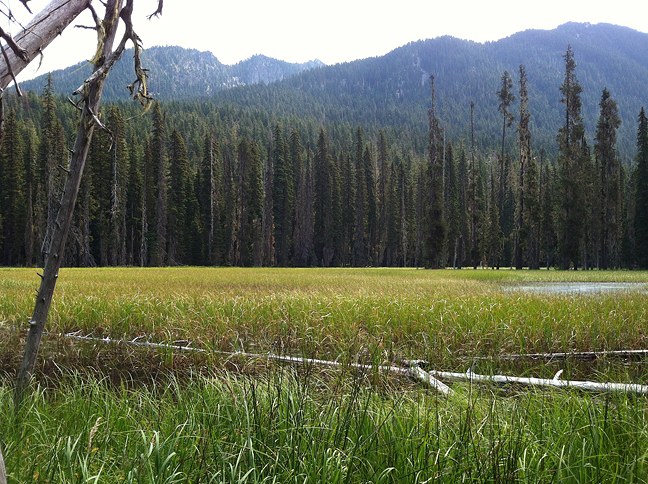
5 miles in the trail passes large, natural wet meadows--elk habitat. Bumping Lake itself has some big wetlands as well--it's not just a reservoir with late-season mud and stumps. In his writings, Douglas mentions that before the dam's construction in 1910 the valley contained a smaller Bumping lake. I'll bet some of the valley was a broad wet meadow just like the ones further up the trail, which also have lakes in them.
The grasses and wetland ecology survived along the shallows and are able to take the annual inundations. If you walk out near the shore of Bumping Lake (arriving via this trail), thousands (millions?) of tiny yellow wildflowers are blooming now in the leafy muck amidst lush wetland grasses. Rotting stumps contain birds nests and insects. Aster, goldenrod and other wildflowers appear near dry land margins. A larger dam would move the water level way up slope into forest and talus, and these big, gentle wetland shores would disappear.
In all, this was another great exploration of an awesome place that I hope survives. We'll be returning; I definitely want to check out this forest in the fall when the huge western larches are gold.


Comments