


Trip Report
North Fork Sauk River, Pacific Crest Trail (PCT) Section K - Stevens Pass to Rainy Pass — Thursday, Jul. 4, 2013
 North Cascades > Mountain Loop Highway
Type of Hike
Multi-night backpackSnow
Snowfields to cross - could be difficult
We started off at the North Fork Sauk River trailhead at about 10 in the morning the parking lot was jam packed with holiday weekend climbing parties and backpackers. After finding a spot we threw on our packs and began the the hike towards Mackinaw Shelter first stop of the long trek to Glacier Peak. There was a stream crossing within the first mile that presented a minor challenge but once past the stream the tread was easily followed. Dense old growth forest of cedar and Doug firs made the first 5 miles a pleasant jaunt. The first portion of the trail presents one of the finest examples of cascade old growth I have had the pleasure of rambling through. There were a few mosquitoes in the area but not the hordes I had expected.
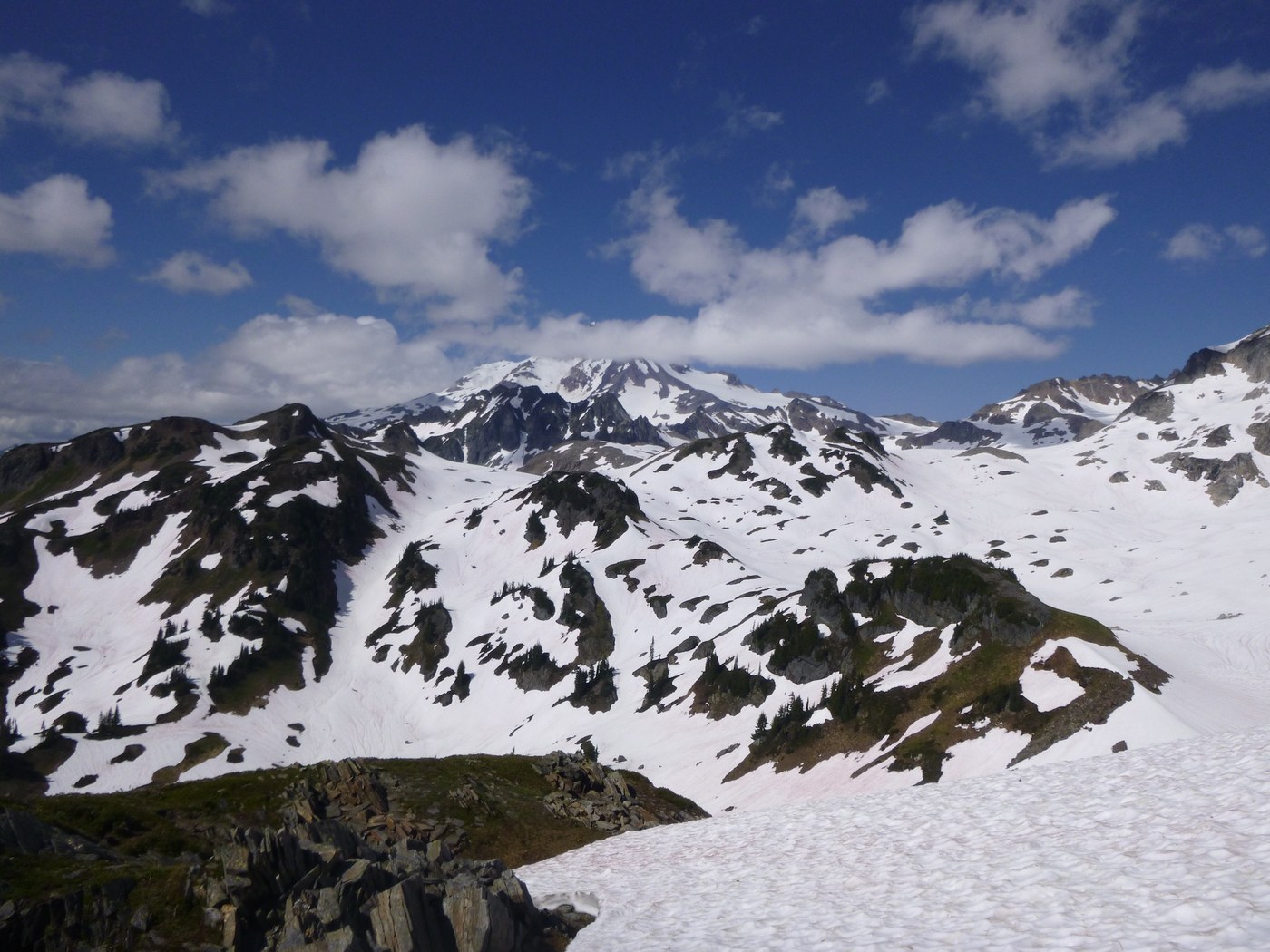
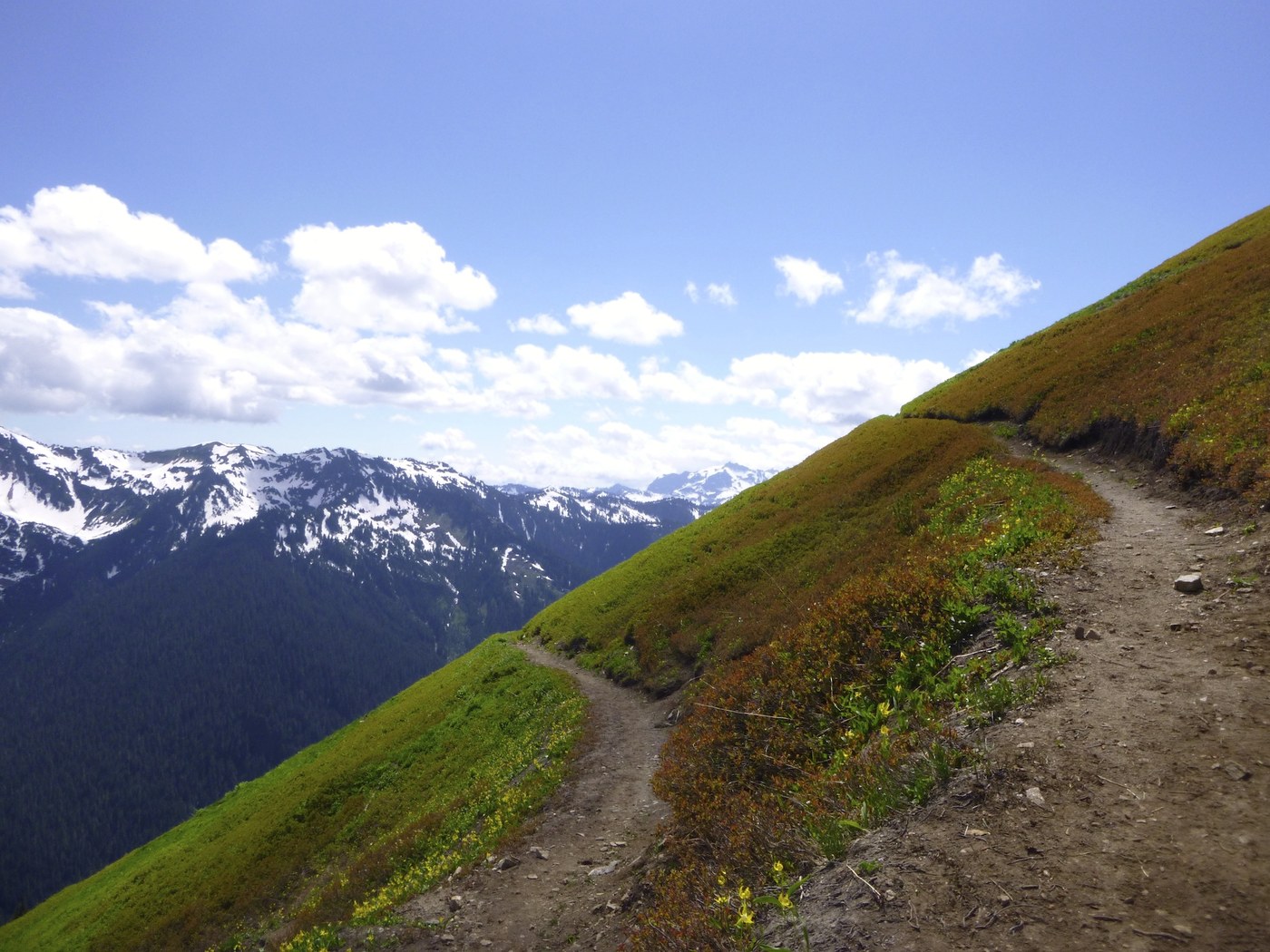
From Mackinaw Shelter we followed the PCT towards white pass, a trail crew was working along this stretch and the path was free of blowdowns and other issues. Stretches of trail alongside thimble berry patches were a bit overgrown unless the trail crew whacked them on the way back. The views of Sloan Peak and Pugh got ever grander as we climbed through meadows of columbine, glacier lily, paintbrush, white anemone, and gentian towards the pass. Once out of the trees the thumping of grouse was replaced with the whistles of marmots playing happily on the hillsides. Sweeping views of the north, east, and central cascades greeted us at the pass as did the first patches of snow. We crossed the snowfield along the climbers path to a sweeping basin filled with large tarns and the first glimpse of stately Glacier peak, the isolated volcano.
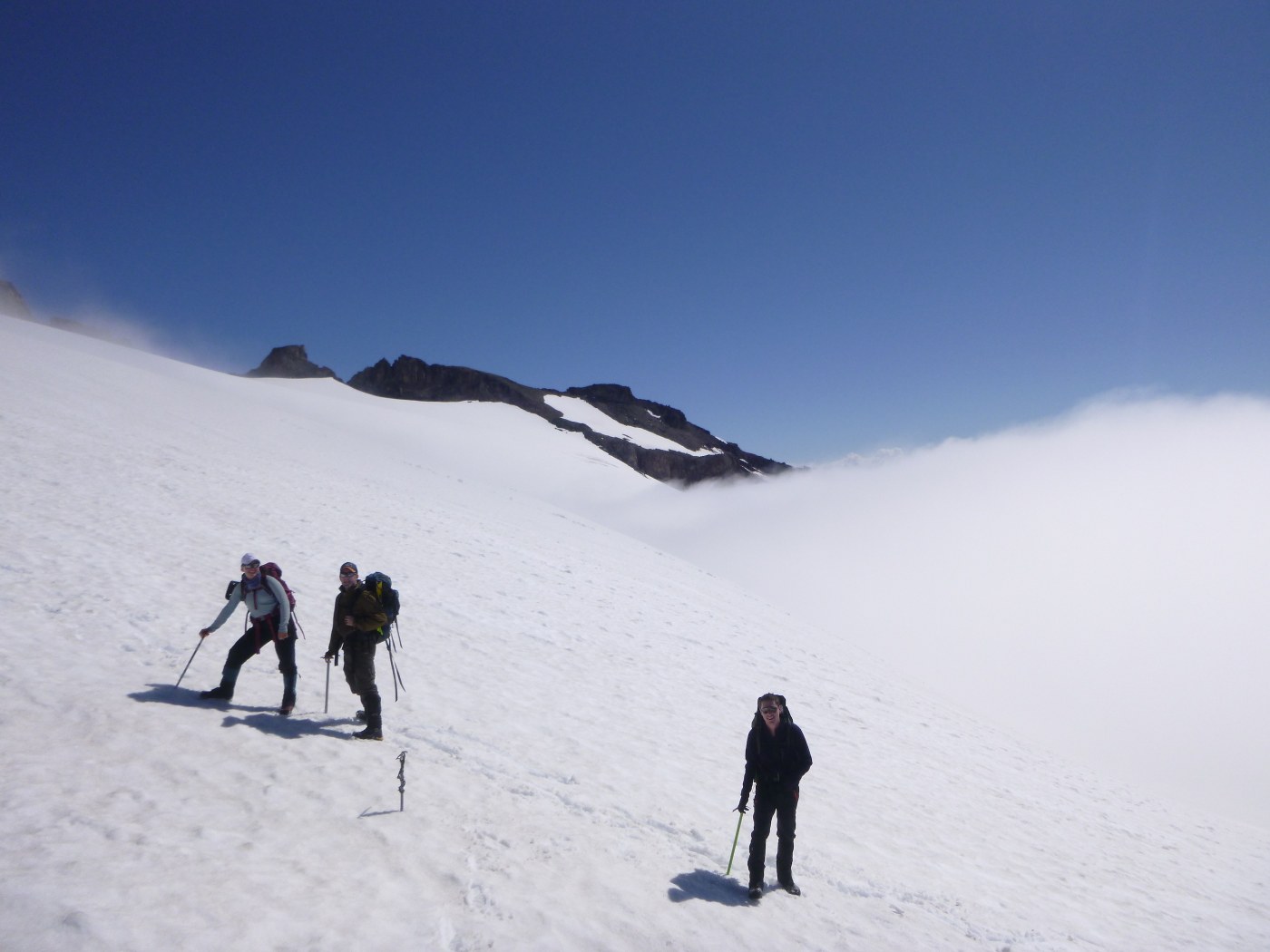
High along the ridge before glacier gap we pitched tents and made dinner as cool weather and wind rolled in. The clouds obscured all but the nearest ridges as we prepared dinner. The next day we began our summit push around 6 am, not exactly an alpine start. Dense fog and low lying clouds made navigation difficult as we consulted GPS, maps, and finally boot paths hoping that one would lead us toward the coveted summit. After following a "short cut" to a 7739 ft summit we found some skiers slightly more confident in their bearings and we continued until we found the actual trail in dry high alpine tundra. The weather started warming as we followed the path towards Cool Glacier. As we reached the glacier around 8,000 feet we popped out of the clouds to see Disappointment Peak looming in front of us. Only the highest peaks were visible among the clouds to the south the top 5,000 feet or so of Rainier was the only view. We climbed the glacier roping up as we started seeing crevasses and continued to the final climb up the face of the mountain. We hiked the staircase of kicked steps for 500 feet until we popped up on the summit meeting the other two parties that had climbed the same day. After descending back to camp we ate dinner and slept.
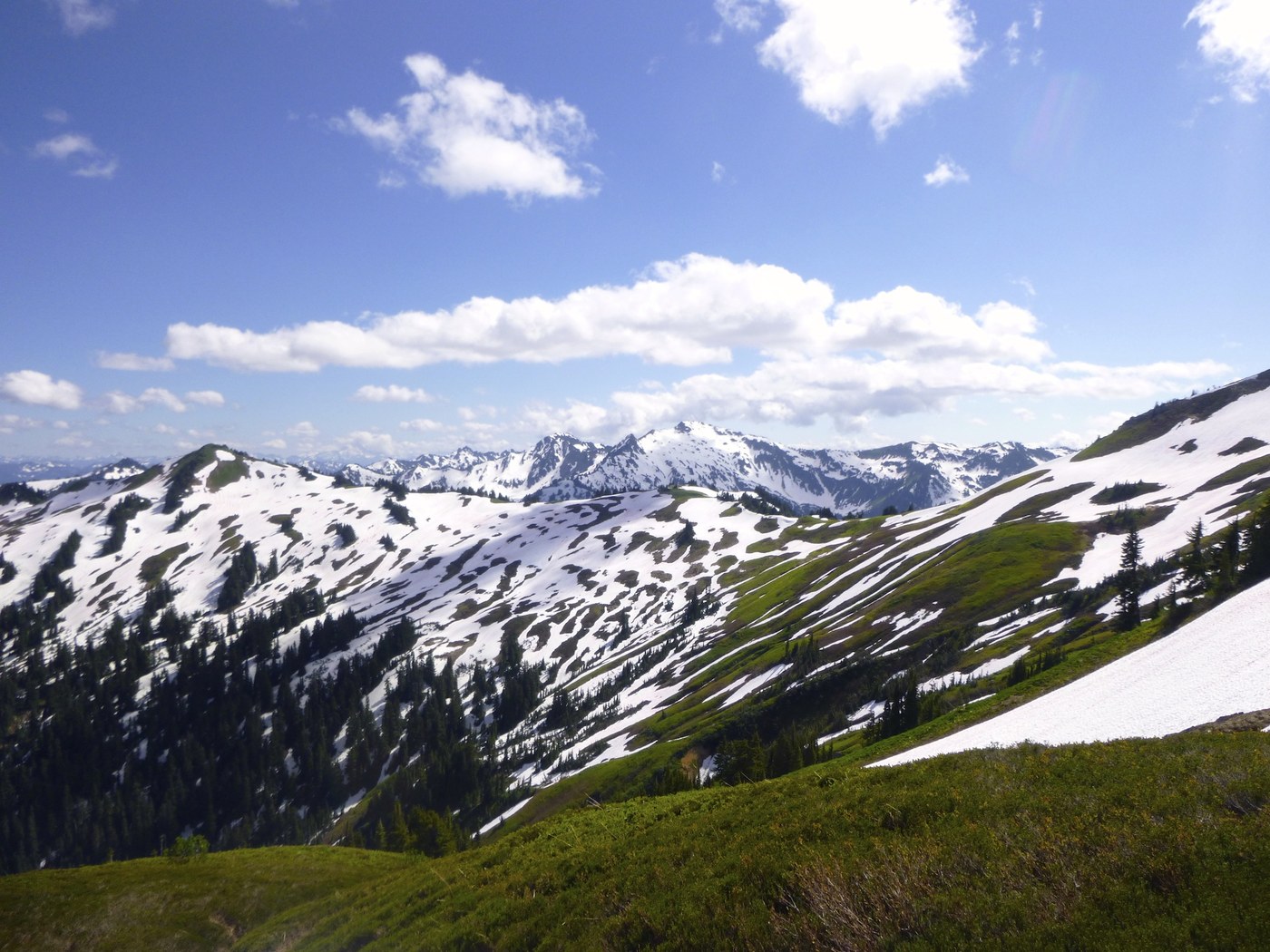
The next day we again woke up at 6 packed our tents and sleeping bags and in the cold morning refilled water bottles before heading down the trail. We retraced steps to White Pass in clear weather walking along ridgelines we could see hundreds of peaks in every direction still covered in snow and ice. I counted 47 marmots on the way down marmot babies, were wrestling on their hind legs and rolling down the meadows. The hike was beautiful but the push out was long carrying a pack full of mountaineering gear. The total distance of the hike was right around 40 miles not bad for three days especially considering the elevation gain.
Comments