


Trip Report
Pacific Crest Trail (PCT) Section K - Stevens Pass to Rainy Pass — Sunday, Jul. 12, 2009
 Central Cascades > Stevens Pass - East
Type of Hike
Multi-night backpackTrail Conditions
Obstacles on trail:Overgrown in places,
Mud/Rock slide or washout,
Bridge out.
Snow
Snowfields to cross - could be difficult

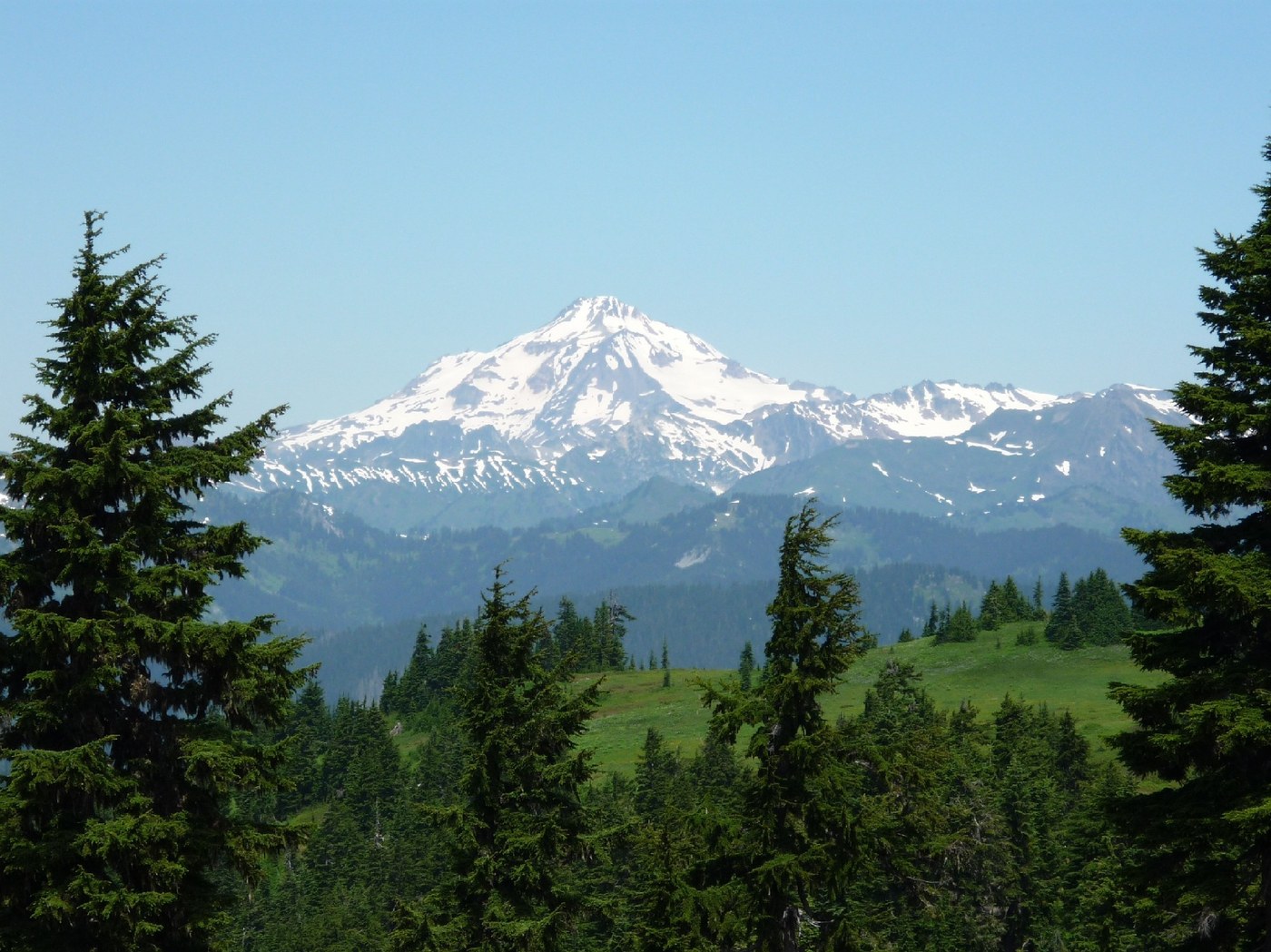
Greetings to all fellow hikers! We (two 20 something females) completed sections J and K(up to Stehekin)of the PCT (northbound) July 12-24, 2009. Before our trip we found a general lack of info about current trail conditions on the detour vs the main PCT through section K - so we hope that this information is helpful for someone!
First off we opted for the real deal. One look at the little used trail cutting off the PCT from Indian Pass and you too will probably decide that the genuine is always better than the "fake"! If you do plan on the detour, get detailed information before you go as there were no detour signs or info at the Indian Pass Junction and the detour route requires quite a bit of navigating due to the number of trails used and the ill repair of some of them. (There were still signs/maps posted at the north end of the detour). There have been some repairs done on the main PCT (mainly new bridges), but much of it has not been maintained since ’03 so expect overgrown trail and downed logs if you chose that route.
After Indian Pass the last exit out of the wilderness area before hitting areas damaged by the 2003 storms is the North Fork Suak Trail (just prior to Red Pass). For sake of reference the trail info below is connected with the mileage points in the 4th edition of the PCT Data Book by Wilderness Press.
2514.7 Red Pass – rapidly melting snow fields down the down the north side. Crampons were not necessary when we were there – and the snow should be all but gone by now.
2516.4 Three creek crossings #1 Rock Hop, #2 new bridge, #3 Log crossing.
2518.9 White Chuck River – new bridge! =)
2519.9 Baekos Creek – bridge over 1st half; easy wade over 2nd half. (large log jam as well).
2522 Sitkum Creek – rock hop or wade. There is camping among the downed logs just prior to the creek crossing.
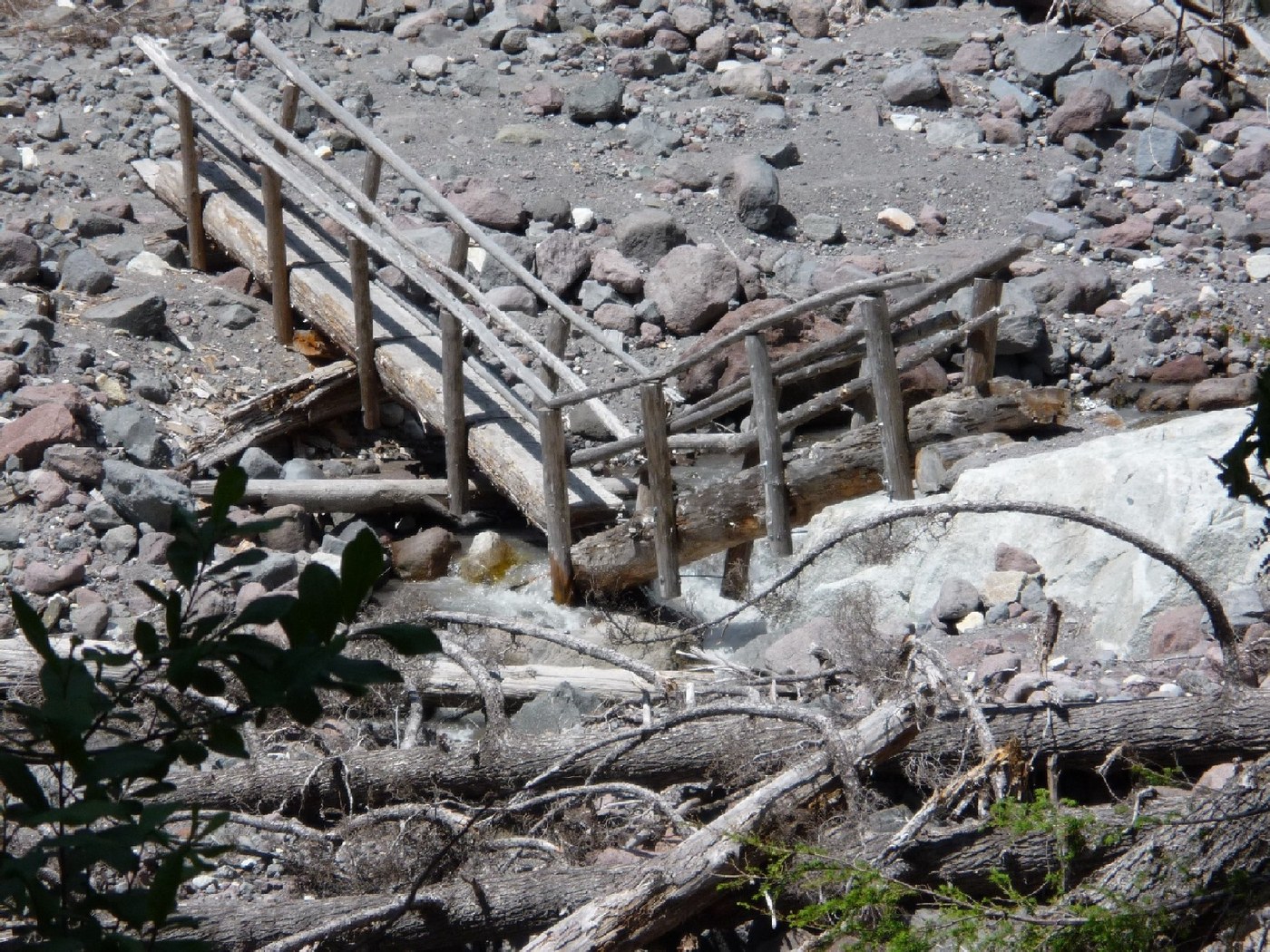
2523.2 Kennedy Creek – the log bridge is broken in the middle so it’s now in the shape of a “V” – but is still crossable
2525.5 Glacier Creek – the campsite and toilet have been obliterated by an avalanche – cross the creek carefully on logs/rocks. From here on the number of downed trees in your path will increase.
2526.7 Pumice Creek – good camping on the north side of an easy crossing
2529.1 Fire Creek – there is a nice campsite just North of the creek. To continue on the trail after crossing the creek on rocks, follow the trail upstream and work around/over the avalanche path to rediscover the trail switch backing up the ridge.
2530.8 Fire Creek Pass – we found a steep snow field covering the first couple switchbacks headed down the north side. If snow is still present – we recommend scrambling over the rocks to bypass.
2531.9 Mica Lake – completely frozen over when we passed
2533.5 Signed campsite and pit toilet still present
From here on down to milk creek you will find many downed logs in your path. The trail has been washed out in 3 places. Look for forestry tape and scramble down to the next switchback. The last several switchbacks are overgrown with 6 foot tall weeds. If you come to a place where the trail disappears and falls into Milk Creek – either cross if there is a good option or retrace your steps and follow the newly constructed trail (Obvious trail work in progress – though the trail is only “roughed out” – expect large boulders/logs/etc) to a newly constructed bridge. This new trail section seems to add a mile or so extra (counting both sides of the creek) as it takes you much farther downstream than the original route. Watch for forestry tape and/or yellow paper “temporary” signs, but in general the trail is not well marked.
2524.8 Climbing up the North side of the canyon is probably harder than what you just finished. The trail is extremely overgrown past the new bridge. We found ourselves “swimming” through a 6 foot tall weed jungle feeling out the trail with our feet. In the afternoon it proved to be a steamy sauna. In the morning it would be a very wet experience from all the dew. Take your pick. A machete would have been helpful! Many log crossings required belly crawling beneath them to stay on the almost non-existent trail. The trail conditions coupled with the added length will make this section take twice as long as it would otherwise so plan accordingly.
2539.4 Most of the snow was already gone off the ridge by mid July
2543.2 Descending the last dozen or so switchbacks down to Vista Creek and then hiking along the south side expect 100’s of downed trees in your path –ranging from 1 to 7 feet in diameter. Again plan on extra time to get through this section. Vista Creek is crossed by a log. The old bridge is sitting on the North shore, just past which is a nice campsite.
2546.1 Gamma Creek was hardly worth mentioning it when we passed in July – it will probably be dry by mid August. Plan on continued slow going with many logs as you continue on to the Suiattle River.
2546.8 The Suiattle River is a 15 foot wide muddy torrent raging through debris piles and silty mud. Follow cairns across the “moonscape” of silt, boulders and log jams to where a log crosses the river. The log was still present on July 22 when we crossed, but its hold on the bank is tenuous and the bark is coming loose. There are no good close places to wade due to partially submerged logs and boulders coupled with zero visibility in the water. North of the river follow cairns back to the main trail. The trail now becomes much easier but still has some smaller log crossings to remind you that this is not a walk in Central Park but rather an obstacle course.
2552 – Buck Creek Pass Trail – junction with the detour route. There were a plethora of signs and notes from the Forest service and hikers alike. Be sure to add your own comments!
From here on to Stehekin the trail is in good condition though an occasional log and some rather overgrown sections before and after Hemlock camp lest you forget that you that you are still in the wilderness.
Final thoughts ~ section K is completely doable! There are now bridges over all the harder creek crossings (with the exception of the Suiattle) and despite the logs and overgrowth the trail is followable. A good topo map is always recommended, but neither that nor a GPS is absolutely essential to find your way out there. The danger from steep snow fields is all but gone by this time of year – though expect to find some. Trekking poles are your friends in these instances. Enjoy your hike and savor the views! This section is beautiful and well worth the effort!
Comments