


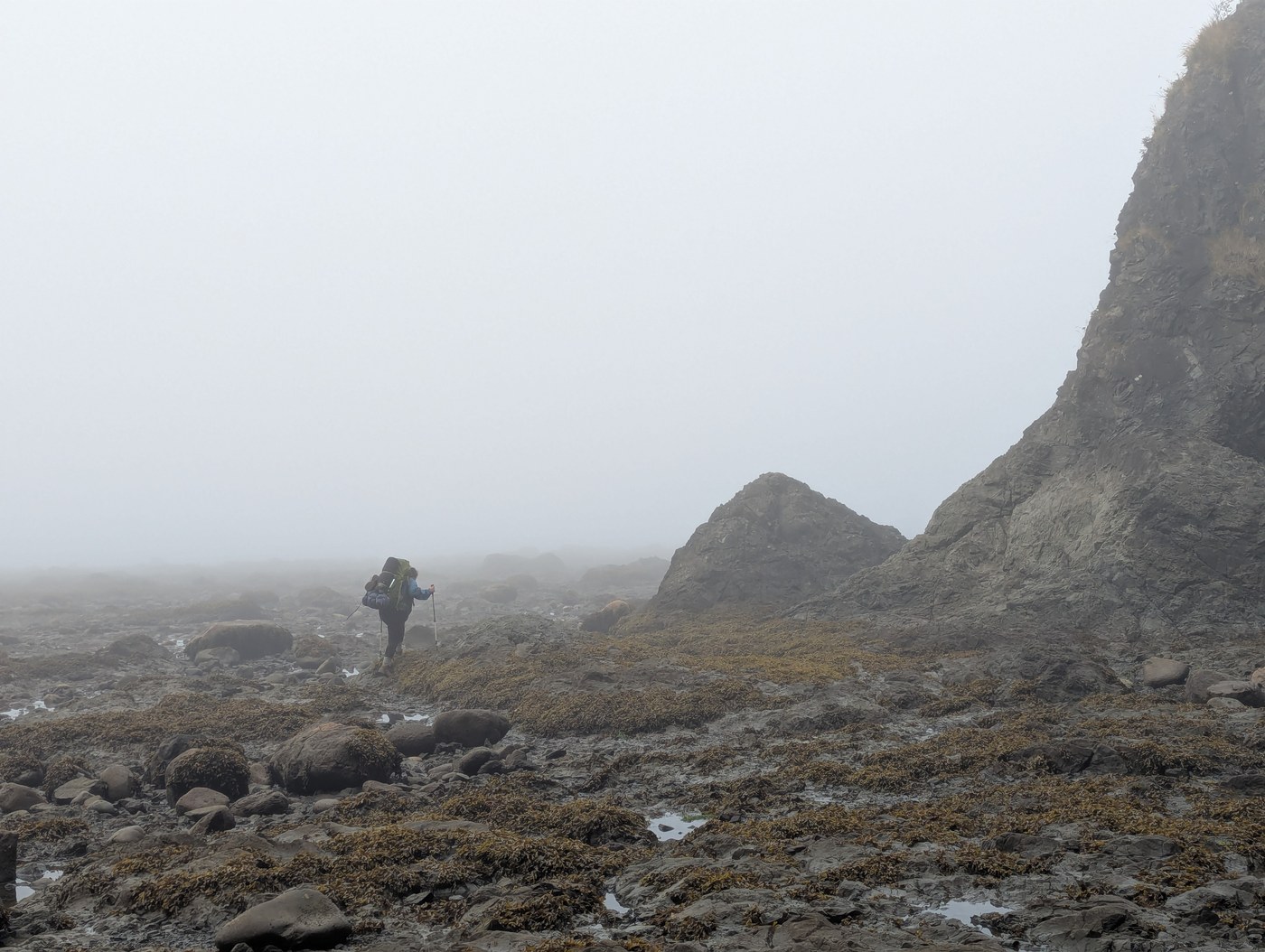
We started halfway through the North Coast Route, at Ozette Ranger Station, and finished a couple of days later at Shi Shi beach. This was the first coastal hike for anyone in our party, so we were relieved not to commit to the full distance, but if this is a first for you as well, don’t be deterred; adequate planning and other hiking experience should be enough for you to hike all of the way from Rialto to Shi Shi, if you choose.
Overall, this is a hike so radically unlike any others we have done before. As this is a route, rather than a trail, progress is a considerate process where the leader must find solid and stiff ground to walk along. Tidal restrictions along the route forced us to shape our plans around the whims of the tides, which practically feels similar to avoiding rush hour gridlock; often progress remains possible during medium and high tides, but is much faster at low tide.
Most importantly, the intersection of the ocean and the rainforest made these 20 miles of beach feel at once magical and alien. In four days I saw more variety and abundance of wildlife than I may have seen in all of the rest of my hiking combined. We saw bears, otters, chipmunks, gulls, birds of prey, corvids, seals (live and dead), urchins, jellyfish, starfish, crabs, and plenty more I don’t have names for. After the first night, we spent the entire trip shrouded in mist with the endless ocean to our left and the forest or bluffs to our right, each day discovering unique sights and land forms.
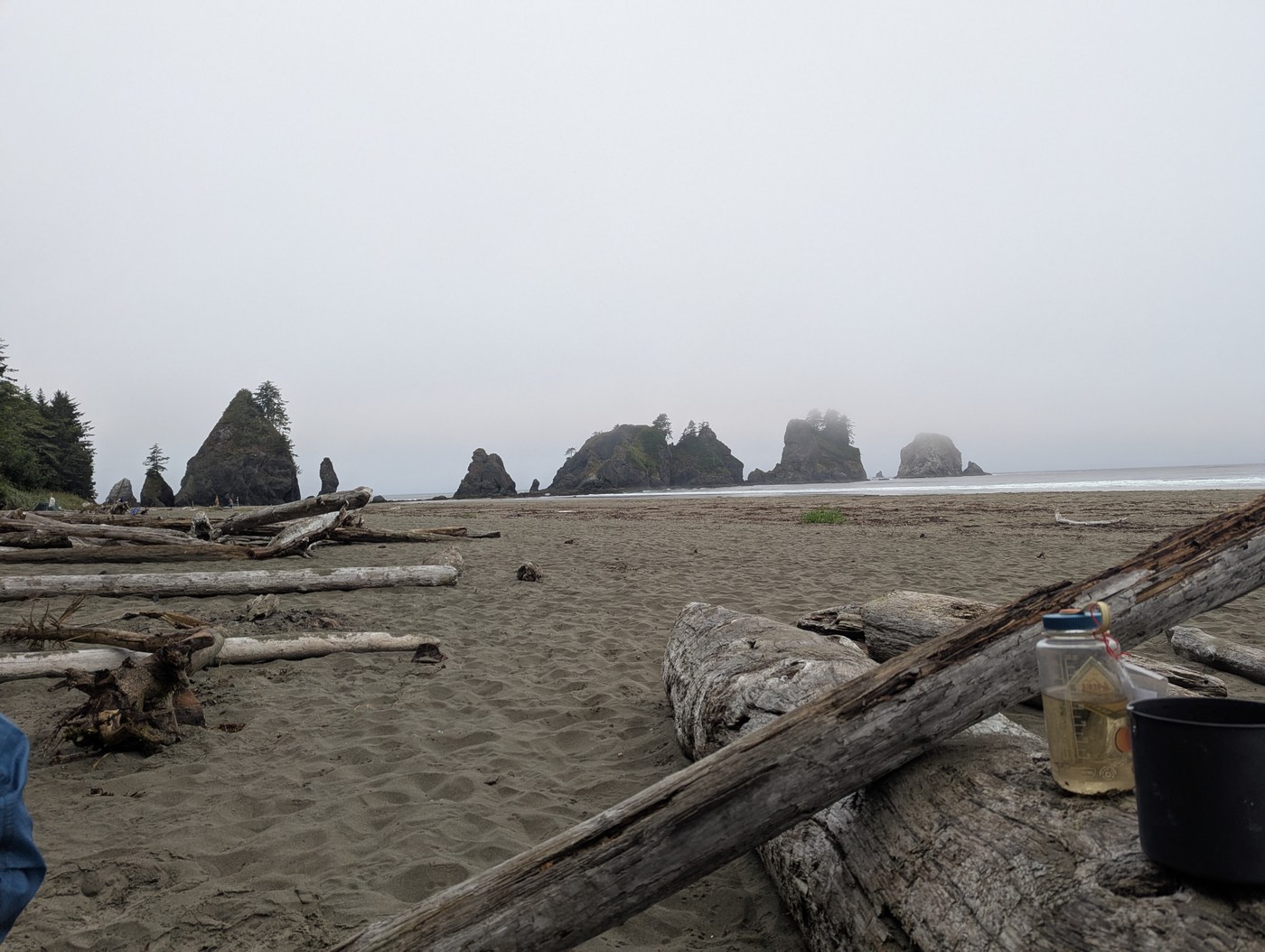
This was my first time camping on the beach, and I am a new fan. Don’t worry about finding a nice, level clearing; everywhere on the sand is perfect, and easy to clean. The ground is soft and easy to level (if not level enough already). There is, however, one big caveat: sand gets everywhere. Take care of your gear because the sand will damage everything soft and hard. Joints (like in multitool hinges) and poles (like tentpoles and telescoping trekking poles) can jam while soft materials (bags, clothes, tent fabrics) will wear down.
The abundance of beach logs guarantees seating, but we all packed chairs and I recommend it. The mercy of the tides means many hours each day seated, and the extra comfort is worth the weight. A tarp should be considered as well, to create shade in the absence of tree cover.
Don’t be fooled by the lack of elevation gain. Despite the flat terrain, walking in sand is slow and tiring in the best case, exhausting in the worst, and still better than tiptoeing along slick tidal boulderfields. Well-timed, hikers can take advantage of the stiff, wet sand revealed by the low tide.
Tide forecasts are a must for this hike, but we found that we didn’t need the chart on the trail, and only really used it when planning months in advance. Day-to-day, tide patterns are approximately the same each day, so a good trip will include generous low tides during the time of day your party prefers to hike. We rescheduled this trip by a week in order to guarantee we could make fast morning progress, and in retrospect we’re glad we did. Review tides early in the planning stages, not while you’re breaking camp.
We spent three nights on this hike. The first day was short and we headed three miles Southwest from the Ozette Ranger Station to Sand Point. Sand Point hosts a small creek which supposedly runs dry in late summer, but we found it reliable in late August. It is also the target of some local bears, who were unfazed by the presence of campers. Within minutes of our arrival, I turned around to see one crossing our path only ten feet behind our last hiker. Listen to the rangers, and use a bear canister.
The second day we awoke early and headed up the beach for our first day of coast hiking. We left right at the apex of low tide, and went as fast as we could to hopefully ford the Ozette River before it became unsafe to do so. This area is beautiful, and the timing is more forgiving than we knew, so we should have slowed down and admired the tide pools around Wedding Rocks and the majesty of Tskawahyah Island. We let out a sigh of relief when we saw the Ozette River, switched into our sandals (bring sandals), and stopped for lunch as soon as we crossed, but other hikers continued fording long after us, including one hiker who was in hip-level water.
After a few hours awaiting the tides, we proceeded up the coast to Seafield Creek for the second night of camp. This is a smaller site and does not host a privy (bring a shovel, pack out used paper), but is popular as the first site south of Point of the Arches.
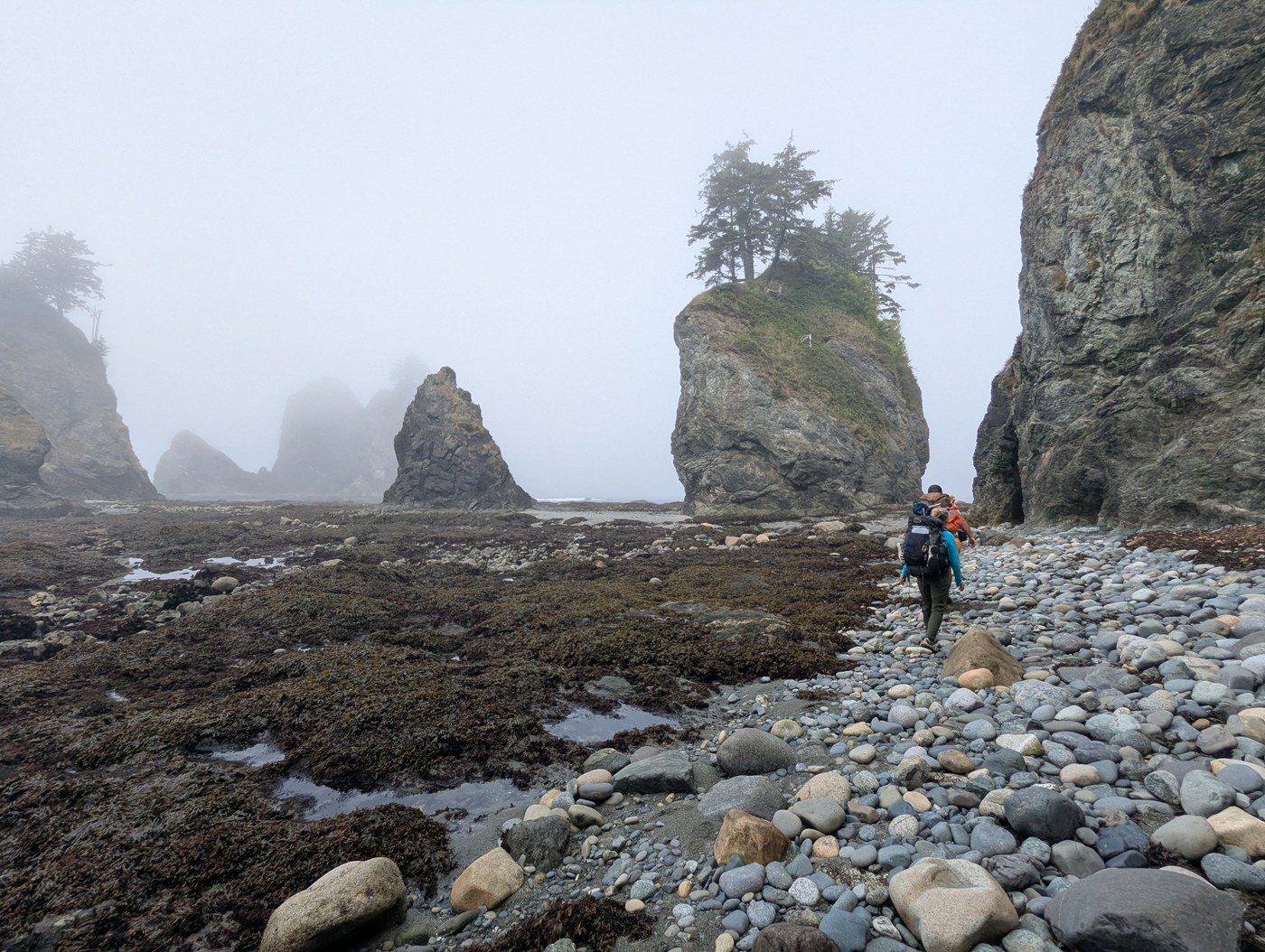
The next morning we woke up early for what we expected to be our easy day. Although we only had 5 miles to make to Shi Shi Beach, the passage through Point of the Arches and the many features South of it were the most grueling miles of our hike. This area has the lowest tide restrictions of the North Coast route, and even when passable, these are slippery boulderfields which had us worried about safety. The overland options are generally safer and more straightforward, but not necessarily easier. Climbing onto the bluffs is very steep, and the assistive ropes are not officially maintained, but we found them to be dependable. These bypasses include scenic lookouts, be sure to take advantage of those, because the seastacks in this area are incredible.
We finally came around the last corner and found ourselves on Shi Shi Beach, where we set down at the first campsite we could find. Shi Shi is easy enough to get to as a day hike, but it is worth spending time here. We took some short day hikes later in the evening when the tide went back out, and got some photos by the arches and the caves. We headed out the next morning, and both Shi Shi and the access trail were much easier than the rest of the hike, so we took our time back to the parking lot and relaxed on the long drive off the peninsula.

Comments