


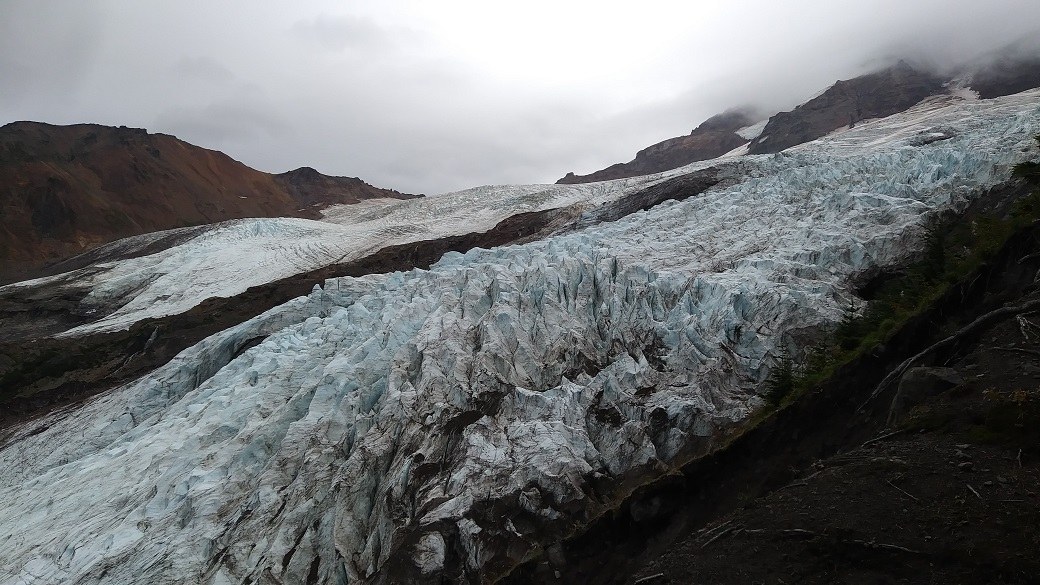
I hiked the trail with my Dad on a Tuesday morning with a forecast of rain in the afternoon. Interestingly, there was almost no one in the lot when we started out at 8:15, but on our way back we met a number of parties headed up in the rain.
We had seen glimpses of the summit from the Mount Baker Highway on the drive out, but by the time we got past the climber's route and really broke out of the trees, the clouds were down to about 6500 feet. That was okay with me though because in my mind the point of this hike is not the summit views but the glacier views. And we had plenty of those, as you can see from the first picture.
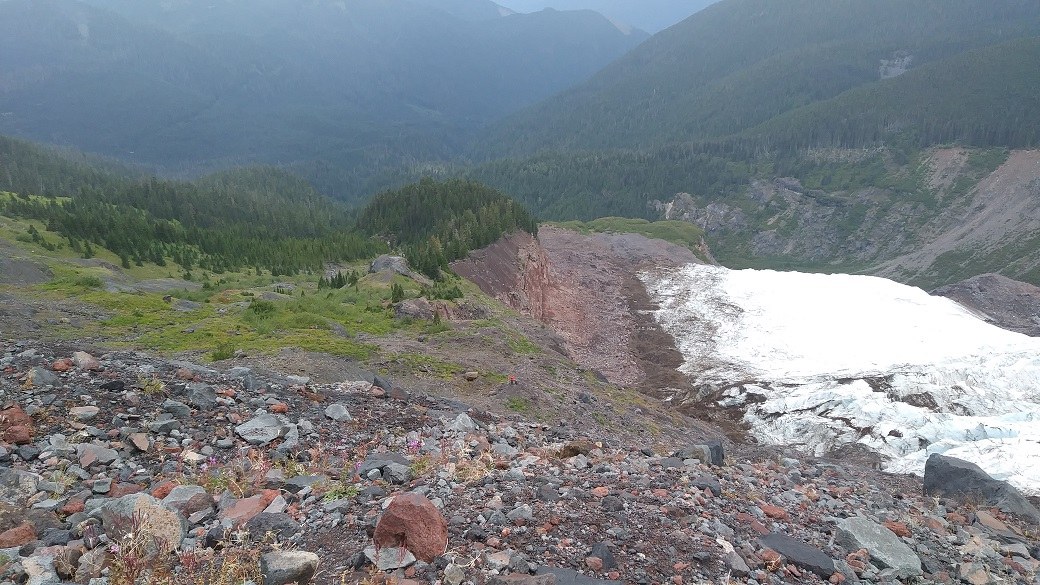
After the overlook I decided to head up a bit farther to get some different views of the glacier. At about 5900 feet the rocks got steeper and it started drizzling enough to make them slippery, so I headed back. The second picture is taken from near where I turned around. You can see my dad's orange jacket just below the center of the picture, and the overlook is just left of center.
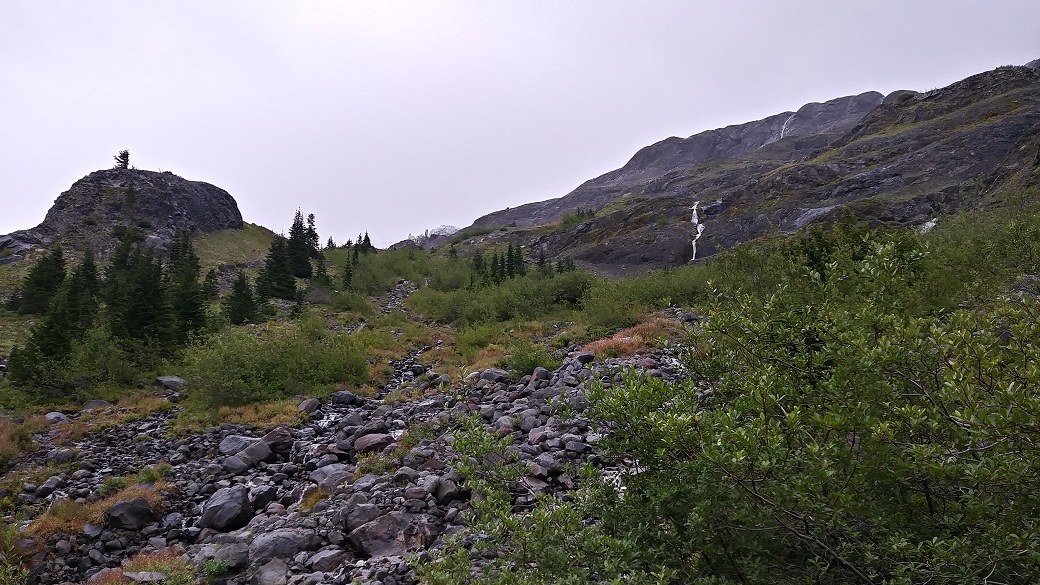
The third picture was taken down below the overlook looking up. On the ridge in the distance you can see a little bump right about in the middle of the picture, above a clump of trees. That's a large boulder, and it's where the second picture was taken from.
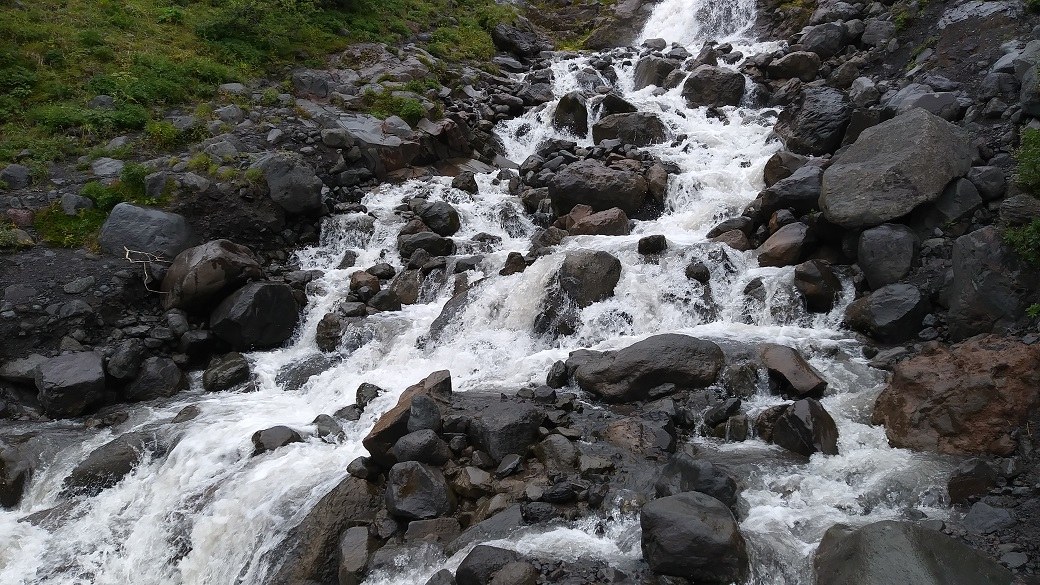
Just about everyone who writes about this trail talks about the infamous stream crossing. The last picture shows what it looked like at the time we came down. It shouldn't surprise you to hear that we saw a group of 4 get to the stream, look at at for a few minutes, and then turn back. On the other hand, my dad is 71 and we got across and back without incident. I definitely want folks to stay safe out there, but I would point out that what makes something safe or unsafe is not just the situation itself, but how you prepare for it in advance and the steps you take to minimize the risk when you get to it.
We had carefully read the trail description and recent trip reports. We wore waterproof boots and had hiking poles. When we got to the stream, we judged that we couldn't safely get across at that point, so I went scouting for a better crossing point. Where we eventually crossed was probably 100 yards upstream from where you first encounter the stream. Once we found a suitable crossing point, we also thought about how much the stream might rise before we came back down.
Even with the best preparation you can't always get the risk down to a reasonable level, and sometimes the best choice is indeed to turn back. But in my personal experience at least, the more I've built risk management into how I prepare for hikes, the less often I've found myself turning back, and the more relaxed I've felt on the trail.
Comments