


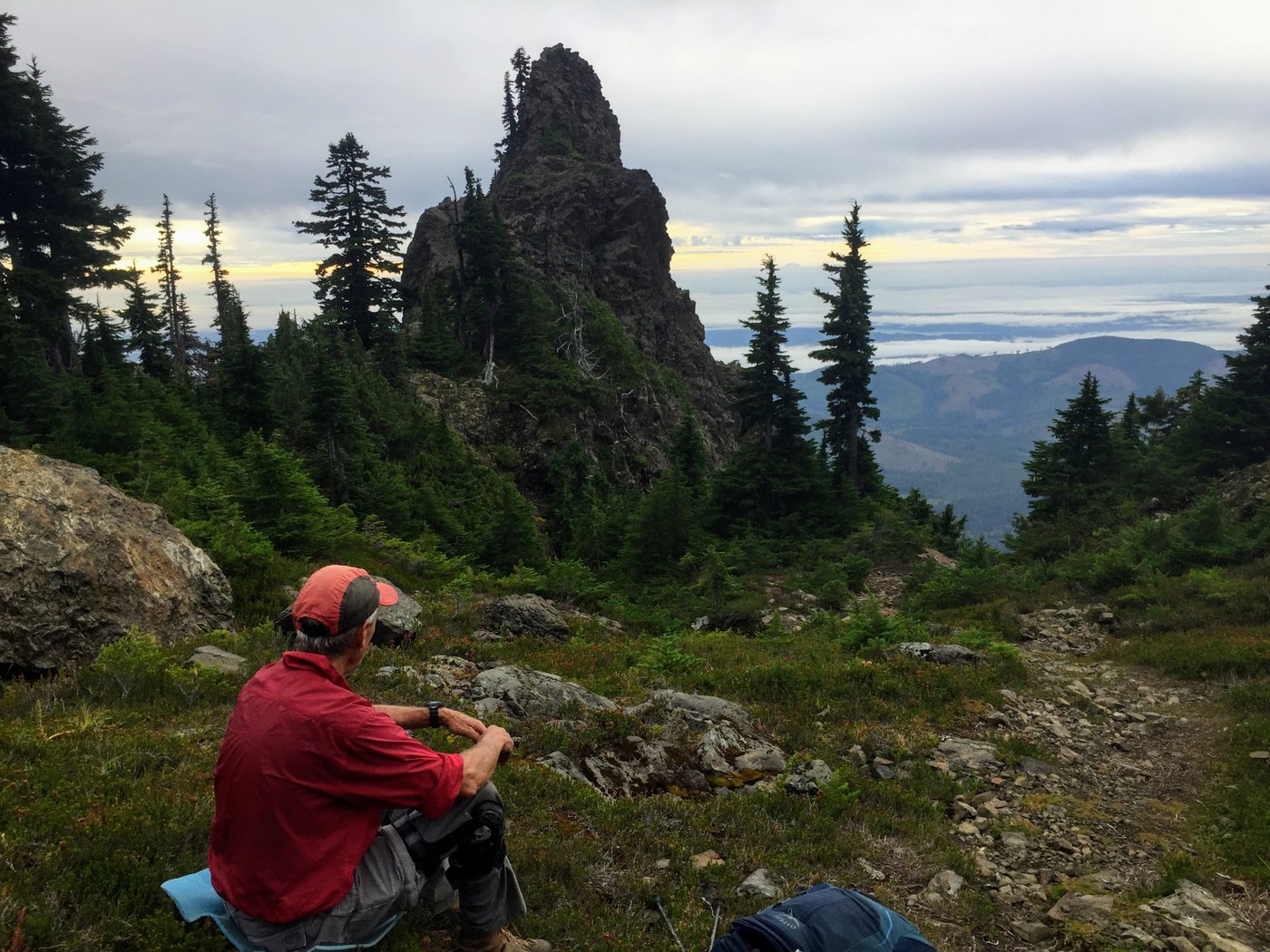
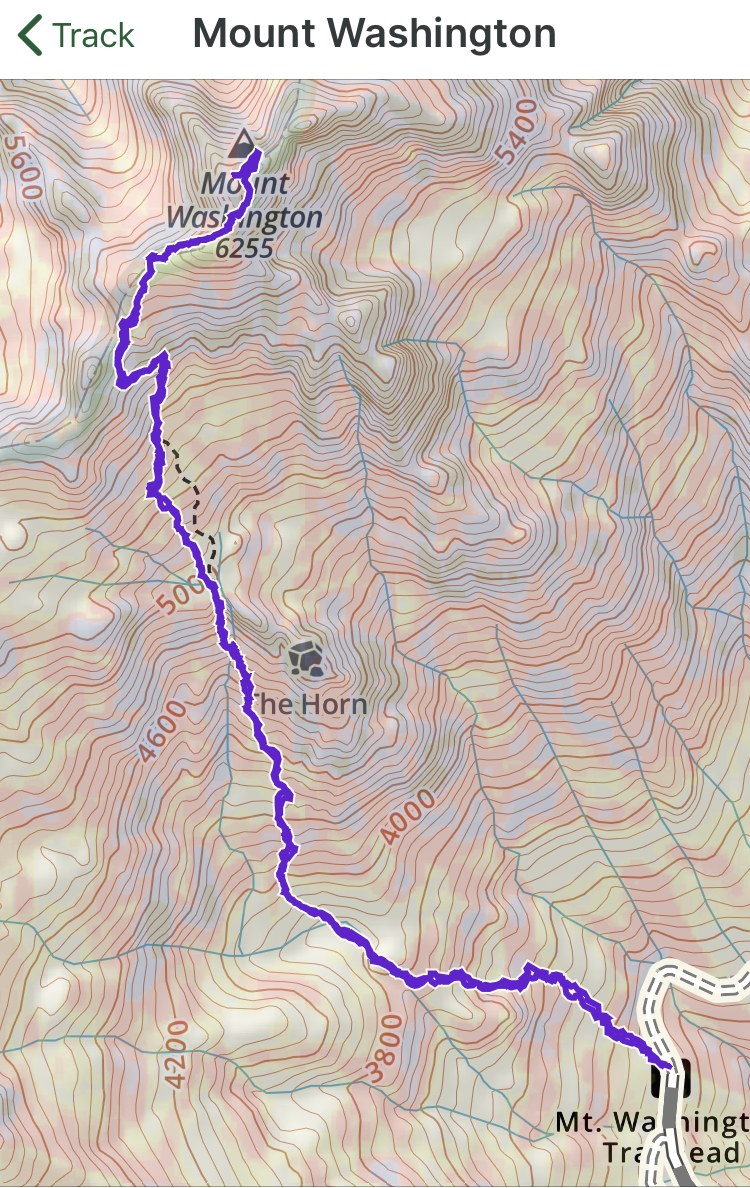
My hiking buddy, Greg, and I paid a Monday morning visit to Mount Washington in the Olympics. Ours were the only two vehicles at the trailhead at 7:45 am. Our intent was to follow the Standard South Route as described in climber's guides. As we hiked up the unmaintained but very well-worn trail, we were pleased to find huckleberries in many spots along the way to the first meadow.
During the course of the day, we ran into two parties doing this hike for the first time, and both parties expressed being a bit disoriented. For those who've never hiked Mount Washington, there are a couple of spots where it's easy to get off track. The first occurs after climbing to the top of a barren scree/talus slope above the first meadow, then making your way through a steep section of low-growing trees to the bottom of a narrow, wooded gully. High above and to the right is rocky pinnacle referred to as the Horn or the Tooth. The gully drains the west (climber's left) side of the Horn. Standing at the bottom of the gully, you can look up the gully and see a saddle above the trees which is the desired destination. A well-worn trail ascends the gully, but if you stop and look 90 degrees to your left, you will see a very faint path descending a short ways towards the west shoulder of the gully. Walking down, you approach the base of the shoulder and a trail comes into view, zig zagging its way uphill. This steep but short route is preferable to being down in the gully, and it doesn't take long to reach the saddle above the Horn.
Once at the saddle, a second location that's easy to miss lies ahead. It isn't a single spot like the previous one but occurs along the trail that leads to an important terrain feature. From the saddle, a large meadow fans out and the rocky flank of Mount Washington can be clearly seen. The main trail heads north-northwest up through low-growing trees towards the base of an imposing cliff. The trail is faint and steep at times, but gradually swings right in a more northerly direction, staying in close proximity to the base of the cliff. It's easy to lose the trail in this section because of an abundance of loose rock.
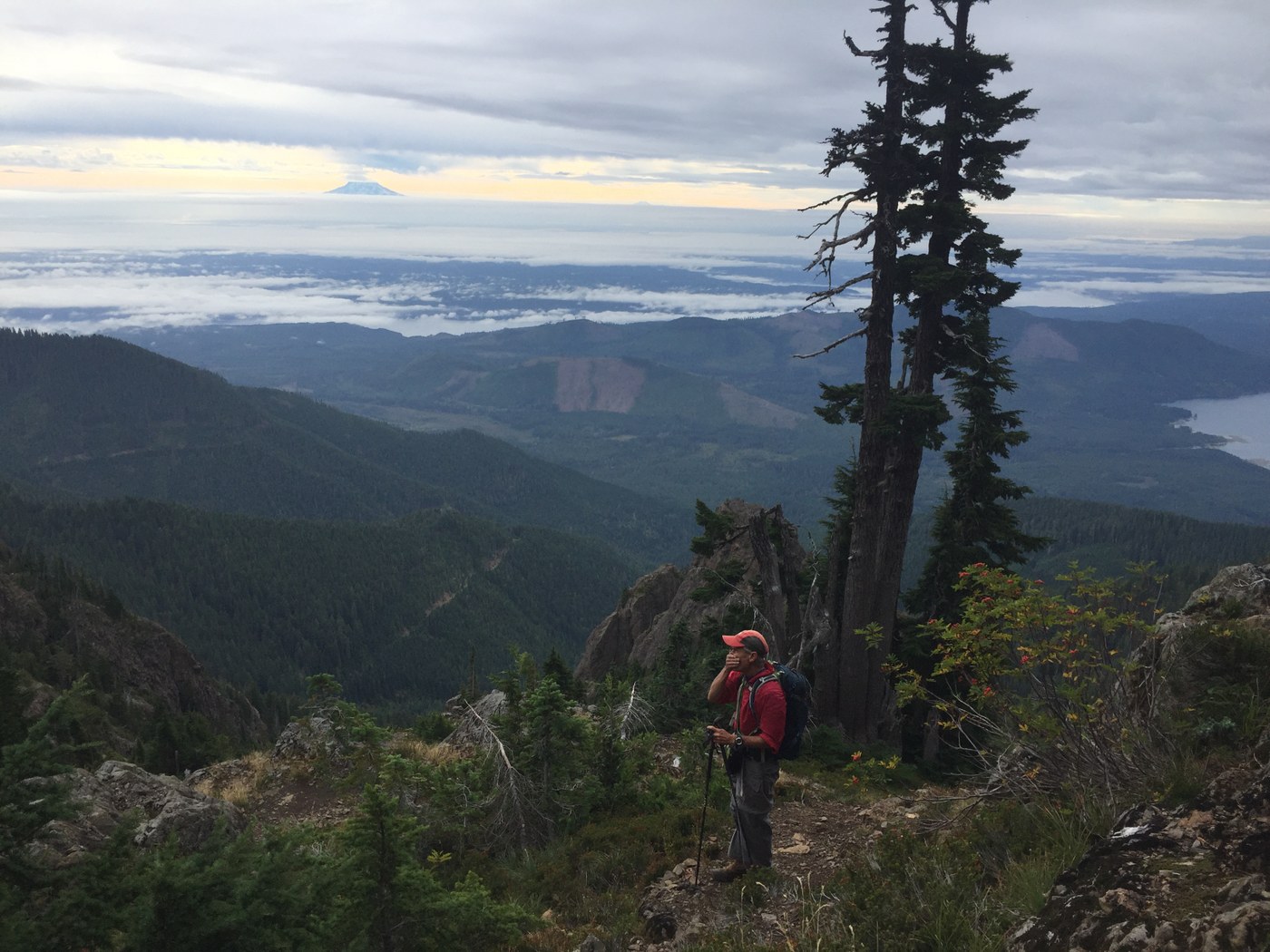
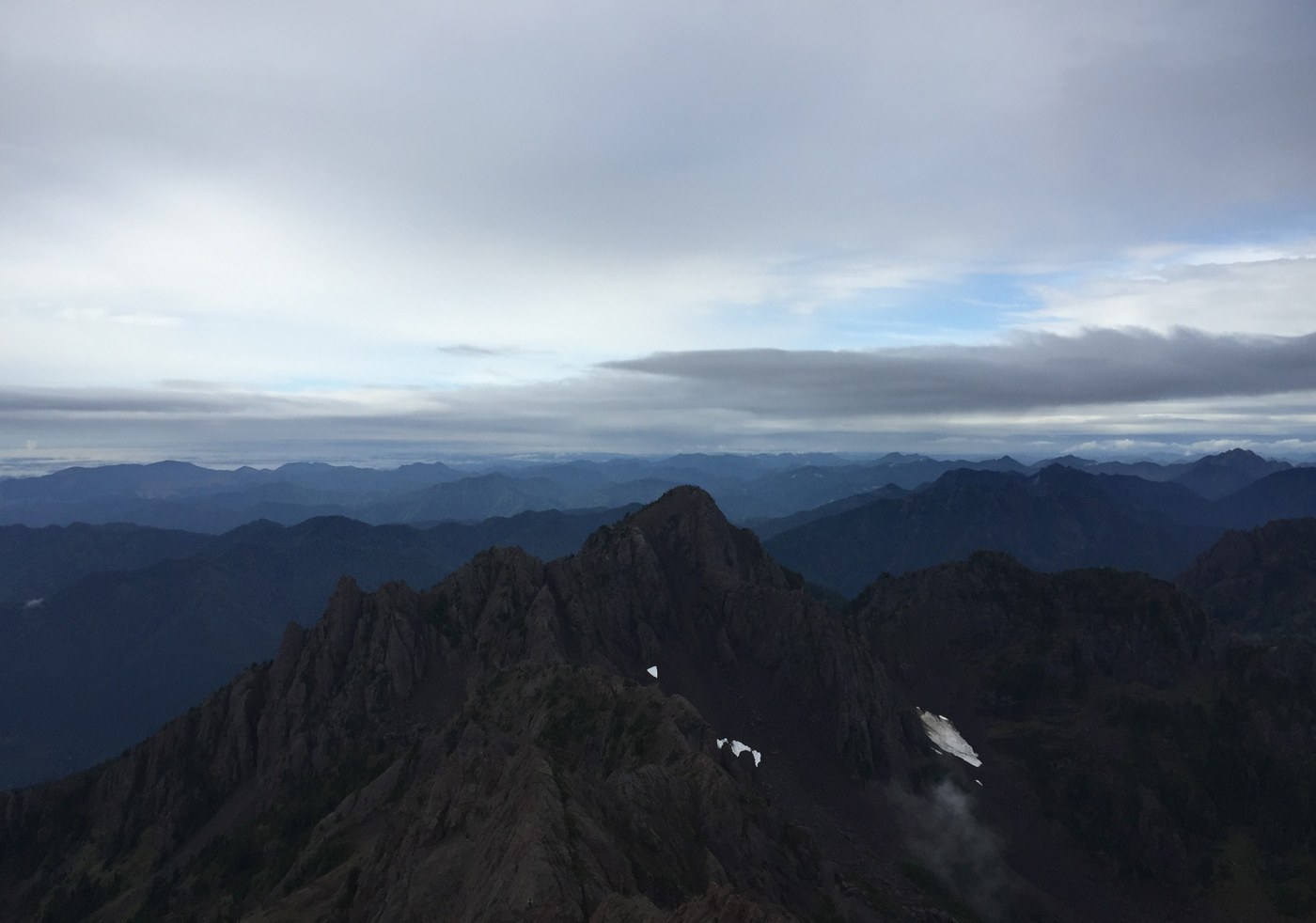
Eventually the trail intersects with the bottom of a narrow ramp that turns and ascends sharply southwest (climber's left). This is an important terrain feature that can be missed if you are not on or near the trail. One of the parties we met had dropped too low down-slope and overshot the ramp by a quarter mile. A well-defined trail ascends the ramp and, once on top, heads in a northeasterly direction traversing just below the ridge that connects Mount Washington with Mount Ellinor. Eventually the trail arrives at a saddle just below the summit where spectacular views of the vast interior of the Olympics greet you. Excitement builds as you see the trail ascending towards the summit.
The final climb to the top passes by the summit on the east side (climber's right), continuing almost to Washington's nose, then turns and approaches the summit on the northeast ridge. Some may find the ridge walk intimidating, but hand and footholds abound. A summit register is nestled in the rocks at the summit.
Comments
BobBrett on Mount Washington
Do you recommend a climber’s helmet for this climb?
Posted by:
BobBrett on Sep 25, 2020 06:44 PM
rkjenner on Mount Washington
Yes, there are several places where the route passes under cliffs or climbs rocky terrain where someone above could knock something loose. You asked an important question, so thanks!
Posted by:
rkjenner on Sep 25, 2020 09:31 PM