Length
 Elevation Gain
 Highest Point

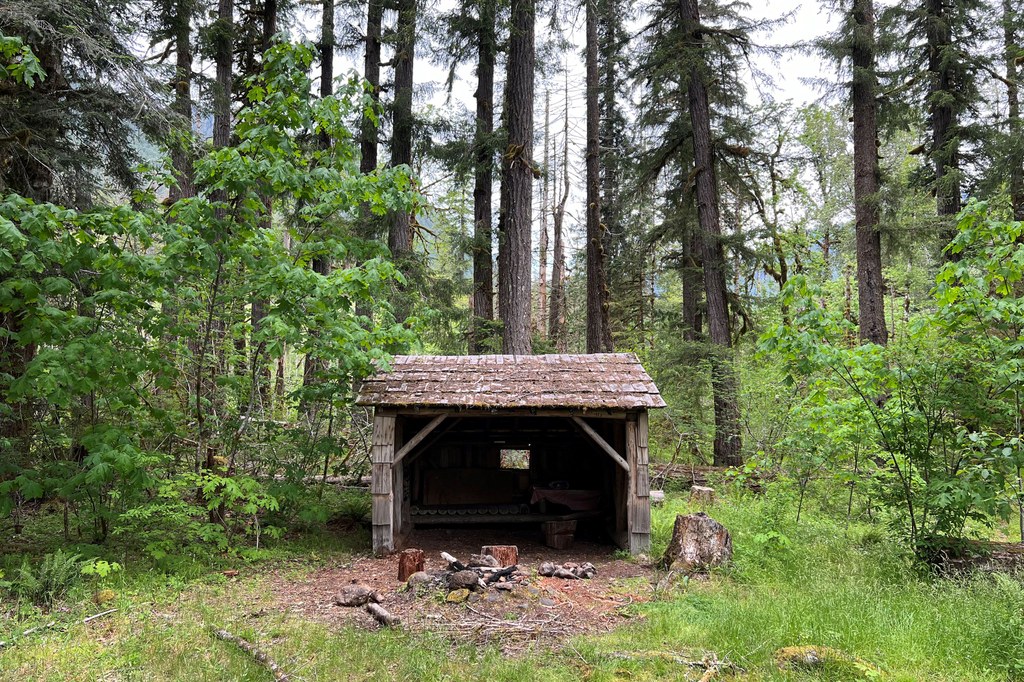


Start by heading east along the well-defined trail. The ground is nearly flat and covered in mossy rocks among thin but tall trees. The tread is mostly dirt and small rocks with the occasional forest litter. Shortly, the trail arrives at the abrupt edge of a terrace where the river can be heard. Now begins a steep descent.
The way becomes a little rougher, with stones rolling along the beaten tread underfoot. The surrounding forest is noticeably different than before; nice old hemlocks covered in moss entice the hiker as two switchbacks are encountered.
Now on the valley floor, the rough and tumble path crosses a typically dry channel of Church Creek. Shortly after, Church Creek comes into view. There is no bridge, so one must either find a handy log jam or ford the cold waters. River shoes are handy if the latter is decided. The trail continues on the other side.
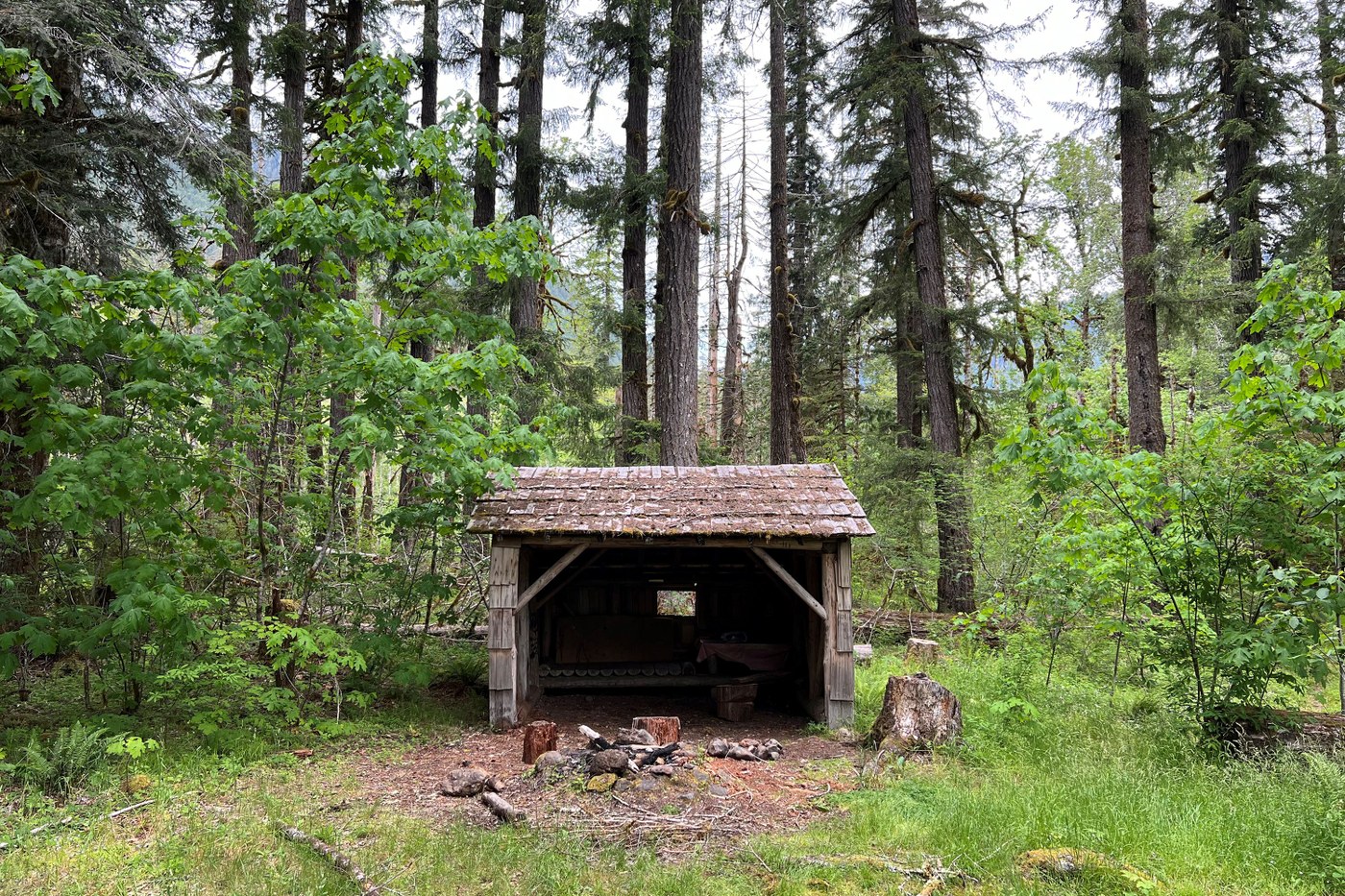
Climb a short terrace and the shelter comes into view, set on the edge of a small clearing beneath tall firs and bigleaf maple. The bottomland sings with running water. Beyond the shelter, the trail continues north along the valley bottom. A side trail heads east to the ford over the South Fork Skokomish.
Built in 1935 by the Civilian Conservation Corps, the shelter is of the Adirondack style that is so common among Olympic trail shelters. It is one of the few remaining shelters of its kind outside of Olympic National Park. The immediate environs offer ample room to spread out if one desires to camp here.
Church Creek was named for Frederic Church, a member of the 1890 expedition into the Olympic Mountains led by Lieutenant Joseph P. O’Neil of the United States Army. The expedition resulted in the first known ascent of Mount Olympus.
 Trailhead